Thursday, February 27, 2025

John Steinbeck: In Search Of The American Experience


John Steinbeck had a long and varied career as an American writer but was best known for his Great Depression era novel, The Grapes of Wrath. I know the film and story line very well, but must confess that I never read the book from cover to cover. In high school, Of Mice and Men was required reading, and I found great pleasure in reading Travels With Charley: In Search of America on my own shortly after its publication in 1962.


Steinbeck, who was born in Salinas, California, on this day in 1902, was a keen participant-observer of 20th century America in general and the California experience in particular. His work earned him a Nobel Prize for Literature in 1962. These days, I don't think students - and teachers - of American history and culture give him the credit and attention he deserves.


My copy from 1962


If you don't know Steinbeck or want to know more about him and his world start with an electronic visit to the National Steinbeck Center in Salinas. Better yet, plan a visit next time you find yourself in the San Francisco area. From Salinas it's a short drive to Monterey Bay and the world-class Monterey Bay Aquarium. Located on a site made famous in Steinbeck's novel, Cannery Row, it's a "must see" exposure to the coastal environment and marine biology the author revered, enjoyed, studied, and interpreted.


Cannery Row, Monterey, California, 1945


Sources:


Photos and Illustrations:
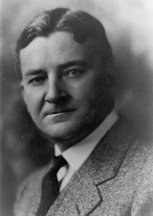
Steinbeck portrait, Nobel Foundation

Marian Anderson: Powerful Voice, Powerful Message


Today is the birthday of the American singer, Marian Anderson. When she passed away in 1993 at the age of 96 the world lost one of its finest voices of the 20th century. She swept to international fame in 1939 with a public performance at the Lincoln Memorial in Washington. 


The Daughters of the American Revolution (DAR) had denied her the opportunity to perform in their venue, Constitution Hall, because she was black. The decision didn't sit well with First Lady Eleanor Roosevelt who sat on the national board of directors of the DAR. Mrs.Roosevelt intervened and helped arrange one of the iconic events of our time.


Portrait of Marian Anderson, 1940

Here is a documentary, Portrait of Marian Anderson, produced for the Greater Washington Telecommunications Association and first aired on public television on May 8, 1991. I normally don't post lengthy audiovisuals but this one affords viewers a flexible opportunity to learn about her life, listen to her singing, and hear her personal observations on an extraordinary life that included seven decades on the stage.


Sources

Photos and Illustrations:
1939 concert, public domain photo by U.S. Information Agency, National Archives and Records Administration, Washington, D.C.
Anderson portrait, Carl Van Vechten Collection, Library of Congress

Text:
Title quote, Marian Anderson 

Wednesday, February 26, 2025

Grand Canyon National Park Celebrates 106 Years


Today marks the 106th birthday of Grand Canyon National Park. I first saw it in 1970 on a cross country trip that introduced me to several National Park Service sites. That was long before any indication that the agency would become my career and its mission a life long pursuit. The Canyon is far removed from my early park experiences in the reaches of the Potomac River Valley from Shenandoah to Gettysburg and east to the Mall in Washington. In addition, all of my career assignments were well east of the Mississippi River. It may seem odd but, outside of them, I spent more time - almost one yrar - on temporary duty and vacation at the Canyon than any other place during my career. That makes the sight, touch, taste, smell, and sound of Grand Canyon very special.


Hermit Rapids on the Colorado River, Grand Canyon National Park, 1974


Although the scenic drives, visitor centers, museums, and accommodations are outstanding, the park is really an outdoor, immersive experience. And it's unfortunate that far too few visitors choose the immersion. Thankfully I spent most of my time there when such an orientation was commonplace. Like most people my age, I was ready because Mom sent me out the door after a summer lunch and didn't expect to see me until the street lights came on. Lots of time for adventure then and now. At the Canyon I ran untold miles on trails through the Ponderosa Pine forests along the South Rim. On many occasions I went over the rim into the Inner Canyon on trails named Grandview, Kaibab, Bright Angel, Hermit, Dripping Springs, and Tonto. Each was its own experience as was the day I climbed 5200 feet out of an 80 degree summer into a blizzard and two feet of snow at the South Rim.


 Grand Canyon National Park Poster, 1938


The Grand Canyon wasn't well known to most Americans until around 1900 and the completion of an Acheson, Topeka and Santa Fe Railroad link to the South Rim. There had been interest in making it a national park as early as 1882 but the first protection afforded the canyon came in 1906 with its proclamation by President Theodore Roosevelt as a game preserve and later in 1908 as a national monument. With the conservation movement in full swing across the nation, Congress finally passed the Grand Canyon National Park Act. It was signed into law by President Woodrow Wilson on February 26, 1919.


El Tovar, the AT&SF hotel, Grand Canyon, early 1900s


In the century following its national park designation, Grand Canyon has witnessed millions of visitors. The park wears its World Heritage Site designation proudly with its multi-faceted display of nature and culture. It does so even when less than one percent of visitors - around 45,000 in 2020 - actually leave its rims to explore the Inner Canyon. Today, the computer and its games, the focus on the automobile as transportation, an aging population, and other demographic and cultural variables may take a bigger toll on an already dismal number. For most of my life I've enjoyed the adventure, walking the beaches and trails end to end on Georgia's Cumberland Island National Seashore and almost every mile of the C&O Canal National Historical Park's 184 mile long towpath across Maryland and the District of Columbia. That's not to mention the hundreds of miles "in the traces" in parks from the Mississippi River southeast to the U.S. Virgin Islands. All in a day's work then. Today? No question there is less walking in my retirement but I can still recall the wonder-filled experiences on the traces in one of the grandest places in the world. It's even more enjoyable to do so on a very special day that very likely made all those experiences possible.


Post-hike at Hermit Rest trailhead. Old Tybee Ranger kneeling, right.


If the Grand Canyon is on your bucket list, be sure to visit. If you've been there many times, go again. Either way, go over the rim. Go into the Canyon. Be the beauty and mystery of this sacred place.


Sources

Photos and Illustrations:
National Park Service
Library of Congress
Personal photo


Text:
wikipedia.org. National Park Service
National Park Service

Saturday, February 22, 2025

Remembering George Washington On His 293rd Birthday


George Washington,  Gilbert Stuart, American, 1796


We had a federal holiday a few days ago commemorating Washington's birthday but it was simply another one of those government manipulations to provide us with three-day weekends. Washington was actually born on February 22, 1732. Perhaps a few days don't matter much in a nation that has lost its appreciation for history and reality over the past decades. Still there are some personalities and events worthy of authentic remembrance. George Washington, fondly recalled as the Father of His Country, is one of them. Here is what Scott Johnson (Powerline) has to say about the subject:


Of all the great men of the revolutionary era to whom we owe our freedom, Washington's greatness was the rarest and most needed. At this remove in time it is also the hardest to comprehend.


Today as we contend with the contemporary equivalent of "the Babylonish empire," let us send up our thanks to the Ancient of Days for this indispensable man.

Johnson originally posted these words in 2006 and it's worth reading the rest of his brief and notable remarks. Very uplifting.


Learn more about the young adventurer who became the father of his country at the following sources:


 Washington's birthplace - the original site is in the foreground


In 1747, when Washington was 15 years old, he accompanied his friend, George William Fairfax, on a surveying expedition to the Virginia - now West Virginia - frontier and the headwaters of Patterson Creek, a tributary of the South Branch of the Potomac River. I got to know well over a thousand feet of Patterson Creek intimately over the span of a quarter century. The creek was a great source of recreation, leisure, study and contemplation. It was a powerful force in shaping my future. I learned of Washington's trip there long after I'd left the place but I still think about what it would have been like sitting on the creek bank in 1960 and suddenly seeing a teenage boy and his companions in colonial dress come slogging around the bend about 50 yeards downriver. That small stretch of Patterson Creek is a sacred place and although I havent sat on its bank or skipped stones across its quiet pools for fifty years this landscape I remember still speaks to me about our imaginary conversation. I'm quite sure that young Washington would have no expectation of becoming in the words of his eulogy delivered by Henry Lee, "first in war, first in peace, and first in the hearts of his contrymen." 

In my experience every sacred place opens dimensions and portals as time exposes layers of its past. Listen carefully next time you stand alone immersed in the experience of your sacred place. There you recall your personal stories. Add  imagination and who knows what you may encounter on the banks and bends of your river through time.


Sources


Illustrations:
Stuart portrait, a copy known as the Lansdowne Portrait, hangs in the White House. The original is located in the National Portrait Gallery, Washington, D.C.
Postcards are from the author's archive.

Tuesday, February 18, 2025

Progresive Liberalism Fails At Legislating Morality


The New York Times front page, February 17, 1933


It really is enjoyable to commemorate the passage of the Blaine Act which took place on this day 92 years ago. This brief piece of legislation began a year-long process that ended the debacle we know as Prohibition. Granted, overindulgence in alcohol was a national issue by the Gilded Age. At the same time, I doubt few progressive liberals would have expected the degree of lawlessness that engulfed American society as a result of their best intentions. Indeed, a year before the Blaine Act, John D. Rockefeller wrote this appraisal:


When Prohibition was introduced, I hoped that it would be widely supported by public opinion and the day would soon come when the evil effects of alcohol would be recognized. I have slowly and reluctantly come to believe that this has not been the result. Instead, drinking has generally increased; the speakeasy has replaced the saloon; a vast army of lawbreakers has appeared; many of our best citizens have openly ignored Prohibition; respect for the law has been greatly lessened; and crime has increased to a level never seen before.


And here's a photo of The Honorable John J. Blaine, U.S. Senator from Wisconsin, who was responsible for not only writing the act bearing his name but also the 21st Amendment that officially repealed Prohibition.


I would suggest a toast this evening to Blaine and his realistic response to moral folly. Oh that we should have such wisdom today!


Sources


Photos and Ilustrations:
The New York Times, rarenewspapers.com
Blaine, public domain photo, bioguide.congress.cov


Text:
Rockefeller quote, "Twenty-first amendment to the United States Constitution," wikipedia.com


Monday, February 17, 2025

Washington's Birthday: Our Unbirthday Holiday


Regardless of what you may hear on the street today's holiday commemorates Washington's birthday. As the official federal government page states,


This holiday is designated as "Washington’s Birthday" in section 6103(a) of title 5 of the United States Code, which is the law that specifies holidays for Federal employees. Though other institutions such as state and local governments and private businesses may use other names, it is our policy to always refer to holidays by the names designated in the law.

At one time the nation had a Washington's Birthday holiday on February 22, the actual day of the man's birth, but that changed in 1971 when the "Monday holiday rule" took effect. The rule was a postlude to a torturous twent year saga of federal bickering, ineptitude, and state's rights issues over the national failure to honor our presidents, especially Abraham Lincoln, with their very own holiday. The fallout left us with what is in reality a Washington's Unbirthday holiday and a three-day weekend. Honest Abe didn't make the official cut.

That said, American capitalists, never keen to let a good shopping opportunity pass, liked the idea of a President's Day, especially one that could be stretched over a full week . They saw the advantage of the patriotic fervor generated by matching silhouettes of Lincoln - log cabins - and Washington - axes and cherries - positioned over merchandise and big red signs reading "SALE." The concept caught on. Today, about all Americans have left with the third Monday in February is the opportunity to buy stuff, mostly stuff they don't need. On the federal level, this not only leaves us with nothing for Old Abe but also nothing for the other presidents save George and his big unbirthday.


So what is one to do?

Perhaps it's best to forget the issues of a misnomer and the neglected presidents and return to Lincoln and Washington as our February presidents. And they have more in common as presidents who share the quality of American exceptionalism, a term we've been hearing more often these days as the republic drifts ever deeper into its golden years.

I elected some years ago to honor these gentlemen on their respective birthdays and celebrate this Monday federal holiday with an Old Fashioned and the pop and crack of a perfect fire. In time my conversations with the faces in the fire will help me organize a tribute post to George Washington that will appear on his birthday, February 22. We owe it to this statesman who postponed a well-earned retirement to become our first chief executive and shaper of what became known as the Office of the President of the United States.


Sources
Text:
federal holiday quote, opm.gov/policy-data-oversight

Sunday, February 16, 2025

The Majestic Sandhills Begin Their Journey


Aside from the Christmas freeze and an exceptionally cold January it has so far been a rather typical winter in north Georgia. The coming weeks looks promising as higher temperatures should reach above normal by month's end, a certain fulfilment of the promise of spring. It is after all that time of year when cool mornings give way to pleasant afternoons and sitting on the patio in the warming sun. Some early spring flowers are already in bloom along with a few optimistic redbud trees. Even casual observation of the woods reveals first hints of color from sap rising into the young branches. But not all of the activity is at ground level. It's time to look up, way up, for the magnificent Sandhill cranes.


Although year round resident populations of Sandhills continue to increase in Georgia for those who feel the urge it's time for birds in the Southeast to begin their journey. Reports from watchers all over north Georgia confirm that that the great migration is indeed underway. For the next month of so over Atlanta, flocks ranging from a few dozen to as many as several hundred push north and northwest on their journey to summer habitats in the western Great Lakes and central Canada. They are a pleasure to watch with their shapely "v" and wide arc formations as well as their "kettling" in uplifts prior to departure.


In our woodland setting I always hear their distant croaking - "ka-roo, ka-roo, ka-roo" - that leaves me hoping they fly over my clearing. Most of the time they do because they fly high, sometimes into the thousands of feet. At those altitudes it's hard to imagine that you are looking at a bird that may stand four feet tall and soar on a seven foot wing span. Several hundred-thousand will migrate from their wintering ground in Florida and Georgia. Far larger numbers will migrate north from Mexico across the Great Plains for their their summer home in Canada, Coming or going, they always bring a smile to my face and leave me looking up for more.


Sources

Phots and illustrations:
bottom photo, ducks.org

ShareThis