Showing posts with label civil rights. Show all posts

Monday, January 19, 2026

Martin Luther King, Jr., Day 2026


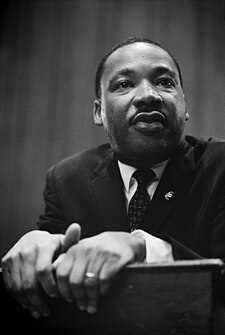
Today is a national holiday observing the birth of the American civil rights leader, Martin Luther King, Jr. His story is well-known but as it slips further into the past we are less likely to recall the deeper and personal impact he had on American culture in his time. Much of that impact lives on in King's words written and spoken eloquently from the mind as well as the heart. In his Powerline post first published on this day in 2005, Scott Johnson captured King's essence so well with his comments inserted between the paragraphs of King's "Letter from Birmingham Jail" and the speech he delivered in Memphis the day before his assassination.


MLK at a press conference in 1964


Here are more words and images of King at his national memorial on the west shore of the Tidal Basin in Washington, D.C.


hotos and Illustrations:
News conference photo; Library of Congress
All others from National Park Service, Martin Luther King, Jr. Memorial webpage


Sunday, June 29, 2025

Lena Horne: An American Legend


In the years around the turn of the century I was a member of the planning and design team for the newly established Tuskegee Airmen National Historic Site in Alabama. Fundraising was a big part of our mission and we asked a large core group of airmen who they would like to see as a national spokesman for the effort. To a man, the response was, "Lena Horne!" who made a number of visits to their two Tuskegee airfields during World War II. They adored her. She was beautiful, had a sultry voice, the perfect figure for a World War II pinup, and a highly successful musical career on stage and screen. She was also strong-willed and, at times, defiant, both characteristics that served her well in the American civil rights movement following the war. No wonder she appealed to them.


Horne publicity photo from 1964, NBC Bell Telephone Hour


Who was this international star and favorite pinup? Lena Horne was born on this day in Brooklyn in 1917. Those familiar with the singer will always remember her remarkable talent as a legendary performer with a sparkling personality and a beautiful smile, In her almost seventy years in entertainment she worked the big band and cabaret circuits, movies, Broadway, and television. She became politically active in the fight for civil rights following World War II, a decision that placed her on the federal entertainment blacklist for over a decade. Readers can learn more details about Horne's life and career in a New York Times obituary published following her death in May 2010.


Horne at Tuskegee Institute banquet, Tuskegee, Alabama, during World War II


Due to her age and disabilities, Horne was unable to take on the role the Tuskegee Airmen so enthusiastically desired but fundraising commenced in a different direction and eventually contributed to construction and interpretation at the park. Her image and the stories of her visits are embedded in those exhibits.

I remember Horne well from her frequent television performances and recordings beginning in the 1950's. She's always been a personal favorite among pop and jazz singers and the stories of her association with the Tuskegee Airmen tells me she was one very special lady.

Here she is performing her signature song, Stormy Weather, from the 1943 film of the same name.


And here is a fine synopsis of the life and times of Horne prepared for a segment of the PBS News Hour in 2010.


Sources

Photos and Illustrations:
public domain photograph, NBC Television, Wikipedia.org
banquet photo, Noel Parrish Collection, Manuscript Division, Library of Congress, Washington

Thursday, June 19, 2025

Juneteenth 2025


Juneteenth? So, what is the new holiday about? If you are an American with African ancestry dating to the Civil War era you have known about Juneteenth from very early childhood; otherwise, the term may be vaguely familiar or perhaps even new. I think of Juneteenth as an ingredient in our national experience that is just now blending in the melting pot concept we learned about in elementary school. We're going to hear much more about the day as we should. This description from the Library of Virginia is a good place to start:


[Juneteenth] has grown into a popular event across the country to commemorate emancipation from slavery and celebrate African American culture. Juneteenth refers to June 19, the date in 1865 when the Union Army arrived in Galveston and announced that the Civil War was over and that slaves were free under the Emancipation Proclamation. Although the proclamation had become official more than two years earlier on January 1, 1863, freedmen in Texas adopted June 19th, later known colloquially as Juneteenth, as the date they celebrated emancipation. Juneteenth celebrations continued into the 20th century, and survived a period of declining participation because of the Great Depression and World War II. In the 1950s and 1960s Juneteenth celebrations witnessed a revival as they became catalysts for publicizing civil rights issues of the day. In 1980 the Texas state legislature established June 19 as a state holiday.


Emancipation Thomas Nast, American, 1865


Several significant days have competed to honor the subject including:

September 22: the day Lincoln issued his preliminary Emancipation Proclamation Order in 1862;

January 1: the day it took effect in 1863;

January 31: the date the 13th Amendment passed Congress in 1865, officially abolishing the institution of slavery, and;

December 6: the day the 13th Amendment was ratified in 1865.


The persistence of the celebration in Texas on June 19 embedded the celebration in the social fiber of former slaves and their families who carried it with them in their migrations to all corners of the nation and to urban areas in particular. Growing wealth among black communities in the 20th century enabled them to hold lengthier and more elaborate celebrations.

Despite a near-century of prejudice and racism, both de jure and de facto, Juneteenth survived across the nation. It was revitalized nationally by the assassination of Martin Luther King Jr. (April 4, 1968), in combination with his Poor People's March on Washington (planned for May 12 to June 24, and its early conclusion with the Solidarity March on June 19.

We extend our best wishes for a joyous day to all those celebrating Juneteenth. And it's the perfect time for all of us to "honor the countless contributions made by African Americans to our Nation and pledge to support America’s promise as the land of the free."

Visit Juneteenth to learn more about story and meaning of our newest national holiday.


Sources:

Photos and Illustrations:
Library of Congress at loc.gov

Text:
virginiamemory.com
loc.gov
wikipedia.com
pbs.org, The African-Americans: Many Rivers to Cross
"honor the countless" quote, whitehouse.gov

Sunday, May 4, 2025

Kent State 1970: American Killing Field


John Filo took this photo - a Pulitzer Prize winner - of Mary Ann Vecchio screaming over the body of Kent State University student, Jeffrey Miller, murdered by National Guard troops during an anti-war protest on campus. The event we know as the Kent State University massacre became a landmark in American history. The date was May 4, 1970.


That day four unarmed students were killed and nine others injured by members of the Ohio National Guard. Years of conflict over the nation's role in the Vietnam War already had millions of Americans on edge. In seconds, 67 shots fired into a crowd of defenseless students marked the beginning of both the end of an already very unpopular war and a controversial president already well-known as "Tricky Dick" Nixon.

For three days prior to the massacre Kent State had been hit with violent demonstrations threatening both the campus and downtown commercial district. The Ohio National Guard had been on scene by the evening of May 2. From a city firehouse, Governor James Rhodes fueled the conflict by referring to the protesters as "brown shirts...the communist element... night riders... and the vigilantes." Days earlier President Richard Nixon referred to some campus protesters as "bums."

May 4 began with university officials attempting to ban a campus protest that had been planned days earlier. The result was a loose gathering of around 2000 persons met by guardsmen armed with tear gas and fixed bayonets. For reasons undetermined shots were fired into the unarmed crowd. The average distance of those killed was 345 feet from the guardsmen. The event incited a strike involving millions of students across the nation, forced the closing of hundreds of universities and colleges, and marked a turning point in national opinion among many who had supported American involvement in Vietnam, an ever escalating action that began in 1959.

On May 18, Crosby, Stills, Nash and Young, one of the nation's most popular bands, released the song, Ohio, as an expression of the anger and frustration as well as a call to action among young Americans over both the war and the murders.


A week after Kent State, police killed a student and a passerby at a demonstration at Jackson State College in Mississippi. An unquestionable sense of rebellion began to grip the nation. The Nixon administration was well aware of the situation and took steps to mitigate the danger and political erosion. One of those steps was the creation of the President's Commission on Campus Unrest- the Scranton Commission - in June 1970. The commission was tasked with reviewing the incident. After three months of work the commission concluded:

Even if the guardsmen faced danger, it was not a danger that called for lethal force. The 61 shots by 28 guardsmen certainly cannot be justified. Apparently, no order to fire was given, and there was inadequate fire control discipline on Blanket Hill. The Kent State tragedy must mark the last time that, as a matter of course, loaded rifles are issued to guardsmen confronting student demonstrators.

John Filo took this photo - a Pulitzer Prize winner - of Mary Ann Vecchio screaming over the body of Kent State University student, Jeffrey Miller, murdered by National Guard troops during an anti-war protest on campus. The event we know as the Kent State University massacre became a landmark in American history. The date was May 4, 1970.


That day four unarmed students were killed and nine others injured by members of the Ohio National Guard. Years of conflict over the nation's role in the Vietnam War already had millions of Americans on edge. In seconds, 67 shots fired into a crowd of defenseless students marked the beginning of both the end of an already very unpopular war and a controversial president already well-known as "Tricky Dick" Nixon.

For three days prior to the massacre Kent State had been hit with violent demonstrations threatening both the campus and downtown commercial district. The Ohio National Guard had been on scene by the evening of May 2. From a city firehouse, Governor James Rhodes fueled the conflict by referring to the protesters as "brown shirts...the communist element... night riders... and the vigilantes." Days earlier President Richard Nixon referred to some campus protesters as "bums."

May 4 began with university officials attempting to ban a campus protest that had been planned days earlier. The result was a loose gathering of around 2000 persons met by guardsmen armed with tear gas and fixed bayonets. For reasons undetermined shots were fired into the unarmed crowd. The average distance of those killed was 345 feet from the guardsmen. The event incited a strike involving millions of students across the nation, forced the closing of hundreds of universities and colleges, and marked a turning point in national opinion among many who had supported American involvement in Vietnam, an ever escalating action that began in 1959.

On May 18, Crosby, Stills, Nash and Young, one of the nation's most popular bands, released the song, Ohio, as an expression of the anger and frustration as well as a call to action among young Americans over both the war and the murders.


A week after Kent State, police killed a student and a passerby at a demonstration at Jackson State College in Mississippi. An unquestionable sense of rebellion began to grip the nation. The Nixon administration was well aware of the situation and took steps to mitigate the danger and political erosion. One of those steps was the creation of the President's Commission on Campus Unrest- the Scranton Commission - in June 1970. The commission was tasked with reviewing the incident. After three months of work the commission concluded:

Even if the guardsmen faced danger, it was not a danger that called for lethal force. The 61 shots by 28 guardsmen certainly cannot be justified. Apparently, no order to fire was given, and there was inadequate fire control discipline on Blanket Hill. The Kent State tragedy must mark the last time that, as a matter of course, loaded rifles are issued to guardsmen confronting student demonstrators.

Location map, Scranton Commission report


Over time the event has been remembered in several way including the designation of the seventeen acre site as a National Historic Landmark in 2016. Kent State University also commemorates the event through its May 4 Visitor Center.


Friday, April 4, 2025

Martin Luther King Jr.: Lest We Forget


Each morning after I contemplate the world outside the window wall by my desk my focus shifts to  reviewing Internet news sources. Much like last year it was unsettling on this day to find little more than passing mention of the most significant event in our national history to occur on April 4. That event was the assassination of Martin Luther King Jr. in 1968.


American society was already divided over our involvement in the Vietnam War. King's assassination, and that of Robert Kennedy two months later, widened that divide and pushed domestic instability on several fronts to unheard of levels in our lifetime. Much of the anger, distrust, and uncertainty rising out of that era has been simmering ever since. As a people we pay a huge price for focusing on what divides us rather than on what unites us. The erosion of political discourse into hatred and violence over the past five years is a daily reminder of that cost. 

I doubt our Founding Fathers ever expected the American experience they created to be an easy one to maintain. Furthermore, I doubt they expected it to evolve outside the freedoms they enshrined in the rule of law. Much of what King did, much of what he said about equality and peaceful change operated within that context. Although there is much debate on whether or not he would have maintained that posture had he lived, his legacy lives on to help us perfect our union. We should take the time to stop talking and listen. 

More about this day, the man, and his legacy can be found at the King Center website and that of the Martin Luther King National Historical Park.


Sources

Photos and Illustrations:
Public domain photo,  Nobel Foundation (http://nobelprize.org/) and Wikimedia Commons

Thursday, February 27, 2025

Marian Anderson: Powerful Voice, Powerful Message


Today is the birthday of the American singer, Marian Anderson. When she passed away in 1993 at the age of 96 the world lost one of its finest voices of the 20th century. She swept to international fame in 1939 with a public performance at the Lincoln Memorial in Washington. 


The Daughters of the American Revolution (DAR) had denied her the opportunity to perform in their venue, Constitution Hall, because she was black. The decision didn't sit well with First Lady Eleanor Roosevelt who sat on the national board of directors of the DAR. Mrs.Roosevelt intervened and helped arrange one of the iconic events of our time.


Portrait of Marian Anderson, 1940

Here is a documentary, Portrait of Marian Anderson, produced for the Greater Washington Telecommunications Association and first aired on public television on May 8, 1991. I normally don't post lengthy audiovisuals but this one affords viewers a flexible opportunity to learn about her life, listen to her singing, and hear her personal observations on an extraordinary life that included seven decades on the stage.


Sources

Photos and Illustrations:
1939 concert, public domain photo by U.S. Information Agency, National Archives and Records Administration, Washington, D.C.
Anderson portrait, Carl Van Vechten Collection, Library of Congress

Text:
Title quote, Marian Anderson 

Thursday, July 11, 2024

Atticus, Scout, Jem, and Dill: Loss Of Innocence In Maycomb, Alabama


On this day in 1960 the novel, To Kill A Mockingbird, made its debut across the country. The book was an instant success and the author, Harper Lee, spent the rest of her life - she passed away in 2016 - seeking anonimity in her home town of  Monroeville, Alabama. I doubt the place has been the same without her. She spent her entire life there living a rather reclusive existence with the help of locals who spent a half century sending curious fans everywhere but to Miss Nelle's place.
Between 1960 and 1964 she published a few essays and participated in interviews then quietly "retired" until the publication of her second novel in 2015.

We can only imagine how many millions of American high school students have read To Kill A Mockingbird. I graduated from high school in the mid-60's and don't recall if the book was required reading; however, it did make the list in college. In fact, I still have that paperback, scuffed, tattered, dog-eared, and stained after several readings by me and my children.

In the face of political correctness and wokeism, Mockingbird has recently come under attack for its language (the N-word and other slurs) and subject (rape) as well as its portrayal of oppression and paternalism. Today, movements to ban the book from schools and libraries have resulted in only one outright banning but the controversy has unfortunately rendered the book untouchable as a learning tool in middle and high schools across the nation.


My copy - scuffed, tattered, dog-eared, and stained


For more on the book and it's impact on American culture here is an article in The Huffington Post featuring four defenses of this enduring work. And here is a link to a more critical review by Allen Barra from The Wall Street Journal. Barra's observations are brief and well worth reading. For a fine summation of the life of the author, here is her obituary by William Grimes that appeared in The New York Times, February 19, 2016.


Sunday, June 30, 2024

Lena Horn: Entertainment And Activism At Its Best


In the years around the turn of the century I was a member of the planning and design team for the newly established Tuskegee Airmen National Historic Site in Alabama. Fundraising was a big part of our mission and we asked a large core group of airmen who they would like to see as a national spokesman for the effort. To a man, the response was, "Lena Horne!" who made a number of visits to their two Tuskegee airfields during World War II. They adored her. She was beautiful, had a sultry voice, the perfect figure for a World War II pinup, and a highly successful musical career on stage and screen. She was also strong-willed and, at times, defiant, both characteristics that served her well in the American civil rights movement following the war. No wonder she appealed to them.


Horne publicity photo from 1964, NBC Bell Telephone Hour


Who was this international star and favorite pinup? Lena Horne was born on this day in Brooklyn in 1917. Those familiar with the singer will always remember her remarkable talent as a legendary performer with a sparkling personality and a beautiful smile, In her almost seventy years in entertainment she worked the big band and cabaret circuits, movies, Broadway, and television. She became politically active in the fight for civil rights following World War II, a decision that placed her on the federal entertainment blacklist for over a decade. Readers can learn more details about Horne's life and career in a New York Times obituary published following her death in May 2010.


Horne at Tuskegee Institute banquet, Tuskegee, Alabama, during World War II


Due to her age and disabilities, Horne was unable to take on the role the Tuskegee Airmen so enthusiastically desired but fundraising commenced in a different direction and eventually contributed to construction and interpretation at the park. Her image and the stories of her visits are embedded in those exhibits.

I remember Horne well from her frequent television performances and recordings beginning in the 1950's. She's always been a personal favorite among pop and jazz singers and the stories of her association with the Tuskegee Airmen tells me she was one very special lady.

Here she is performing her signature song, Stormy Weather, from the 1943 film of the same name.


And here is a fine synopsis of the life and times of Horne prepared for a segment of the PBS News Hour in 2010.


Sources

Photos and Illustrations:
public domain photograph, NBC Television, Wikipedia.org
banquet photo, Noel Parrish Collection, Manuscript Division, Library of Congress, Washington

Wednesday, June 19, 2024

Juneteenth 2024


Juneteenth? So, what is the new holiday about? If you are an American with African ancestry dating to the Civil War era you have known about Juneteenth from very early childhood; otherwise, the term may be vaguely familiar or perhaps even new. I think of Juneteenth as an ingredient in our national experience that is just now blending in the melting pot concept we learned about in elementary school. We're going to hear much more about the day as we should. This description from the Library of Virginia is a good place to start:

[Juneteenth] has grown into a popular event across the country to commemorate emancipation from slavery and celebrate African American culture. Juneteenth refers to June 19, the date in 1865 when the Union Army arrived in Galveston and announced that the Civil War was over and that slaves were free under the Emancipation Proclamation. Although the proclamation had become official more than two years earlier on January 1, 1863, freedmen in Texas adopted June 19th, later known colloquially as Juneteenth, as the date they celebrated emancipation. Juneteenth celebrations continued into the 20th century, and survived a period of declining participation because of the Great Depression and World War II. In the 1950s and 1960s Juneteenth celebrations witnessed a revival as they became catalysts for publicizing civil rights issues of the day. In 1980 the Texas state legislature established June 19 as a state holiday.


Emancipation Thomas Nast, American, 1865


Several significant days have competed to honor the subject including:

September 22: the day Lincoln issued his preliminary Emancipation Proclamation Order in 1862;

January 1: the day it took effect in 1863;

January 31: the date the 13th Amendment passed Congress in 1865, officially abolishing the institution of slavery, and;

December 6: the day the 13th Amendment was ratified in 1865.


The persistence of the celebration in Texas on June 19 embedded the celebration in the social fiber of former slaves and their families who carried it with them in their migrations to all corners of the nation and to urban areas in particular. Growing wealth among black communities in the 20th century enabled them to hold lengthier and more elaborate celebrations.

Despite a near-century of prejudice and racism, both de jure and de facto, Juneteenth survived across the nation. It was revitalized nationally by the assassination of Martin Luther King Jr. (April 4, 1968), in combination with his Poor People's March on Washington (planned for May 12 to June 24, and its early conclusion with the Solidarity March on June 19.

We extend our best wishes for a joyous day to all those celebrating Juneteenth. And it's the perfect time for all of us to "honor the countless contributions made by African Americans to our Nation and pledge to support America’s promise as the land of the free."

Visit Juneteenth to learn more about story and meaning of our newest national holiday.


Sources:

Photos and Illustrations:
Library of Congress at loc.gov

Text:
virginiamemory.com
loc.gov
wikipedia.com
pbs.org, The African-Americans: Many Rivers to Cross
"honor the countless" quote, whitehouse.gov

Saturday, May 4, 2024

The Day Kent State University Became A Killing Field


John Filo took this photo - a Pulitzer Prize winner - of Mary Ann Vecchio screaming over the body of Kent State University student, Jeffrey Miller, murdered by National Guard troops during an anti-war protest on campus. The event we know as the Kent State University massacre became a landmark in American history. The date was May 4, 1970.


That day four unarmed students were killed and nine others injured by members of the Ohio National Guard. Years of conflict over the nation's role in the Vietnam War already had millions of Americans on edge. In seconds, 67 shots fired into a crowd of defenseless students marked the beginning of both the end of an already very unpopular war and a controversial president already well-known as "Tricky Dick" Nixon.

For three days prior to the massacre Kent State had been hit with violent demonstrations threatening both the campus and downtown commercial district. The Ohio National Guard had been on scene by the evening of May 2. From a city firehouse, Governor James Rhodes fueled the conflict by referring to the protesters as "brown shirts...the communist element... night riders... and the vigilantes." Days earlier President Richard Nixon referred to some campus protesters as "bums."

May 4 began with university officials attempting to ban a campus protest that had been planned days earlier. The result was a loose gathering of around 2000 persons met by guardsmen armed with tear gas and fixed bayonets. For reasons undetermined shots were fired into the unarmed crowd. The average distance of those killed was 345 feet from the guardsmen. The event incited a strike involving millions of students across the nation, forced the closing of hundreds of universities and colleges, and marked a turning point in national opinion among many who had supported American involvement in Vietnam, an ever escalating action that began in 1959.

On May 18, Crosby, Stills, Nash and Young, one of the nation's most popular bands, released the song, Ohio, as an expression of the anger and frustration as well as a call to action among young Americans over both the war and the murders.


A week after Kent State, police killed a student and a passerby at a demonstration at Jackson State College in Mississippi. An unquestionable sense of rebellion began to grip the nation. The Nixon administration was well aware of the situation and took steps to mitigate the danger and political erosion. One of those steps was the creation of the President's Commission on Campus Unrest- the Scranton Commission - in June 1970. The commission was tasked with reviewing the incident. After three months of work the commission concluded:

Even if the guardsmen faced danger, it was not a danger that called for lethal force. The 61 shots by 28 guardsmen certainly cannot be justified. Apparently, no order to fire was given, and there was inadequate fire control discipline on Blanket Hill. The Kent State tragedy must mark the last time that, as a matter of course, loaded rifles are issued to guardsmen confronting student demonstrators.

Location map, Scranton Commission report


Over time the event has been remembered in several way including the designation of the seventeen acre site as a National Historic Landmark in 2016. Kent State University also commemorates the event through its May 4 Visitor Center.


Thursday, April 4, 2024

A King Struck Down By Hate


Each morning after I contemplate the world outside the window wall by my desk my focus shifts to reviewing Internet news sources for a hour or so. Again this year it was unsettling but not unexpected to find little more than passing mention one of the most significant events in our national history. That event was the assassination of Martin Luther King, Jr. in 1968.
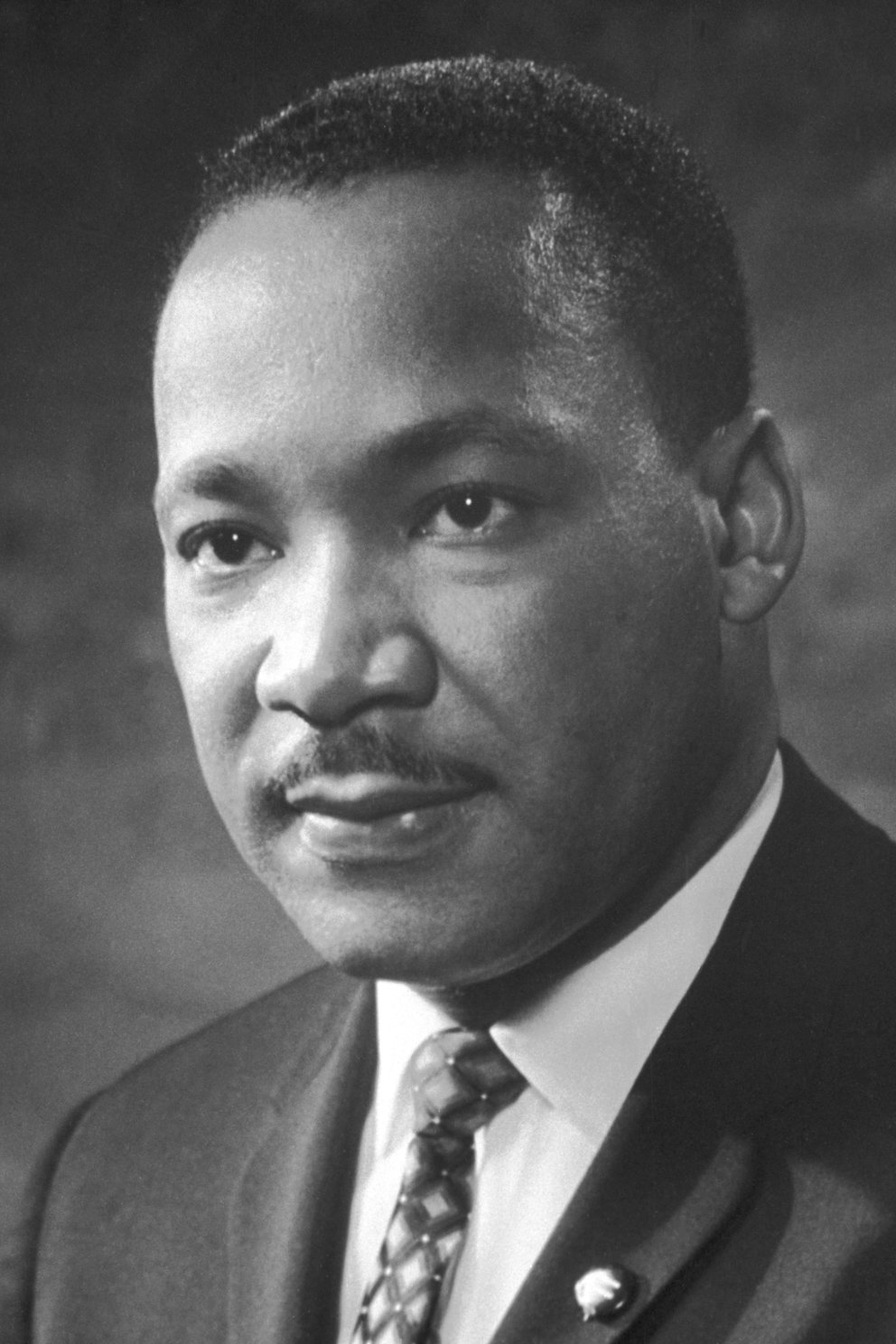


That year American society was already divided over our involvement in the Vietnam War. King's assassination, and that of Robert Kennedy two months later, widened that divide and pushed domestic instability on several fronts to unheard of levels in our lifetime. Much of the anger, distrust, and uncertainty rising out of that era has been simmering ever since. As a people we pay a huge price for focusing on what divides us rather than on what unites us. The erosion of political discourse since 2000 is a daily reminder of that cost.

Today the erosion accelerates when a zealous, hate-filled prosecutor indicts a former president with a felony crime that ordinarily would be a misdeanor offense for virtually all other Americans. The leftist mob cheers this indictment. At the same time it ignores the precedent it sets and the national consequences sure to follow when the opposition party assumes executive power and a legislative majority, both likely near-term events.

I doubt our Founding Fathers ever expected the American experience they created to be an easy one to maintain. We're certainly proving that today. Furthermore, I doubt they expected it to evolve outside the freedoms they enshrined in a republic and its rule by law. Much of what King did, much of what he said about equality and peaceful change, operated within that context. Although there is much debate on whether or not he would have maintained that posture had he lived, his legacy lives on to help us perfect our union. We should take the time to stop talking and listen before our unique experiment enboldened by the Declaration of Independence and the Constitution can no longer be sustained. We can only imagine how pleased King would be were we to focus on reconciliation in the pursuit of freedom, equality, and justice.

More about this day, the man, and his legacy can be found at the Lorraine Motel/National Civil Rights Museum website, the King Center website, and that of the Martin Luther King National Historical Park.


Sources

Photos and Illustrations:
Public domain photo, Nobel Foundation (http://nobelprize.org/) and Wikimedia Commons

Monday, March 18, 2024

Nat King Cole: A Leading Pioneer In 20th Century American Music


The inimitable American jazz pianist and singer, Nat King Cole, was born March 17, 1919, in Birmingham, Alabama. He spent most of his childhood in Chicago where he became a successful club performer in his early teens. Like many promising performers, Cole relocated to Los Angeles and its booming film and recording industry. His newly formed King Cole Trio met with continued success in clubs throughout southern California. Savannah's favorite son, the singer-songwriter, Johnny Mercer, is credited with recognizing Cole's talent and potential in the entertainment industry. In 1943 Mercer signed Cole to record for Capitol Records a recording company founded by Mercer, Buddy DeSylva, and Glenn Wallichs the previous year. Over a five month period beginning in July 1943 Mercer produced five Nat King Cole Trio recordings. They were superb examples of jazz and popular music fusion that appealed to a broad American market. The recordings sold in the millions, placed Cole in the national spotlight, and ensured huge success for Capitol Records. The songs were: Tea For Two, Body and Soul, Straighten Up and Fly Right, Sweet Lorraine, and Embraceable You. All of them were embedded in American music history and remain popular today. Here is a sample of that history in sound from the trio before 1955:


Cole developed a close friendship with Mercer as well as a business relationship with Capitol Records that lasted for the rest of his life. What a pleasure it is to watch these two extraordinary artists enjoying themselves in a fun performance on Cole's NBC television show from the 1950s:


Cole's success brought wealth to Capitol Records, made him an international star, enriched American popular music music, and shaped the careers of scores of singers for decades. His death at 45 left a world shocked and saddened but the recording have kept his talent very much alive almost sixty years after his passing.


Sources

Photos and Illustration:
Cole at the piano, June 1947, William Gottleib Photo Collection, Library of Congress, Washington, D.C.

Text:
Glenn T. Eskew, Johnny Mercer: Southern Songwriter for the World, Athens, Georgia: University of Georgia Press, 2013.

Tuesday, July 11, 2023

"...But Remember It's A Sin To Kill A Mockingbird."


Today marks the 63rd anniversary of the publication of To Kill A Mockingbird. The author, Harper Lee, passed away seven years ago. I doubt that her hometown, Monroeville, Alabama, has been the same without her. She spent her entire life there living a rather reclusive existence with the help of locals who spent a half century sending curious fans everywhere but to Miss Nelle's place. Between 1960 and 1964 she published a few essays and participated in interviews then quietly "retired" until the publication of her second novel in 2015.

We can only imagine how many millions of American high school students have read To Kill A Mockingbird. I graduated from high school in the mid-60's and don't recall if the book was required reading; however, it did make the list in college. In fact, I still have that paperback, scuffed, tattered, dog-eared, and stained after several readings by me and my children.


Scuffed, tattered, dog-eared, and stained


In the face of political correctness and wokeism, Mockingbird has recently come under attack for its language
 (the N-word and other slurs) and subject (rape) as well as its portrayal of oppression and paternalism. Today, movements to ban the book from schools and libraries have resulted in only one outright banning but the controversy has unfortunately rendered the book untouchable as a learning tool in middle and high schools across the nation.

For a fine summation of the life of the author, here is her obituary by William Grimes which appeared in The New York Times on February 19, 2016.


Sources

Text:
title, famous quote from the book
 

Monday, June 19, 2023

Juneteenth 2023


My thanks to the Biden administration for making Juneteenth our newest national holiday. I find it hard to believe the nation waited so long to see this day. I find it even harder to believe that President Donald Trump, standing with the Grand Old Party of Abraham Lincoln, failed to declare a one-time federal holiday for Juneteenth in 2020 during a critical bid for reelection. It was a grave tactical error. He chose instead to announce his support for such a designation in the last days of September. Instead of being the topic at countless family gatherings and other celebrations on June 19 itself, the message was lost in the 24/7 flurry of rhetoric during a bitter campaign.

So, what is the new holiday about? If you are an American with African ancestry dating to the Civil War era you have known about Juneteenth from very early childhood; otherwise, the term may be vaguely familiar or perhaps even new. I think of Juneteenth as an ingredient in our national experience that is just now blending in the melting pot concept we learned about in elementary school. We're going to hear much more about the day as we should. This description from the Library of Virginia is a good place to start:

[Juneteenth] has grown into a popular event across the country to commemorate emancipation from slavery and celebrate African American culture. Juneteenth refers to June 19, the date in 1865 when the Union Army arrived in Galveston and announced that the Civil War was over and that slaves were free under the Emancipation Proclamation. Although the proclamation had become official more than two years earlier on January 1, 1863, freedmen in Texas adopted June 19th, later known colloquially as Juneteenth, as the date they celebrated emancipation. Juneteenth celebrations continued into the 20th century, and survived a period of declining participation because of the Great Depression and World War II. In the 1950s and 1960s Juneteenth celebrations witnessed a revival as they became catalysts for publicizing civil rights issues of the day. In 1980 the Texas state legislature established June 19 as a state holiday.


Emancipation           Thomas Nast, American, 1865


Several significant days have competed to honor the subject including:

September 22: the day Lincoln issued his preliminary Emancipation Proclamation Order in 1862;

January 1: the day it took effect in 1863;

January 31: the date the 13th Amendment passed Congress in 1865, officially abolishing the institution of slavery, and;

December 6: the day the 13th Amendment was ratified in 1865.


The persistence of the celebration in Texas on June 19 embedded the celebration in the social fiber of former slaves and their families who carried it with them in their migrations to all corners of the nation and to urban areas in particular. Growing wealth among black communities in the 20th century enabled them to hold lengthier and more elaborate celebrations.

Despite a near-century of prejudice and racism, both de jure and de facto, Juneteenth survived across the nation. It was revitalized nationally by the assassination of Martin Luther King Jr. (April 4, 1968), in combination with his Poor People's March on Washington (planned for May 12 to June 24, and its early conclusion with the Solidarity March on June 19.

We extend our best wishes for a joyous day to all those celebrating Juneteenth. And it's the perfect time for all of us to "honor the countless contributions made by African Americans to our Nation and pledge to support America’s promise as the land of the free."

Visit Juneteenth to learn more about story and meaning of our newest national holiday.


Sources:

Photos and Illustrations:
Library of Congress at loc.gov

Text:
virginiamemory.com
loc.gov
wikipedia.com
pbs.org, The African-Americans: Many Rivers to Cross
"honor the countless" quote, whitehouse.gov


Thursday, May 4, 2023

The Day Vietman Became Tricky Dick's War


John Filo took this photo - a Pulitzer Prize winner - of Mary Ann Vecchio screaming over the body of Kent State University student, Jeffrey Miller, murdered by National Guard troops during an anti-war protest on campus. The event we know as the 
Kent State University massacre became a landmark in American history. The date was May 4, 1970. 


That day four unarmed students were killed and nine others injured by members of the Ohio National Guard. Years of conflict over the nation's role in the Vietnam War already had millions of Americans on edge. In seconds, 67 shots fired into a crowd of defenseless students marked the beginning of both the end of an already very unpopular war and a controversial president already well-known as "Tricky Dick" Nixon.

For three days prior to the massacre Kent State had been hit with violent demonstrations threatening both the campus and downtown commercial district. The Ohio National Guard had been on scene by the evening of May 2. From a city firehouse, Governor James Rhodes fueled the conflict by referring to the protesters as "brown shirts...the communist element... night riders... and the vigilantes." 
 Days earlier President Richard Nixon referred to some campus protesters as "bums."

May 4 began with university officials attempting to ban a campus protest that had been planned days earlier. The result was a loose gathering of around 2000 persons met by guardsmen armed with tear gas and fixed bayonets. For reasons undetermined shots were fired into the unarmed crowd. The average distance of those killed was 345 feet from the guardsmen. The event incited a strike involving millions of students across the nation, forced the closing of hundreds of universities and colleges, and marked a turning point in national opinion among many who had supported American involvement in Vietnam, an ever escalating action that began in 1959.

On May 18, Crosby, Stills, Nash and Young, one of the nation's most popular bands, released the song, Ohio, as an expression of the anger and frustration as well as a call to action among young Americans over both the war and the murders.


A week after Kent State, police killed a student and a passerby at a demonstration at Jackson State College in Mississippi. An unquestionable sense of rebellion began to grip the nation. The Nixon administration was well aware of the situation and took steps to mitigate the danger and political erosion. One of those steps was the creation of the President's Commission on Campus Unrest- the Scranton Commission - in June 1970. The commission was tasked with
reviewing the incident. After three months of work the commission concluded:

Even if the guardsmen faced danger, it was not a danger that called for lethal force. The 61 shots by 28 guardsmen certainly cannot be justified. Apparently, no order to fire was given, and there was inadequate fire control discipline on Blanket Hill. The Kent State tragedy must mark the last time that, as a matter of course, loaded rifles are issued to guardsmen confronting student demonstrators.

Location map, Scranton Commission report


Over time the event has been remembered in severak way including the designation of the seventeen acre site as a National Historic Landmark in 2016.  Kent State University also commemorates the event through its May 4 Visitor Center.


Sunday, April 9, 2023

Paul Robeson: A Ground-Breaking Star Lost To Activism


One of the finest natural singing talents of the last century was the American bass baritone, Paul Robeson, born April 8, 1898. Robeson had an extraordinary voice and in my opinion the finest diction of any male performer in the 20th century. He was also a scholar, athlete, actor, and a graduate of Rutgers University and Columbia Law School. You can read more about his biography here.


Paul Robeson                              Gordon Parks, 1942


By 1928 he was already known in the US and UK as a successful singer and actor on stage and film, Later that year his role in the London production of the musical, Showboat, and the song, "Ol' Man River," made him a star. In the next decade he achieved even more success as a singer and actor and broadened his concern with discrimination affecting his fellow black Americans and Africans world-wide. A 1934 visit to the Soviet Union where he met Joseph Stalin and was treated like royalty helped turn him from art to Marxist activism. Sadly for the next 25 years his role as a Soviet propagandist completely derailed his arts career. Opposition to Robeson's political stance softened by 1960 and he attempted to restore his place as a singer. Unfortunately, ill health intervened and he returned to the United States where he lived a near reclusive life until his death in 1976.

Although Robeson always denied Communist Party membership, in 1998 during the centennial celebration of his birth, Gus Hall, General Secretary of the Communist Party USA, revealed that he was indeed a secret member of the party for several decades. More telling perhaps was Robeson's Stalinist dedication. This is what he wrote in tribute on news of Stalin's death in 1953:


Today in Korea -- in Southeast Asia -- in Latin America and the West Indies, in the Middle East, in Africa, one sees tens of millions of long oppressed colonial peoples surging toward freedom. What courage -- what sacrifice -- what determination never to rest until victory!

Colonial peoples today look to the Soviet Socialist Republics. They see how under the great Stalin millions like themselves have found a new life. They see that aided and guided by the example of the Soviet Union, led by their Mao Tse-tung, a new China adds its mighty power to the true and expanding socialist way of life. They see formerly semi-colonial Eastern European nations building new People's Democracies, based upon the people's power with the people shaping their own destinies. So much of this progress stems from the magnificent leadership, theoretical and practical, given by their friend Joseph Stalin.

They have sung -- sing now and will sing his praise -- in song and story. Slava - slava - slava - Stalin, Glory to Stalin. Forever will his name be honored and beloved in all lands.

In all spheres of modern life the influence of Stalin reaches wide and deep. From his last simply written but vastly discerning and comprehensive document, back through the years, his contributions to the science of our world society remain invaluable. One reverently speaks of Marx, Engels, Lenin and Stalin - the shapers of humanity's richest present and future.

It may be difficult for some to understand how in 1934 Robeson as a scholar could be driven by the social ills of his native country into the welcoming arms of a dictatorship actively murdering millions of its own people. At least three factors were at work: the social and political devastation of World War I, a capitalist economy in depression, and in the case of the United States, an activist federal executive backed by a sympathetic national press. Had Robeson used his gifted voice rather than political ideology as the basis for his activism, I have no doubt he would have become a well-known, widely respected civil rights leader as well as a beloved American entertainer with a historic, lifetime career in opera, popular song, and jazz.

Here's why I hold that opinion:


Sources

Photos and Illustrations:
Gordon Parks, Office of War Information photo, 1942, Library of Congress, Prints and Photos Division, Farm Security Administration

Text:
wikipedia.com
Robeson, Paul (1978). Sheldon, Philip; Foner, Henry, eds. Paul Robeson Speaks: Writings, Speeches, and Interviews, A Centennial Celebration, Citadel Press


Tuesday, April 4, 2023

A Fallen Leader Remembered


Every morning after I contemplate the world outside the window wall by my desk my focus shifts to reviewing Internet news sources for a hour or longer if warranted. It was unsettling but not unexpected again today to find little more than passing mention of the most significant event in our national history to occur on April 4. That event was the assassination of Martin Luther King, Jr. in 1968.


That year American society was already divided over our involvement in the Vietnam War. King's assassination, and that of Robert Kennedy two months later, widened that divide and pushed domestic instability on several fronts to unheard of levels in our lifetime. Much of the anger, distrust, and uncertainty rising out of that era has been simmering ever since. As a people we pay a huge price for focusing on what divides us rather than on what unites us. The erosion of political discourse over the past decde is a daily reminder of that cost. 

Today the erosion accelerates when a zealous, hate-filled prosecutor indicts a former president with a felony crime that ordinarily would be a misdeanor offense for virtually all other Americans. The leftist mob cheers this indictment. At the same time it ignores the precedent it sets and the national consequences sure to follow when the opposition party assumes executive power and a legislative majority, both likely near-term events.

I doubt our Founding Fathers ever expected the American experience they created to be an easy one to maintain. We're certainly proving that today. Furthermore, I doubt they expected it to evolve outside the freedoms they enshrined in the rule of law. Much of what King did, much of what he said about equality and peaceful change, operated within that context. Although there is much debate on whether or not he would have maintained that posture had he lived, his legacy lives on to help us perfect our union. We should take the time to stop talking and listen before our unique experiment enboldened by the Declaration of Independence and the Constitution can no longer be sustained. We can only imagine how pleased King would be were we to focus on reconciliation in the pursuit of freedom, equality, and justice.

More about this day, the man, and his legacy can be found at the King Center website and that of the Martin Luther King National Historical Park.


Sources

Photos and Illustrations:
Public domain photo, Nobel Foundation (http://nobelprize.org/) and Wikimedia Commons

Saturday, March 18, 2023

Nat King Cole: Simply Unforgettable


The inimitable American jazz pianist and singer, Nat King Cole, was born March 17,  1919, in Birmingham, Alabama. He spent most of his childhood in Chicago where he became a successful club performer in his early teens. Like many promising performers, Cole relocated to Los Angeles and its booming film and recording industry. His newly formed King Cole Trio met with continued success in clubs throughout southern California. Savannah's favorite son, the singer-songwriter, Johnny Mercer, is credited with recognizing Cole's talent and potential in the entertainment in industry. In 1943 Mercer signed Cole to record for Capitol Records a recording company founded by Mercer, Buddy DeSylva, and Glenn Wallichs the previous year. Over a five month period beginning in July 1943 Mercer produced five Nat King Cole Trio recordings. They were superb examples of jazz and popular music fusion that appealed to a broad American market. The recording sold in the millions, placed Cole in the national spotlight, and ensured huge success for Capitol Records. The songs were: Tea For Two, Body and Soul, Straighten Up and Fly Right, Sweet Lorraine, and Embraceable You. All of them were embedded in American music history and remain popular today. Here is a sample of that history in sound from the trio before 1955:


Cole developed a close friendship with Mercer as well as a business relationship with Capitol Records that lasted for the rest of his life. What a pleasure it is to watch these two extraordinary artists enjoying themselves in a fun performance on Cole's NBC television show from the 1950s:


Cole's success brought wealth to Capitol Records, made him an international star, enriched American popular music music, and shaped the careers of scores of singers for decades. His death at 45 left a world shocked and saddened but the recording have kept his talent very much alive almost sixty years after his passing.


Sources

Photos and Illustration:
Cole at the piano, June 1947, William Gottleib Photo Collection, Library of Congress, Washington, D.C.

Text:
Glenn T. Eskew, Johnny Mercer: Southern Songwriter for the World, Athens, Georgia: University of Georgia Press, 2013.


ShareThis