Showing posts with label popular culture. Show all posts

Monday, January 5, 2026

The Twelfth Day Of Christmas And The End Of Christmastide 2025-26


Today is the twelfth and final day of Christmastide or the Twelve Days of Christmas. This day is important among Christians who maintain liturgical traditions: first, it marks the end of a 1500 year-old festival celebrating the birth of Christ, and second, it is the eve of Epiphany. It is also the beginning of the carnival season ending with Mardi Gras and the beginning of Lent. Those who are reluctant to bid Christmas farewell can take heart knowing that some traditions of Christmastide extend through February 2 or Candlemas, the Feast of the Presentation of Jesus at the Temple. Candlemas occurs on the 40th day of and the end of the liturgical Christmas-Epiphany season. In my home I'll be removing decorations day by day until February 2 when our simple manger scene stands alone in the library awaiting Christmas future.


For some the Twelve Days of Christmas will end with elaborate costumes, masks, feasting, music, dancing, and theater at Twelfth Night festivities where misrule is the only rule. They are indeed topsy-turvy events. Only the Surveyor of Ceremonies will appear without a mask. He will direct the company through a series of games and other activities beginning with the distribution of the Twelfth Cakes. When all the party goers have arrived, each will select a small festival cake or cake slice. Three of those cakes contain a hidden bean or token designating them as the king cake, queen cake and fool cake. The lucky holders of the royal cakes oversee the evening's activities before returning to their normal lives, most likely "below the salt."


Twelfth Night (The King Drinks) David Teniers, ca 1634


These Twelfth Night traditions have been part of western culture for over a thousand years. Some traditions carry over the night into Epiphany, January 6. This is the case in New Orleans where Twelfth Night parties have been popular for centuries due in part to their role as opening events of the Carnival season.


Twelfth Night festivities in New Orleans in 1884


We trust that you have experienced a wonder-filled Christmas. May you live throughout this new year in the spirit of Twelfth Night, finding joy and happiness in what often seems a disordered world. In the words of William Shakespeare, who had a bit to say about this evening in Twelfth Night, (Act II, Scene 5):

Be not afraid of greatness: some are born great, some achieve greatness, and some have greatness thrust upon them.
Great or common - What you will!

And speaking of greatness here is music for the season, Johann Sebastian Bach's Magnificat in D Major. The composition was originally written in Leipzig for Christmas 1723 and contained four seasonal hymns. In 1730 the composer revised the work by dropping the four seasonal hymns and changing the key to D Major. The second version is the one most often head today. An English translation in parallel format is available here. This 2000 performance is by the Arnold Shoenberg Choir and the pioneer period instrument ensemble, Concentus Musicus Vienna. Conductor Nikolaus Harnoncourt and his wife founded the ensemble in 1953. 


Hope you're enjoying a serving of Chatham Artillery Punch tonight.


Monday, August 4, 2025

Louis Armstrong: America's Jazzman


If there was one personality to play music as a joyful and universal language in the last century it was Louis Armstrong. He once wrote that "what we play is jazz." He indeed helped make a wonderful world during his near six decades in jazz and popular music. He was a phenomenal jazz trumpeter, performer, writer, stage personality and all around good will ambassador who was born on this day in New Orleans in 1901. He was nicknamed, "Satchmo," short for "satchelmouth," as a child because of his prominent mouth. The moniker stayed with him as he blazed a trail of unforgettable music throughout his life. Although he passed away in 1971 his imprint remains large in popular music and jazz in particular.


Louis Armstrong                                  Adi Holzer, 2002


Here is a short video by storyteller, Mick Carlon, relating Armstrong's impact on the 20th century in a TEDx program for students.


Readers can learn more about Armstrong life and impact at the Louis Armstrong House Museum site.

And here are two pieces of the master at his trade performing Now You Has Jazz at the 1960 Newport Jazz Festival, and his signature song, What A Wonderful World:


And here is Armstrong in 1956 with one of his most beloved collaborators, Ella Fitzgerald, and the Oscar Peterson Quartet in a masterful performance of April In Paris.  To this day the album, Ella and Louis, consistently appears in lists of the top ten jazz albums of all time. 


After just a few minutes of this talent on display, I'm sure readers will agree that Armstrong indeed helped make a wonderful world for his audience. May his smile, his sound, and his goodness stay with us for a long, long time.

Saturday, July 26, 2025

Jean Shepherd: The Man Behind Ralphie And His Unforgettable Christmas


Mention "Ralphie" and "Red Ryder BB gun" in the same breath and I'd say most people could make an immediate connection with the film, A Christmas Story. On the other hand, most people probably know very little about the remarkable personality behind that story. His name is Jean Shepherd.


He was born on July 26, 1921, on Chicago's south side and raised in nearby Hammond, Indiana. After serving in World War II, Shepherd began a career in broadcasting that expanded into writing, film, and live performance. He was heard on late night radio for over twenty years - all unscripted - on New York's WOR where he entertained listeners with his humorous stories, interviews, and practical jokes. Shepherd hosted a television show for WOR as well, but he is best remembered in video narrating a number of productions based on his stories of growing up in the Midwest. Many of the scripts were so popular they later appeared in print. Here is the storyteller at his best on his traditional Christmas Eve broadcast on WOR in 1974. A Christmas Story would emerge from these broadcasts in 1983.


Psychology tells us that humorists often do not have the happiest of life stories. Shepherd was no exception. Although he surely had the talent to become a well-known national treasure, radio did not provide him coast-to-coast exposure available with the new medium of television. He was fiercely independent, a maverick, and one not to take life too seriously. I can imagine he was a threat to the ego of more than one radio executive. Furthermore, he was a "night owl" on radio, broadcasting to a dedicated but smaller audience, and in direct competition with televised local news and the likes of Johnny Carson and The Tonight Show. In fact this warm story by a fan notes that Shepherd likely was in line to take over The Tonight Show with Steve Allen's departure in 1957 but Jack Paar had the right of first refusal with the NBC network. Paar unexpectedly accepted thus denying Shepherd his big break on one of television's most popular shows. Finally, from my research, it seems Shepherd maligned his radio work when he moved into writing film for television in the '70s. Indeed, it apparently was a clean break - maybe the execs were happier without him - and he did go on to success with films, including The Phantom of the Open Hearth, The Great American Fourth of July and Other Disasters, and Ollie Hopnoodle's Haven of Bliss. Still, I think the fates denied him the opportunity to become a big television star in the 1950's and much better well-known in his lifetime.


Without question, his best known contribution to American humor is A Christmas Story, a compilation of stories and characters drawn from his earlier work. It was originally produced as a feature film in 1983 and made the transition into a television classic thanks to the persistence of Ted Turner. Almost any man born before 1950 has lived some or all of Ralphie's/Shep's childhood. Each man's path to adulthood is his own, but the markers are identical. Jean Shepherd was a genius at capturing them. And his skills as a narrator made him a natural at weaving life's common threads into humorous and entertaining listening.


". . . the soft glow of electric sex gleaming in the window."

Shepherd died 26 years ago on Sanibel Island, Florida, remembered for one film produced in 1983 when he was 62. There's much more to him than that and I hope more people come to enjoy his work. The settings now and in the future will be different but the collected experiences from childhood and adolescence remain similar and often age into fine wine. Thanks to Shepherd we can laugh at past times and enjoy the harvest.

If you want to explore more of Shepherd's work, the made-for-television film, The Phantom of the Open Hearth, is the place to start. It premiered at Christmas 1976 on public television as a humorous glimpse of Ralphie's teen angst during his high school years in the Midwest. You'll see many of the characters and storylines - yes, the leg lamp is there - that appear in A Christmas Story. These days Phantom is a cult classic among Shepherd fans. If you want to join the cult you can watch the film for free on You Tube.


Friday, June 27, 2025

Happy Birthday, Mel Brooks: He's 99 Years Young Today


When he was 14, Mel Brooks, began his career in show business as a comedian at several Catskill Mountain resorts north of New York City. After service in Germany in World War II - he dismantled booby traps and defused land mines among other duties - he returned home determined to establish a career in entertainment where he soon found himself enjoying writing more than performing. He honed that skill for several years on Sid Caesar's Show of Shows and Caesar's Hour. Around 1960 he teamed up with Carl Reiner, also a Caesar comedy writer, to develop a sketch that would make both of them famous.


Entitled "The 2000 Year-Old Man," the concept featured a comic Brooks as the old man being interviewed by Reiner as the straight man. Over fifty years the duo produced several recordings of the often ad lib sketches produced in studio as well as live on countless television programs. After this success and a move to Hollywood filmmaking wasn't far behind.

Today we wish the 2000 year-old man a very happy birthday. The performer, writer, director, producer, songwriter, and perpetually wacko comic personality is 99 years old. In his seventy year career he's brought us some of the finest comedy to grace the American stage, big screens in theaters, and the television screens in millions of our homes. And there's no end in sight either with his work in animated features and now rare television appearances. It's only a guess where his talents could emerge in the future.


Brooks in a still from Blazing Saddles, 1974


His film career began with The Producers in 1968. The rest is history, a laugh track of films including:

Blazing Saddles (1974) "Mongo only pawn...in game of life."

Young Frankenstein (1974) "Abby...Normal."

Silent Movie (1976) "Non!"

High Anxiety (1977) "Those who are tardy do not get fruit cup!"

History of the World Part I (1981) "It's good to be the king."

Spaceballs (1987) "May the schwartz be with you."

Robin Hood: Men in Tights (1993) "Actually Scarlet is my middle name. My whole name is Will Scarlet O'Hara. We're from Georgia."

Dracula: Dead and Loving It (1995) "I have been to many stakings - you have to know where to stand! You know, everything in life is location, location, location...."

The Producers (musical) 2001 "Will the dancing Hitlers please wait in the wings? We are only seeing singing Hitlers.

The Producers (film remake) 2005 "My blue blanket! Give me back my blue blanket!"

Young Frankenstein (musical) 2007 "He vas my boyfriend!"


The American Film Institute's 100 Greatest Comedies list has The Producers (1968), Blazing Saddles, and Young Frankenstein ranked at #11, #6, and #13. Here is the unforgettable three minutes and twenty seconds from the film he calls his personal favorite, the 1968 production of The Producers:


I think one reason why the 2000 year-old man is still laughing with us at 99 rests with the fact that the Mel Brooks on stage and film is most often the same man one finds in private life. How does he do it? I recall the many stories my National Park Service colleagues told of Brooks and his wife, Anne Bancroft. In the '70's and '80's they were frequent guests at Caneel Bay Resort inside Virgin Islands National Park on the island of St. John. Known for playing practical jokes on the younger park rangers and resort staff during the day, Brooks and Bancroft hosted them at after-hours gatherings where hilarity ruled. Given the public comedy we know, one can only imagine the memories to come out of the spontaneity of such an evening. The world would be a far happier place if all of us could have more evenings like that.

Today, instead of laughing at the comedy and satire Brooks gave us over the years the political correctness of the day would rather smother it and insure we never produce it again. So unfortunate. Regardless, with the passing of Carl Reiner at 98 in 2020, we're looking at Brooks as the last man standing from a remarkable era of comedy entertainment in the US. Here's wishing one of the funniest men on the planet a very happy birthday. It's my hope that we can laugh at his wacko genius for years to come. 


For more information as well as a most entertaining read this summer I recommend Brooks's memoir published in 2021. Without a doubt it will leave you smiling.


But wait, there's more. Brooks has two new projects under developement. First, there is Very Young Frankenstein, a television series influenced  by his earlier film, Young Frankenstein, in 1974. A pilot is expected soon. The second project is Spaceballs 2, a sequel to his 1987 film, Spaceballs. The film is expected to be released in 2027.


Saturday, June 14, 2025

Flag Day 2025 And The United States Army's 250th Birthday


Today is Flag Day, a day for commemorating the adoption of a design by Francis Hopkinson as the official Flag of the United States on this date in 1777. President Woodrow Wilson issued a proclamation in 1919 declaring June 14 as the official day.


Francis Hopkinson Flag, 1777


Here are some words about the Hopkinson flag from the link above:


Hopkinson is recognized as the designer of the official "first flag" of the United States. Although he sought compensation from Congress, the letter was somewhat comical. He asked for a quarter cask of wine in payment for the flag, the Great Seal, and various other contributions. Congress used the usual bureaucratic tactics of asking for an itemized bill. After some back and forth, Congress eventually refused on the pretext that Hopkinson was already paid as a public servant. The letter also mentioned that Hopkinson collaborated with others on his designs because he was one of many contributing to the Great Seal.
While there is no known Hopkinson flag in existence today, we do know from his rough sketch that it had thirteen stars and thirteen stripes. It is believed that his flag used red and white stripes and white stars on a field of blue. Because the original stars used in the Great Seal had six points, we might also assume that Hopkinson's flag intended the use of a 6-pointed star. This is bolstered by his original sketch that showed asterisks with six points.

The legend of Betsy Ross as the designer of the first flag entered into American consciousness about the time of the 1876 centennial celebrations. See Betsy Ross Flag for the full story. Today many Americans still cling to the legend that she designed the first flag with it's familiar circle of thirteen stars, At the same time most are unaware of Hopkinson's legacy.

There are any number of songs written about our national flag. Among the best of them is George M. Cohan's 1906 rouser, You're A Grand Old Rag, written in 1906 for his musical, George Washington, Jr. Here it is performed by Billy Murray, the best selling recording artist of the earthy 20th century.


That's right, you read and heard "rag" instead of "flag". Cohen wrote the song inspired by a Civil War veteran clutching a tattered US flag he referred to as a grand old rag. Although the song was an immediate success many individuals and patriotic groups were uncomfortable with "rag" referring to such a sacred symbol. Eager to please his audience, Cohan soon published a revision with new words and a new title, You're A Grand Old Flag. 

And while you admire the Grand Old Flag remember that today is the 250th birthday of the United States Army. These words from the America250 webpage say it all:

On June 14, 1775, the Second Continental Congress voted to establish the Continental Army. This action marked the creation of America’s first national military force, more than a year before the signing of the Declaration of Independence.

For 250 years, the United States Army has played a vital role in defending America. From the Revolutionary War to the present day, Americans have served selflessly–many sacrificing their lives–in defense of the country. Our service members’ courage, loyalty, and dedication have inspired generations. At the same time, Army-led innovations and breakthroughs–from radar and the internet to everyday items like wireless communications–have advanced our national security, transformed global commerce, and propelled America’s economic competitiveness.


Sources

Photos and Illustrations:
Hopkinson Flag, public domain image, Wikimedia.org
America250.org

Text:
Francis Hopkinson, entry, Wikipedia.org
"You're A Grand Old Flag," entry, Wikipedia.org


Friday, May 23, 2025

Artie Shaw: He Searched For The Perfect Sound


The music world has several significant birthdays to remember this week. One of them (May 23, 1910) belongs to  Arthur Arshawsky, the clarinetist, composer, band leader, and author better known as Artie Shaw. To say that Shaw was complex and difficult would be an understatement. He was married eight times, greatly disliked fame, and resented the conflict between creativity and the music industry so much that he virtually abandoned music in the early 1950s. Perhaps his life illustrated a never ending search for perfection by a man who could have approached it in any number of fields. When he died in December 2004 at the age of 94, he was recognized as one of the century's finest jazz clarinetists and a principal force in the development of the fusion of jazz and classical music that would become known as "Third Stream Music." Technically, I think he was at the top. This 1936 recording of him performing his composition, Interlude in B Flat, provides the evidence:


And here is Shaw with strings and woodwinds performing Alberto Dominguez's composition, Frenesi. It charted at #1 in 1940 and would remain one of Shaw's greatest hits.


He completed an autobiography in 1952 and two years later gave up a full-time commitment to the industry and turned to a vast range of interests from advanced mathematics to literature. He went on two write several novels and short stories as well as an unfinished historical fiction trilogy on the jazz era. For a more thorough examination of even more facets in the life of this restless musical genius, visit this link at Swing Music Net for his obituary and this entry for his Wikipedia biography.

Saturday, May 3, 2025

Crosby And Seeger: Two Very Different Voices In American Music History


Two iconic American entertainers share May 3 as a birthday. 


Bing Crosby 1930s.jpg
Crosby publicity photo from the 1930's

Born in 1903, Bing Crosby used his baritone voice and recording technology to develop a personal singing style that made him the nation's top entertainer for a generation beginning in the mid-1930s. Young people probably know little if anything about Crosby. He died in 1977 but I think he sits at the pinnacle of the American entertainment industry in that era - along with Bob Hope - and is well worth exploring if you enjoy popular culture. The Crosby family has authorized a comprehensive site about The Crooner if readers want more information. For a small taste of his talent, here is Crosby singing to Grace Kelly in the 1956 film, High Society:


Our second birthday celebrant is Pete Seeger, an entertainer who has been described as the most successful communist in the United States. I'll let readers discover the politics for themselves and focus instead on Seeger as singer and songwriter. 

File:PeteSeeger2.jpg
Entertaining at labor canteen opening, Washington, DC, February 1944

Seeger was born in 1919 into a musical family, took up the family's leftist politics, and made a name for himself as a "protest singer" in the 1940s. In 1950, he was a member of the folk group, The Weavers, and in the bow wave of a folk music revival in the U.S. It was short-lived, however, as the group was blacklisted in 1953 for suspected political reasons. A decade later Seeger found himself at the forefront of the 1960's folk revival embedded in antiwar activities and the Youth Revolution.  He continued singing and pursuing his social, political, and environmental activism around the world almost to the day he died at 94 in 2014. For more information and a host of links, here is his Wikipedia entry.

For a taste of Pete Seeger the performer, here he is singing lead and playing his banjo on the first recording (1949) of If I Had A Hammer, co-written with Lee Hays, also with The Weavers:


Although this video highlights Seeger, it does not do justice to the beautiful harmony The Weavers produced. Readers may want to explore the Internet for more of their recordings. Their 1981 reunion concert at Carnegie Hall is a particularly moving statement on the American music experience.


Sources

Photos and Illustrations:
commons.wikimedia.org/wiki/File:Bing_Crosby_1930s.jpg
loc.gov/pictures/resource/fsa.8d41983/

Tuesday, April 29, 2025

Duke Ellington: He Created A Sound That Influenced World Culture


Smooth, high brow, faultless, sophisticated, American. All of these words describe the music that came out of the world of Edward Kennedy "Duke" Ellington as a composer, performer, and conductor. For fifty years he defined jazz in his own way with his superbly talented jazz orchestra, surviving the onslaught of bebop, rhythm and blues, and rock and roll. His discography includes over seventy hit records out of hundreds of releases spanning seven decades. Here is perhaps his most celebrated song, credited primarily to Ellington's extraordinarily talented composer and arranger, Billy Strayhorn.


Ellington was born on this day in Washington, D. C., in 1899. He formed a band while in his teens and played the circuit in and around the nation's capital before moving to New York in 1923. There, his creative fervor and gentlemanly demeanor made him an influential force in the Harlem Renaissance. He was a star much appreciated in Europe as well as the United States by the mid '30s. His collaboration with the brilliant composer and arranger, Billy Strayhorn, later in that decade and again in the '60s enhanced his fame and helped him bridge gaps between jazz and other musical genres.


We end with a historic moment in jazz history: Duke Ellington and his orchestra at the 1956 Newport Jazz Festival. Jazz was changing from a dance band to smaller ensemble format and at the same time competing with the rise of rock and roll. Ellington decided to link two compositions with a free-wheeling sax solo. Many jazz historians agree that this was a landmark performance that not only gave the band concept renewed life but also gave jazz a new and expanded direction in sound and listener experience.


The conclusion is obvious: Ellington was an amazing force in both American and world music. 
Ellington passed away over forty years ago and with his passing the nation lost both a legendary technician at the piano and its strongest advocate for the American musical invention called jazz. Readers can learn more about this extraordinary entertainer by visit his Wikipedia page, by far the most comprehensive source of Ellington information and references on the Internet. I also recommend Terry Teachout's fine biography, Duke, published in 2015.

Friday, March 21, 2025

J. S. Bach: Sounds From Heaven


J.S. Bach statue in Leipzig, Germany


Today marks the birthday (in 1685, and for Old Style calendar sticklers, it's March 21) of one of the great three "B's" in classical music, Johann Sebastian Bach, He gave us some of the most sublime music in western culture and it would be an oversight, especially as a Lutheran, not to honor this master of the Baroque and pillar of Lutheranism. 

Here, in seventeen minutes, I think you will understand the compelling effect Bach music has on listeners. In this interpretation by Glenn Gould you'll also be able to hear the performer's notorious verbal accompaniment.


His music was largely forgotten for almost a century following his death, but had been restored by the first quarter of the 19th century. The new-found popularity of Bach was due largely to the composer-performers, Felix Mendelssohn and Ludwig van Beethoven, and the publication of many of Bach's works. 

I was introduced to the music of J.S. Bach as an infant at Mount Calvary Lutheran Church in my little hometown in the mountains of Maryland. The church already had been baptizing members of my father's family for over seventy years. In the summer of my ninth year our family moved leaving behind not only familiar places but also a church family. When I left town I took Bach's faith and music with me. 

So what makes his music so appealing? I could give you my opinion but I'm going to defer to Rick Beato, a performer, composer, producer, teacher, and music historian who has produced an outstanding fifteen minute assessmenyt of Bach and his legacy. Beato's You Tube channel has many videos on the subject. Prepare to be surprized watching your favorite musicians of the past sixty years - jazz, blues, rock, country, c;lassical, or whatever - discuss the place of Bach in the lives and careers. 


Bach's music has remained very much alive in me since leaving "home" seventy years ago. His preludes. fugues, harmonies, the shear wonder of his work, it's all in my blood, and I can't play a single note of it. Wouldn't have it any other way. I simply listen and let it flow.

It's my hope that you can take time today to listen to the videos in this post. Normally I try to avoid posting music longer than ten minutes but today will be an exception. Also, I trust if interested you'll watch the other Bach videos available on Beato's YouTube channel. You will not be disappointed.

As an aside, I highly recommend Rick Beato's YouTube channel as an outstanding source for news and general info on all kinds of music and music history. He knows the industry from all sides in addition to being an entertaining host and interviewer.


Music's ultimate end or final goal…should be for the honor of God and the recreation of the soul.

                                                        J. S. Bach - Leipzig, 1738


Sources

Photo: stlpublicradio.org, flickr/seabamirum


Wednesday, March 19, 2025

He Captured The Character Of The Vanishing West And Shaped Its Image For The World


When the Land Belonged to God                 C. M. Russell, 1914


In 2009 my wife and I made a detailed journey along the Missouri River following the route of the Lewis and Clark Expedition (1804-06). It took us from the mouth of the river in Saint Louis to its headwaters at the continental divide on the Montana-Idaho border. One of our destinations was the very appropriately named city of Great Falls, Montana. The Lewis and Clark expedition reached this same series of forbidding obstacles to navigation in June 1805 and spent a month portaging around them. A century later, the city that grew up around the falls would become the home to artist and writer, Charles M. Russell, one of the finest interpreters of the landscape of the American West, its Indian inhabitants, and the cowboy.


Photo portrait of Russell taken around 1900


Russell was born on March 19, 1864, in St. Louis, Missouri, and developed a fascination with the West as a young boy. It never left him. When his parents sent him to boarding school in New Jersey to overcome his obsession, he merely filled his notebooks with sketches of cowboys and Indians until his parents relented and sent him to the frontier with a trusted friend. As a participant-observer, Russell captured Montana in a brief period of perhaps thirty years when boundaries separating the sublime natural setting, Native American culture, and western frontier cowboy culture began to dissolve. In that period his work developed depth and detail and by 1910 he was well-known among art circles from coast to coast. In addition, he had a huge influence on the interpretation of western culture in print and especially in film making. For many years he was the nation's highest earning artist. When he died in 1926, he left a legacy of thousands of illustrations, paintings, sculptures, letters and other material documenting the three themes. Much of that work is displayed today at the C. M. Russell Museum in Great Falls. Within the museum, visitors can see the nature of the Northern Rockies and High Plains and the full range of cultures of those who lived and worked in this beautiful and challenging place. One can see and feel the full range of Russell's personality, from serious to whimsical, by exploring his home and studio.


Russell's Christmas greeting in 1914


Best wishes for your Christmas 
Is all you get from me.
 'Cause I ain't no Santa Claus— 
Don't own no Christmas tree. 
But if wishes was health and money 
I'd fill your buck-skin poke, 
Your doctor would go hungry 
An' you never would be broke.


In the last century, any boy or girl who played "cowboys and Indians," enjoyed stories, illustrations, films, and televisions programs with western themes did so  through Russell's interpretation of his experience. Today, he remains a fascinating example of the reality and mythology of a man who lived his dreams, captured the soul of a vanishing culture, and planted its seeds for others to nuture in their own way. And for citizens of the United States, he is a national treasure. For Big Sky Montana, he is a beloved favorite son.

If you ever find yourself in Great Falls, Montana, pay Charlie a visit. You will not be disappointed.


Sources

Photos and Illustrations:
When the Land Belongs to God, replica, Montana Historical Society, public domain
portrait, public domain
Christmas greeting, Montana Historical Society, public domain

Text:
C. M. Russell Museum, Great Falls, Montana
wikipedia.org
C. M. Russell and the American West, An Unfinished Work
, Montana Public Broadcasting Service

Sunday, January 5, 2025

The Twelfth - And Last - Day Of Christmas 2024-25 Ends In The Parties Of Twelfth Night


Today is the twelfth and final day of Christmastide or the Twelve Days of Christmas. This day is important among Christians who maintain liturgical traditions: first, it marks the end of a 1500 year-old festival celebrating the birth of Christ, and second, it is the eve of Epiphany. It is also the beginning of the carnival season ending with Mardi Gras and the beginning of Lent. Those who are reluctant to bid Christmas farewell can take heart knowing that some traditions of Christmastide extend through February 2 or Candlemas, the Feast of the Presentation of Jesus at the Temple. Candlemas occurs on the 40th day of and the end of the liturgical Christmas-Epiphany season. In my home I'll be removing decorations day by day until February 2 when our simple manger scene stands alone in the library awaiting Christmas future.


For some the Twelve Days of Christmas will end with elaborate costumes, masks, feasting, music, dancing, and theater at Twelfth Night festivities where misrule is the only rule. They are indeed topsy-turvy events. Only the Surveyor of Ceremonies will appear without a mask. He will direct the company through a series of games and other activities beginning with the distribution of the Twelfth Cakes. When all the party goers have arrived, each will select a small festival cake or cake slice. Three of those cakes contain a hidden bean or token designating them as the king cake, queen cake and fool cake. The lucky holders of the royal cakes oversee the evening's activities before returning to their normal lives, most likely "below the salt."


Twelfth Night (The King Drinks)           David Teniers, ca 1634


These Twelfth Night traditions have been part of western culture for over a thousand years. Some traditions carry over the night into Epiphany, January 6. This is the case in New Orleans where Twelfth Night parties have been popular for centuries due in part to their role as opening events of the Carnival season.


Twelfth Night festivities in New Orleans in 1884


We trust that you have experienced a wonder-filled Christmas. May you live throughout this new year in the spirit of Twelfth Night, finding joy and happiness in what often seems a disordered world. In the words of William Shakespeare, who had a bit to say about this evening in Twelfth Night, (Act II, Scene 5):

Be not afraid of greatness: some are born great, some achieve greatness, and some have greatness thrust upon them.
Great or common - What you will!

And speaking of greatness here is music for the season, Johann Sebastian Bach's Magnificat in D Major. The composition was originally written in Leipzig for Christmas 1723 and contained four seasonal hymns. In 1730 the composer revised the work by dropping the four seasonal hymns and changing the key to D Major. The second version is the one most often head today. An English translation in parallel format is available here. This 2000 performance is by the Arnold Shoenberg Choir and the pioneer period instrument ensemble, Concentus Musicus Vienna. Conductor Nikolaus Harnoncourt and his wife founded the ensemble in 1953. 


Hope you're enjoying a serving of Chatham Artillery Punch tonight.


Wednesday, January 1, 2025

New Year's Day 2025 And The Eighth Day Of Christmas


Happy New Year
2025!


In much of Western Christianity this day is also celebrated either as the Solemnity of Mary or the Festival of the Circumcision and Name of Jesus. The Word for the day is simply one verse, Luke 2:21:

And at the end of eight days, when he was circumcised, he was called Jesus, the name given by the angel before he was conceived in the womb.

Here are two music selections for the day. The first is Johann Sebastian Bach's cantata for New Year's Day, Jesu, nun sei gepreiset, [Jesus, now be praised.], BWV 41. Those who would enjoy an English translation will find one here.


The second selection is Levy-Dew, a Welsh carol for New Year's Day set to the music of the British composer, Benjamin Britten. The custom of Levy-Dew derives from an ancient tradition of drawing water from a well and sprinkling it on townspeople as a means of cleansing or preparing them to face the new year.


Llanllawer Holy Well and stream Pembrokeshire Richard Law


Here we bring new water from the well so clear
To worship God, with this happy New Year


Sing levy dew, sing levy dew, the water and the wine;
the seven bright gold wires and the bugles that do shine.


Sing reign of Fair Maid, with gold upon her toe,
Open you the West Door, and turn the Old Year go.
Sing levy dew, sing levy dew, etc.


Sing reign of Fair Maid, with gold upon her chin,
Open you the East Door, and let the New Year in.
Sing levy dew, sing levy dew, etc.


The postcard at the top of the page was sent to Charles, my great uncle, in 1907. The message on the back reads, "May the new year prove a bright, happy and prosperous one to you is the wish of your Brooklyn friend." Her name was Nellie. I know nothing about their friendship and although they are now both lost to history she certainly left us with a timeless message for the new year.


Bright
Happy
Prosperous
2025!


Friday, November 29, 2024

A Genius Behind The Music


For jazz, pop and Great American Songbook enthusiasts today marks another important birthday, that of Billy Strayhorn in 1915. He was the genius songwriter and arranger behind many of Duke Ellington's hits including, Take the A Train, Chelsea Bridge, My Little Brown Book, Day Dream, Something to Live For, and Lotus Blossom. I have written about Strayhorn in a few posts over the years but never devoted one to him until I found Scott Johnson's Power Line tribute, Lush Life, from 2013. Do check it out and make a note of his mention of Terry Teachout's biography of Duke Ellington, a study that explores the Ellington-Strayhorn musical partnership at length.

Here's an added treat for some context: the Ellington-Fitzgerald version of Lush Life that Johnson references is again available on You Tube.


That song has a remarkable number of fine interpretations. He makes mention of my favorite version. And thanks to You Tube, readers can listen to the Johnny Hartman-John Coltrane offering and make their own decision.


To me, it's the best. Given Strayhorn's remarkable tapestry of words and music, Hartman is superb here. No equal. Add Coltrane and we have even greater music history in that it is the only recording he made with a vocalist.


Unfortunately, Strayhorn never emerged from Ellington's shadow to enjoy the limelight. His full contribution to the world of music emerged only after his death in 1967, the publication of Ellington's autobiography in 1973, and further research on their collaboration.

Wednesday, September 25, 2024

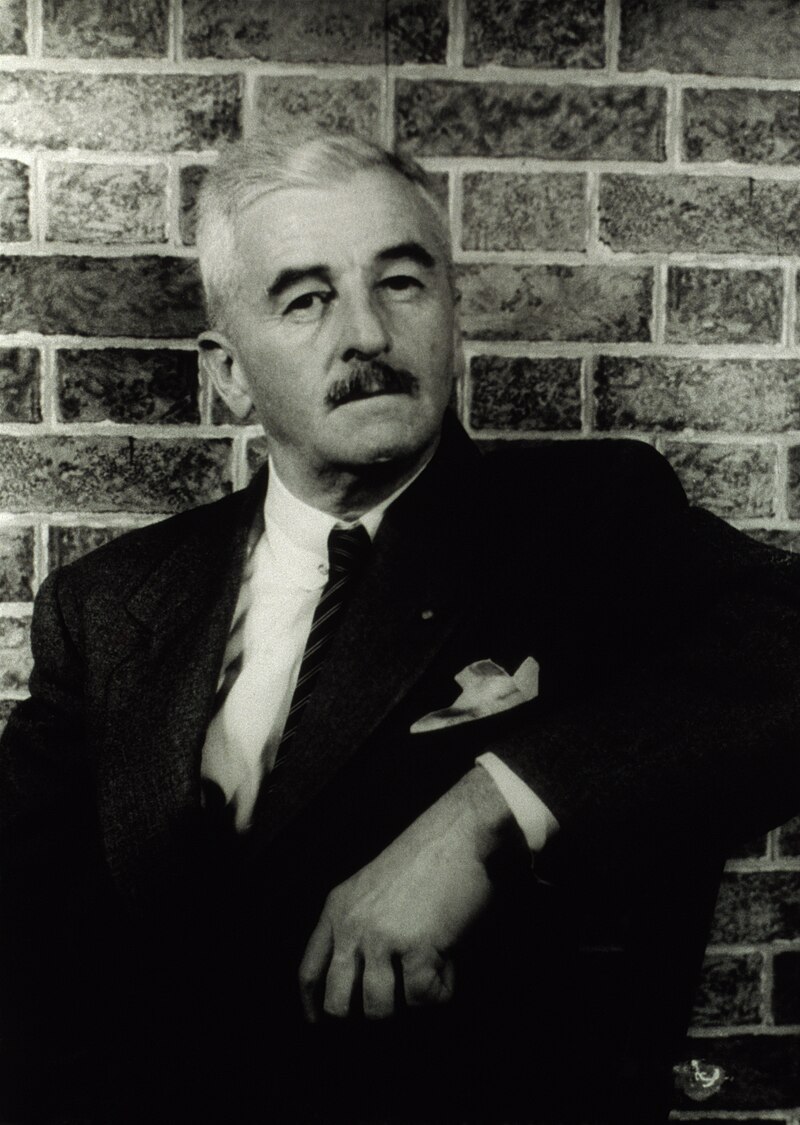
William Faulkner: The View From Yoknapatawpha County


Today we remember William Faulkner, the celebrated world-famous writer and favorite son of Oxford, Mississippi, who was born on September 25, 1897. He explored the character of the South in a string of novels and stories predominately over a twenty year period beginning around 1920. This work earned him the Nobel Prize for Literature in 1949. Later work was recognized with two Pulitzer Prizes.


Faulkner has never been an easy read for me. His complexity and detail, along with the run on sentences and page long paragraphs, make the experience as challenging as the analysis of his characters. Having lived almost five decades in the Deep South, I can appreciate in my own small way the 20th century Southern personality Faulkner captured from his Mississippi home in fictional Yoknapatawpha County. Southern folks then were quite different from their fellow Americans. Today that regional character continues to change with a changing South. It is an interesting overlay.

In 1956, Faulkner sat for a Paris Review interview by author, oral historian, and editor, Jean Stein. It became a seminal piece on the art of fiction as well as an insightful exchange on the writer himself. Readers can access an article based on the interview at this link.

And here is the the author reading from The Sound and the Fury, a novel ignored by readers when first published in 1929, but earning him fame after the publication of Sanctuary in 1931.


It would be a serious error to end a post about Faulkner without mentioning Rowan Oak, his home in Oxford. For over thirty years the house and acres surrounding it provided Faulkner with sanctuary and inspiration during his most productive period. Today the home is a mecca for Faulkner enthusiasts. Visitors can tour the house and grounds as well as the nearby historic Oxford Square - don't miss Square Books, Oxford's world-famous bookstore - and the University of Mississippi Museum and campus.


There is no mechanical way to get the writing done, no shortcut. The young writer would be a fool to follow a theory. Teach yourself by your own mistakes; people learn only by error. The good artist believes that nobody is good enough to give him advice. He has supreme vanity. No matter how much he admires the old writer, he wants to beat him.

                                                            William Faulkner


Sources

Photos and Illustrations:
Faulkner photo, Carl Van Vecten Collection, United States Library of Congress, Washington, D.C.
Rowan Oak photo, User: Wescbell, Creative Common Attribution-ShareAlike3.0 Unported

Text:
end quote, from the Paris Review interview, 1956.
Wikipedia.org

Sunday, September 22, 2024

Northern Autumn Begins


A new season crept over Atlanta today. It began with the usual soft breeze, dry air, and beautiful sky. The big difference this year is an expected high temperature of 92 and its persistence deep into the  coming week.  It's what I call the beginning of our endless Fall and it's one of the events I most enjoy here in north Georgia. It usually stays with us well past Thanksgiving which means Christmas has a tendency to sneak up on you. I had an even harder time with it in Savannah where fall colors usually "peaked" in January if at all. In any case I'm already thinking about the possibility of Thanksgiving and Christmas dinners on the patio, events that have occurred more often than you'd expect during my 47 years of living in Georgia.


With an unblemished week of beautiful weather behind us we expect it will continue into October. Other than shortening days and cooler nights about the only sign of seasonal change on the patio and around the house is the singular blooms that have replaced summer's clusters of color.


As we enter the harvest cycle I am reminded of the bounty of nature we enjoy regardless of the season. And that reminds me of the calander and in particular the Napoleonic Calendar born in the spirit of the French Revolution and the romantic movement that followed. It's composed of ten day weeks, twelve months of thirty days, and assorted extra days to add up to the essential number, 365/6. Yes, it was a confusing time piece. On the other hand, using seasonal events, plant and animal names, and farming implements to label the days and months made the calendar a work of art. This day may be a Sunday in Atlanta but in 1800 in Paris the day was Raisin.


Here in the next 29 days is a vivid picture of the season:

Safran (Saffron)
Chataignes (Chestnut)
Colchique (Autumn Crocus)
Cheval (Horse)
Balsamine (Yellow Balsam)
Carrotes (Carrots)
Amaranthe (Amaranth)
Panais (Parsnip)
Cuve (Tub)
Pommes de terre (Potatoes)
Immortelle (Strawflower)
Potiron (Giant Pumpkin)
Reseda (Mignonette)
Ane (Donkey)
Belle de nuit (Marvel of Peru)
Citroville (Summer Pumpkin)
Sarrazin (Buckwheat)
Touresol (Sunflower)
Pressoir (Wine-Press)
Chanvre (Hemp)
Peches (Peaches)
Navets (Turnip)
Amarillis (Amaryllis)
Boeuf (Cattle)
Aubegine (Eggplant)
Piment (Chile Pepper)
Tomate (Tomato)
Orge (Barley)
Tonneau (Barrel)

I think Vendemiaire provides us a comforting association with a different time and place, a pre-industrial existence where we can easily recognize ourselves as part of nature and not separate from it. That's as it should be. This is the season to be close to the earth and its harvest that sustains us through the cold and dark months to come. Welcome to Fall and the grape harvest. Let us enjoy it whether it be early or late.


Sources:

Photos and Illustrations:
Wikipedia entry: Vendemiaire, author unknown, National Library and Bureau of Measures,

Text:
Fondation Napoleon, www.napoleon.org

ShareThis