Showing posts with label American literature. Show all posts

Saturday, May 31, 2025

Walt Whitman: On Being In America


The American poet and essayist, Walt Whitman, was born on this day in 1819 in West Hills, Long Island, New York. His formal education ended after six years but his insatiable desire to learn immersed him in libraries, museums, lectures, salons, and landscapes in and around New York. His life as a poet, essayist, journalist and humanitarian would take him to New Orleans, Washington, Boston, and Camden, New Jersey, but his associations in New York would make the greater metropolitan area the hub of his career.


Whitman in 1887


A free spirit easily recognized as the most extraordinary poet of his time, Whitman bridged the American experience from the early Romantic period in literature to the advent of hard realism as the end of the century approached. I'm not sure what presence he has these days in public school systems across the country but baby boomers - born between 1946 and 1964 - had a full dose of his poetry beginning in elementary school. For more information on Whitman, including an extensive biography, visit the outstanding resources at the Walt Whitman Archive.

For an example of his work here is "One's-Self I Sing," the introductory poem to the third and last section of his collection, Leaves of Grass, as published in 1867.


ONE’S-SELF I sing—a simple, separate Person,
Yet utter the word Democratic, the word En-masse.


Of Physiology from top to toe I sing;
Not physiognomy alone, nor brain alone, is worthy for the muse—I say the
Form complete is worthier far;
The Female equally with the male I sing.


Of Life immense in passion, pulse, and power,
Cheerful—for freest action form’d, under the laws divine,
The Modern Man I sing.


Much of Whitman's poetry has been set to music. Sometimes the blend of music and existing poetry as opposed to lyric has limited success and authors often do not think favorably of such adaptations. I believe Whitman would have approved especially with the music coming from a fellow impressionist, in this case Frederick Delius. This composition has been a personal favorite for forty years. The recording features the superb Welsh baritone, Bryn Terfel, and the Bournemouth Symphony Orchestra and Chorus under the baton of Richard Hickox. If you want to follow the text it's available here.


Here is a brief, well-known poem brought to a new generation through it's use in the 1989 film, Dead Poets Society.


Sources

Photos and Illustrations:
public domain photo, George Collins Cox, restored by Adam Cuerden, Library of Congress Prints and Photographs Division

Text:
whitmanarchive.org
Walt Whitman entry, wikipedia.org
One's Self I Sing, wikipedia.org


Thursday, May 15, 2025

Katherine Anne Porter: I Want To Live In A World Capital Or A Howling Wilderness


Katherine Anne Porter, an American writer, journalist and activist, was born on this day in 1890 in the west-central Texas town of Indian Creek. She led an often troubled yet exciting and eccentric life. By the age of forty she was an acclaimed and widely read author but it took another thirty years and the publication of her novel, Ship of Fools (1962), before she found financial security in her craft.


She moved to Washington, D.C., in 1959 to finish the novel and while there developed an association with the University of Maryland in nearby College Park. In 1966 her great success with the novel as well as her receipt of the Pulitzer Prize in Fiction for her Collected Stories published in 1965 moved the university to award Porter an honorary degree of Doctor of Humane Letters. At the same time she announced her desire to donate a lifetime of treasured personal possessions and papers to the school to be housed in the Katherine Anne Porter Room, at that time located in McKeldin Library. Porter eventually moved the few miles from her Washington home to College Park where she could be even closer to her collection and the university's resources.


Readers interested in Porter as a writer will enjoy this 1963 Paris Review interview conducted as part of their Art of Fiction series. 

On a personal note: Back in 1968 I spent about two weeks doing research in special collections on the top floor of McKeldin Library at Maryland. At the elevator and in the hallways I kept meeting this small, friendly, elderly, white-haired woman with a jovial smile that invited conversation. She seemed far too helpful to be a typical university librarian. Years later I read how much Porter loved the academic setting and interacting with students, learning about them, their studies, and their plans for the future. She was, in fact, a near constant visitor to her room on the library's fifth floor. It wasn't long before the realization hit that my "little old librarian" was none other than Katherine Anne Porter. With the knowledge gained over the last fifty years I'd love to have those two weeks back to explore the few degrees of separation she brought me among Mexican Leftists of the 1920's, film making, fractal theory, systems of creative design, and the study of pandemics. This time I'd ask the questions.

Alas, that will never happen but perhaps I could explore this wide-ranging story in a future blog post. Better yet, it is a story best told over pitchers of craft beer enjoyed with some quiet and distant jazz, overstuffed club chairs, and the golden hour blazing from the horizon. Could pure chance give rise to the opportunity for such an exploration among old friends? Porter would be pleased.


Sources

Photos and Illustrations:
grannyweatherall.wordpress.com

Text:
Title, "Katherine Anne Porter, The Art of Fiction," No. 29, Paris Review
Katherine Anne Porter, wikipedia.org

Sunday, April 13, 2025

Eudora Welty: Distinctly Southern


Today we remember the celebrated Southern writer, Eudora Welty, on what would have been her 116th birthday. She is remembered as one of the finest short story writers in American literary history. Welty lived and died in Jackson, Mississippi. Although she attended college in Wisconsin and New York, and traveled abroad, she always returned to the house and garden on Pinehurst Street that she had called "home" since high school.

Her skill as a writer enabled her to transform observations of life in Mississippi into a body of literature including novels, short stories, reviews, letters, and an autobiography. Over sixty years she received a host of awards including the Pulitzer Prize for her 1973 novel, The Optimist's Daughter.

Here is a short CSPAN BookTV production exploring Welty and her home in Jackson.


For four years toward the end of the Great Depression (1929-1939) Welty was employed by the Works Progress Administration to document everyday life in Mississippi. Her photography from that period has become well known as an expression of her powers of observation. Smithsonian Magazine produced this short documentary on her photography on the occasion of the centennial of her birth in 2009.


For more information on Welty readers should visit the outstanding website maintained by the Euroda Welty Foundation.


Sources

Text:
Eudora Welty entry, Wikipedia.com

Photos and Illustrations:
National Portrait Gallery, Smithsonian Institution, Washington


Wednesday, March 26, 2025

Flannery O'Connor: Southern Beings, Southern Spirits


One of the most significant writers in America, Flannery O'Connor, was born on March 25 in Savannah, Georgia, in 1925. She spent her early childhood as a devout Catholic there in a home just off Lafayette Square. The square features moss-draped live oaks, colorful azaleas, and an abundance of birds, all sitting in the shadows of the towering spires of the Cathedral of St. John the Baptist. Things haven't changed much in this beautiful space. It still has its interesting spectrum of regular visitors: fast-walking pedestrians, lovers holding hand, lunch hour diners, retirees enjoying the benches, touring families, people waiting for the bus, runners and bikers, and children at play. And every day for the last 120 years, the cathedral casts its shadow over the O'Connor home while its bells remind the people of God's grace and their obligations as His children. I think as long as you can visit Lafayette Square, say on any pleasant Sunday afternoon, you can know O'Connor well.


Her family moved to Atlanta in 1938, where her father was diagnosed with lupus, a chronic disease involving the destruction of healthy tissue by the body's immune system. Shortly thereafter they moved 100 miles southeast to her mother's family home in Milledgeville. When her father died in 1941, O'Connor moved a few miles north of town to her uncle's farm where she lived with her mother. Eventually, the farm would be called Andalusia, and it became a refuge following her own diagnosis with lupus in 1950. At Andalusia, she would raise her beloved peacocks and weave her experiences and memories of people, ethics, morals, and religion into her novels, Wise Blood, and The Violent Bear It Away, and scores of short stories published in two collections in her lifetime, A Good Man is Hard to Find, and Everything That Rises Must Converge. Her Complete Stories appeared posthumously in 1971.


Main house at Andalusia


O'Connor's office-bedroom at Andalusia


Lupus, an incurable long-term autoimmune disease, took Flannery O'Connor from us in 1964 when she was in her 39th year. You can visit both her childhood home and Andalusia thanks to foundations that preserve the landscapes and memories she cherished. And, thanks to her, you can visit the South anytime by simply opening one of her books.

Many years ago the management at Andalusia removed scores of the offspring of O'Connor's beloved peacocks to the Monastery of the Holy Spirit, a large Trappist estate about two and a half miles from our ridge top home. At that time the area was still quite rural and the peacocks flourished in and around the monastery grounds.


Thirty years ago on quiet evening when the wind was right it was not unusual for us to hear them calling faintly in the distance. Eventually, they were removed and for some years now there has been no call to break the silence. But we do remember those urgent and sometimes fearful calls in the dusk. Today the woods remain a gallery of sounds. Some we know well. Others we may not recognize so easily. Those of us who know O'Connor's work well may find it difficult to distinguish between the peacock, the author's veil, or the rich spirit world that inhabits her American South. After all, from the ancient traditions of the Catholic world the peacock is the symbol of immortality.


I think it is safe to say that while the South is significantly less Christ-centered than it was in O'Connor's time, it most certainly remains Christ-haunted. The Southerner who isn’t convinced of it is very much afraid if not haunted by the fact that he may have been formed in the image and likeness of God. And visitations by ghosts can be very fierce and instructive. In O'Connor's dance with the grotesque her characters and their angst cast strange shadows. The characters may fade away. Their shadows never fade away.


Sources


Photos and Illustrations:

Childhood photo, Andalusia Farm, Inc. Photo courtesy of the Flannery O'Connor Collection, Georgia College and State University, Milledgeville, Georgia.
House, deepsouthmagazine.com
Bedroom, photo courtesy of Emily Elizabeth Beck
Adult portrait, openculture.com


Text:

Flannery O'Connor entry, Sarah Gordon, et al, georgiaencyclopedia.org
quotation from Flannery O'Connor, Mystery and Manners: Occasional Prose, selected and edited by Sally and Robert Fitzgerald, New York; Farrar, Straus & Giroux, 1969

Sunday, March 2, 2025

Remembering Tom Wolfe, The Champion Of New Journalism


Tom Wolfe in his Manhattan apartment


Tom Wolfe, an iconic figure in New Journalism, movement was born on this day in 1930. With his passing in 2018, the first wave of Gonzo writers - a term coined around 1970 by Hunter S. Thompson to describe a wing of New Journalism advocates - is all but gone, save for Gay Talese. Wolfe's earlier works seem written as much for entertainment as for traditional reportorial honesty and often involve not only the writer's observation but also his participation. And there are those long daydream passages of vivid description that end with a quick snap back to reality. As he worked more and more in fiction his style retained muted elements of the "wildness" that made his early "journalism" amazingly popular into the 1990's. It's been a long way from The Kandy-Colored Tangerine-Flake Streamline Baby to tackling the Great American Novel for Wolfe. He's always seemed quite happy interpreting the American experience as an outsider looking into other worlds. 


Wolfe's last novel, Back to Blood [2012], was only marginally successful and may lead us to speculate on what the future holds for a successful writer whose life has entered the twilight years. Most of us would like to think there is more compelling reading to come from such a wise observer but better we should leave prediction to heaven and immerse ourselves in the great wealth of observation of the American experience Tom Wolfe assembled for us.


These days Wolfe's impact on journalism still make news but I believe we should always remember his entertaining journalism, especially the work that chronicled our cultural history in the critical years from early 1960's to the mid-1970's. In those years he wrote the following titles:

The Kandy-Colored Tangerine-Flake Streamline Baby (1965)
The Electric Kool-Aid Acid Test (1968)
The Pump House Gang (1968)
Radical Chic & Mau-Mauing the Flak Catchers (1970)
The New Journalism (1974) edited with E.W. Johnson
The Painted Word (1975)
Mauve Gloves & Madmen, Clutter & Vine (1976)


He capped the 1970's with, The Right Stuff, his fascinating look at the nation's first astronauts, the Mercury Seven, and the program that put most of them into space. Although he had already achieved fame as a writer the publication of The Right Stuff and the film by the same name that followed in 1983 ensured his place in American literature.


In 2012 Wolfe took on the immigration theme and the Cuban-Americans community dominating the scene in Miami. Back to Blood hit the market with high expectations but performed poorly. This article reprinted from New York Magazine appeared with the release of the novel and remains a pleasing blend of biography and book. In August 2016 he published his last book, The Freedom of Speech, an analysis of the work of Charles Darwin and Noam Chomsky.  

In a writing career spanning more than half a century Wolfe left us a personal view of the American scene that, written in the present tense, brings our past alive. I think it's a safe bet that the man who gave us terms including, "the right stuff", "radical chic", the Me Decade", and "good ol' boy" will be read, enjoyed, and remembered for a long, long time.  


Sources

Photos and Illustrations:
Wolfe, New York MagazineText:
wikipedia.org

Thursday, February 27, 2025

John Steinbeck: In Search Of The American Experience


John Steinbeck had a long and varied career as an American writer but was best known for his Great Depression era novel, The Grapes of Wrath. I know the film and story line very well, but must confess that I never read the book from cover to cover. In high school, Of Mice and Men was required reading, and I found great pleasure in reading Travels With Charley: In Search of America on my own shortly after its publication in 1962.


Steinbeck, who was born in Salinas, California, on this day in 1902, was a keen participant-observer of 20th century America in general and the California experience in particular. His work earned him a Nobel Prize for Literature in 1962. These days, I don't think students - and teachers - of American history and culture give him the credit and attention he deserves.


My copy from 1962


If you don't know Steinbeck or want to know more about him and his world start with an electronic visit to the National Steinbeck Center in Salinas. Better yet, plan a visit next time you find yourself in the San Francisco area. From Salinas it's a short drive to Monterey Bay and the world-class Monterey Bay Aquarium. Located on a site made famous in Steinbeck's novel, Cannery Row, it's a "must see" exposure to the coastal environment and marine biology the author revered, enjoyed, studied, and interpreted.


Cannery Row, Monterey, California, 1945


Sources:


Photos and Illustrations:
Steinbeck portrait, Nobel Foundation

Wednesday, January 8, 2025

Carl Sandburg: The Voice Of Heartland And History


The American lecturer, journalist, poet, biographer, editor and folk singer, Carl Sandburg was born this week (January 6) in 1878 in Galesburg, Illinois. He remains my favorite American socialist. Those of us who had a childhood in the 1950s grew up knowing Sandburg rather well as he enjoyed near iconic status as a literary figure. By 1950 his most significant work had already appeared but he maintained a busy working retirement at his farm, Connemara, located in western North Carolina, where he produced about one-third of his total literary output.


Carl Sandburg, 1955                    Library of Congress Photo

Sandburg was widely known as the voice of the American people, especially the working men and women who built a new and prosperous nation out of dreams and sweat. In spite of his popularity, he was a family man at heart who loved the warmth and activities associated with his close-knit family consisting of his wife, Lillian Steichen Sandburg and their three children and their families.

Here is a fascinating 1956 interview giving us a glimpse of Sandburg the man, his personality, and his works, all delivered in his wonderful oratorical style developed over many years on the lecture circuit as a young man. I think this is thirty minutes readers will enjoy not only for the entertainment value but also for Sandburg's commentary and insight on the American experience. As you will soon discover we could certainly use his wisdom today.


There is much more on Sandburg and his family at the National Park Service website for Carl Sandburg Home National Historic Site. Over the course of my career I had the pleasure of working several months with the staff and resources at this historic site. In fact, I was offered the opportunity to manage the place in the mid 90's, but timing and circumstance kept me from accepting it.  As time and fate would have it, my only direct association with Lillian and Carl Sandburg at Connemara will remain my late father-in-law's goat trading with them and their award-winning herd of Chikaming dairy goats.

If you decide to read one biography, make it Penelope Niven's Carl Sandburg: A Biography (1991). Most enjoyable.


Tuesday, January 7, 2025

Alan Watts: Forever Dancing In The Here And Now


By the late 1960s he had become rather well-known on the American scene as much for living "in the moment" in alcohol, experimental drugs, and other excesses as for his writing and vast collection of audiovisual productions. Classical Zen masters criticized him for practicing a light version of Buddhism. Many in the counterculture of the time latched on to his eccentrism and independent thought as a beacon in what they viewed as a western world in decline. Either way, he would say that he was what he did. We can do nothing more or less than accept the full man. So who was this man whose portraits seemed to remind me of a clever and mischievous child?


His name was Alan Watts. He was born January 6, 1915, in Britain where he developed a keen interest in Asian studies. He moved to the U.S. in the late 1930’s and became an Episcopal priest in 1943. After seven years Watts left the church and returned to the study of Asian philosophy and religion full-time. When he died in November 1973 he left the world over two dozen books, hundreds of pamphlets and briefs, countless audio tapes, and well over a thousand hours of audiovisual recordings offering his original thoughts on the Western expression of Zen/ Zen Buddhism and Asian thought. For further reading I recommend his autobiography, In My Own Way, published in 1972. It is an lively book providing readers with a memorable glimpse at American culture and character in the generation following World War II.

And how did I come to know of Watts and his world? In 1968 documentary filmmakers, Irving and Elda Hartley, produced a fourteen-minute film entitled Buddhism: Man and Nature. Watts wrote the script and provided the narration. For the Hartleys, it was an award winning addition to their series on spirituality and religion. For others, particularly those studying or working in natural resource management, ecology and related fields, the film was a compelling prescription for understanding and appreciating our natural world. It is in that context that I encountered it in the early 1970’s as a new employee of the National Park Service.


Within days after seeing Buddhism: Man and Nature I transcribed the narration and proceeded to carry it with me for more than 36 years fulfilling my employer's mission to help people appreciate, understand, and preserve some of the finest natural and cultural landscapes throughout the nation.

The film never influenced my personal religious convictions but it certainly impacted my understanding of the human place and role in natural landscapes. Alan Watts’s powerful script writing as well as his transcendent narration motivated me to look deeper into the man and his writings. Over the next decade his books on Zen, Asian philosophy and the West's response, and human behavior grew to occupy well over two feet of shelf space in my library.

What happened to the transcript I typed on my trusty Smith-Corona portable way back when? Well-tattered and coffee stained, it sits enshrined in the household safe. Its message is still on my mind as I work with a group dedicated to the preservation of Watt's last residence. The rustic home and library is in Druid Heights across the Golden Gate from San Francisco. Now essentially abandoned this cultural landscape and cluster of vernacular architecture designed and built a band of mid-20th century  beats, bohemians, and activists sits quietly on Mount Tamalpais in what is now Muir Woods National Monument.hile the

Whilte the remnants of Watts's last residence and the community he knew slips away into the fog-shrouded forest, dedicated pilgrims from around the world visit the site. At the same time millions of people continue to explore and enjoy his contributions to human behavior, philosophy, and religion as they walk their lives in their own way.


rld 
Photos and Illustration:
kpfa.org

Text:
title: from a self-descriptive quote in his autobiography, In My Own Way
wikipedia.org
alanwatts.com

Tuesday, December 17, 2024

A Southern Preacher's Kid Observes His World


Erskine Caldwell (1903-1987) was an only child, a "PK," a preacher's kid. His family moved frequently throughout the South until he was fifteen when they settled in Wrens, Georgia. Still, his father often preached on large circuits, necessitating plenty of travel. In fact, the elder Caldwell traveled so regularly that his son could determine his destinations by the odor of coal smoke on his suit. In time, father took son on many of these journeys. The peculiarity, poverty, and injustice of the Depression era South was embedded in Erskine Caldwell's memory and he soon began writing about it. His observations had little to do with remnants of "the late unpleasantness" - the Civil War - that often gripped the region. Instead, Caldwell wrote of the raw realities of the human condition in the South. This, and his crusade for improving conditions, did not sit well with many Southerners. The dislike was enhanced because he was writing "in absentia," having left the South before 1930. Furthermore, his subject matter often placed him in conflict with censors across the country.


Caldwell had a long career as a writer of both fiction and non-fiction, but he is best known for Tobacco Road (1932), God's Little Acre (1933) and other works from the 1930's. An adaptation of Tobacco Road played on Broadway for eight years - a record at the time - beginning in 1933. A "sentimental burlesque" adaptation directed by John Ford in 1941 contributed to the stereotyping and ridicule of poor white Southerners. Caldwell greatly disliked the film. God's Little Acre remains one of the most popular novels in the U.S. with over ten million copies in print. A 1958 film version is considered the best presentation of Caldwell themes on film.


Here are the opening scenes from Tobacco Road (1941) and the theatrical trailer from God's Little Acre (1958):


Caldwell, who was born on this day in 1903, is an interesting blend of 20th century authors. He is Sherwood Anderson, William Faulkner, D.H. Lawrence, Christopher Isherwood, Joseph Mitchell, and a reflection of other modernists. Readers who seek more than discourse on the happy veneer of the human condition will enjoy Caldwell's interpretations. A good place to start is Deep South: Memory and Observation, a collection of travel essays written in 1968.

Read more about him in this entry from the New Georgia Encyclopedia. The volume is also the source of a quotation and other information in this post.


Monday, December 9, 2024

Joel Chandler Harris: When Uncle Remus Told His Tales


Today is the birthday (1845) of the beloved Georgia journalist and writer, Joel Chandler Harris. He was born in Eatonton and raised by his single mother and other benefactors to love reading, writing, and humor. At sixteen he was employed at the nearby Turnwold Plantation as a print setter for what was likely the nation's only plantation newspaper, The Countryman. Under the guidance of owner Joseph Addison Turner, Harris read from the plantation's large library over the a period of four years. He also observed life on the plantation including its rich culture of oral traditions among the slaves.


After a decade of employment with several papers in central Georgia and Savannah, Harris joined the staff of the Atlanta Constitution in 1876. It was here that he linked a Lippincott's article on black folklore to his Turnwold Plantation experience and the Uncle Remus character he had created for his feature writing. The rest was history, described here in R. Bruce Bickley's Georgia Encyclopedia article on Harris:

For the next quarter-century, Harris lived a double life professionally. He was one of two associate editors of the premier newspaper in the Southeast, helping readers interpret the complex New South movement. He was also the creative writer, the "other fellow," as he termed himself: a prolific, committed, and ambitious re-creator of folk stories, a literary comedian, fiction writer, and author of children's books. Harris published thirty-five books in his lifetime, in addition to writing thousands of articles for the Constitution over a twenty-four-year period. Along with his first book, Uncle Remus: His Songs and His Sayings, the most ambitious of the Uncle Remus volumes is Nights with Uncle Remus: Myths and Legends of the Old Plantation (1883). This book comprises seventy-one tales that feature stories told by four different black narrators, including Uncle Remus.                                                  
Harris also left his impact on major literary figures to come. Rudyard Kipling, Zora Neale Hurston, William Faulkner, Flannery O'Connor, Ralph Ellison, and Toni Morrison all responded to the legacy of Brer Rabbit and the tar baby that Harris had helped popularize. Fellow Eatonton writer Alice Walker protested, however, that Harris had stolen her African American folklore heritage and had made it a white man's publishing commodity.
Harris died on July 3, 1908, of acute nephritis and was buried in Westview Cemetery, West End, Atlanta. Obituary writers were not exaggerating when they eulogized this celebrated middle Georgia writer as "the most beloved man in America." Only Harris's friend and admirer, Mark Twain, who died two years later, surpassed Harris in popular reputation at the beginning of the twentieth century. Harris's retelling of the story of Brer Rabbit and the tar baby remains one of the world's best-known folktales, and his complex legacy as a literary comedian, New South journalist, folklorist, fiction writer, and children's author continues to influence modern culture in a surprising number of ways.

As noted in the quotation, Harris's place in the history of folklore is not without its controversy. Historically there has always been a struggle in the sphere of anthropological studies with cultural preservation and destruction as well as ownership. In Harris we have a written legacy from black oral tradition as viewed though the author's personal lens. It isn't perfect but it does preserve universal themes and lessons in their cultural context. Furthermore his work in part inspired a resurgence of interest in storytelling and performance in a number of cultural niches. If anything that interest is far stronger today than it was a century ago and much of it under black ownership. I can certainly encourage and appreciate that as well as Harris's contribution. I also trust that the magic of storytelling will remain a rich tradition in the American experience and beyond.


Sources

Text:
R. Bruce Bickley, Joel Chandler Harris, Georgia Encyclopedia, georgiaencyclopedia,org


Saturday, October 26, 2024

Time And Tide: Remembering The Beloved Southern Writer, Pat Conroy


Even in his fiction, Pat Conroy had a way of writing about himself and all of us as we face the challenges and adversities - mental and physical - of growing into young adulthood and beyond. Stated another way, he had extraordinary skill in probing the long childhoods many of us face as we grow old. For him, it was an arduous journey, carried out with the same reality that comes with recognizing nature as a cruel mother. Yes, there is beauty and light along the way, but the mountains can't stand without the valleys, and Conroy's reality had its share of darkness. Some may not enjoy that journey, but it is a good dose of reality and I and millions of other readers hold Conroy in high esteem.

In 1977, Conroy's book, The River is Wide, was hardly five years old when I moved to the edge of the ocean east of Savannah and a mere three miles or so across the sound from the book's setting on Daufuskie Island. In a matter of months, I succumbed to life on a sea island and having lived there for eleven years - there's a poem about it - was never quite the same. The coast obviously had a similar effect on Conroy a decade earlier, and over the next forty years he would blend his experience with the Lowcountry setting and produce many books. One of his last, My Reading Life (2010), is a memoir of sorts recalling his love of reading as well as an interesting list the essential and influential books in his life.

Over thirty years have passed since those quiet evenings when I sat reading in my den, feeling and hearing the low frequency vibrations from ship screws in the channel a few thousand feet away. That may seem like an odd recollection from the complex experience of the natural setting and its cultural overlay, but it approaches the unique and remains one of many fond memories. For the most part - small flashes of creativity being the exception - I simply enjoyed them. Pat Conroy, on the other hand, took the everyday and unique events in his life journey and turned them into some of the most lyrical writing of our time.

Charleston has a landscape that encourages intimacy and partisanship. I have heard it said that an inoculation to the sights and smells of the Carolina lowcountry is an almost irreversible antidote to the charms of other landscapes, other alien geographies. You can be moved profoundly by other vistas, by other oceans, by soaring mountain ranges, but you can never be seduced. You can even forsake the lowcountry, renounce it for other climates, but you can never completely escape the sensuous, semitropical pull of Charleston and her marshes.

                                                                The Prince of Tides


Born on this day in 1945, Pat Conroy passed away in his beloved adopted hometown of Beaufort, South Carolina, in February 2016, not far from Charleston and Daufuskie Island where the wide rivers join the sea.


The image above is a screen capture of Conroy at a UNCTV interview conducted in Chapel Hill in February 2014. Interested readers may view this 27 minute program here. It's an informative look at the author's life and work and well worth your time, especially if you're a Conroy fan.


Wednesday, September 25, 2024

William Faulkner: The View From Yoknapatawpha County


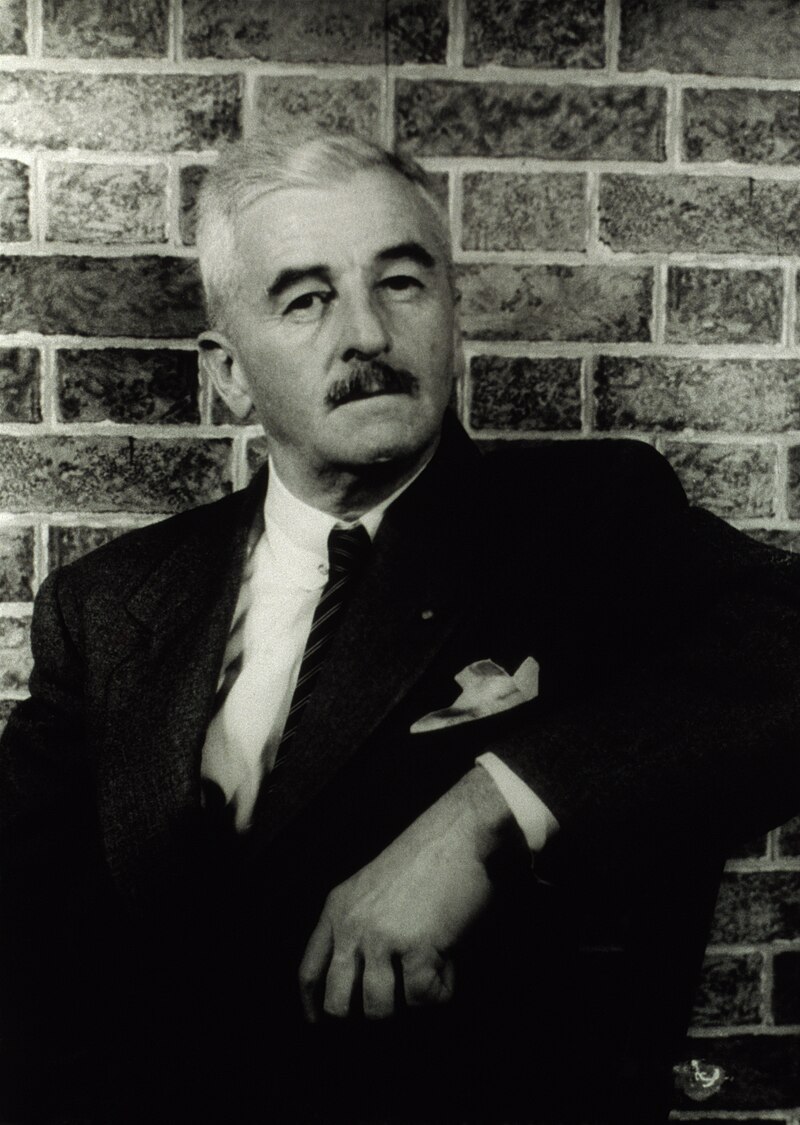
Today we remember William Faulkner, the celebrated world-famous writer and favorite son of Oxford, Mississippi, who was born on September 25, 1897. He explored the character of the South in a string of novels and stories predominately over a twenty year period beginning around 1920. This work earned him the Nobel Prize for Literature in 1949. Later work was recognized with two Pulitzer Prizes.


Faulkner has never been an easy read for me. His complexity and detail, along with the run on sentences and page long paragraphs, make the experience as challenging as the analysis of his characters. Having lived almost five decades in the Deep South, I can appreciate in my own small way the 20th century Southern personality Faulkner captured from his Mississippi home in fictional Yoknapatawpha County. Southern folks then were quite different from their fellow Americans. Today that regional character continues to change with a changing South. It is an interesting overlay.

In 1956, Faulkner sat for a Paris Review interview by author, oral historian, and editor, Jean Stein. It became a seminal piece on the art of fiction as well as an insightful exchange on the writer himself. Readers can access an article based on the interview at this link.

And here is the the author reading from The Sound and the Fury, a novel ignored by readers when first published in 1929, but earning him fame after the publication of Sanctuary in 1931.


It would be a serious error to end a post about Faulkner without mentioning Rowan Oak, his home in Oxford. For over thirty years the house and acres surrounding it provided Faulkner with sanctuary and inspiration during his most productive period. Today the home is a mecca for Faulkner enthusiasts. Visitors can tour the house and grounds as well as the nearby historic Oxford Square - don't miss Square Books, Oxford's world-famous bookstore - and the University of Mississippi Museum and campus.


There is no mechanical way to get the writing done, no shortcut. The young writer would be a fool to follow a theory. Teach yourself by your own mistakes; people learn only by error. The good artist believes that nobody is good enough to give him advice. He has supreme vanity. No matter how much he admires the old writer, he wants to beat him.

                                                            William Faulkner


Sources

Photos and Illustrations:
Faulkner photo, Carl Van Vecten Collection, United States Library of Congress, Washington, D.C.
Rowan Oak photo, User: Wescbell, Creative Common Attribution-ShareAlike3.0 Unported

Text:
end quote, from the Paris Review interview, 1956.
Wikipedia.org

Thursday, September 12, 2024

H. L. Mencken: Keen Observer Of The American Experience


After all these years, the Sage of Baltimore - Henry Louis Mencken - still has so much to tell us about the American experience. In his day he invented the term "booboisie" to refer to the masses who didn't read much, know much or even care much about their lives as citizens of a democratic republic. Today we could easily apply his term to the masses who are well-schooled but not well-educated, who apply emotion rather than reason and logic to their decision making, and who align themselves with coalitions of self-interests wrapped in collectivist totalitarianism. Another term for the modern-day "booboisie" is "moonbat". I think Mencken would have a even more colorful term for them if he were still with us. And oh would he have a time with our political and social landscape today.


Mencken portrait photo taken around 1923

Democracy is a pathetic belief in the collective wisdom of individual ignorance. No one in this world, so far as I know - and I have researched the records for years, and employed agents to help me - has ever lost money by underestimating the intelligence of the great masses of the plain people. Nor has anyone ever lost office thereby.

Henry Louis Mencken, the "Sage of Baltimore," was born on this day in 1880. He was a leading journalist and author on the American scene, humorist, and a student of the American language. Mencken's stature seems to be on the rise over the last few decades. I'd guess it's because we experienced a concurrent rise in many nation-wide opportunities to watch logic, practicality, and skepticism destroy a multitude of political pretenders and their policies regardless of political persuasion.

Puritanism is the haunting fear that someone, somewhere is having a good time.


Mencken (right) celebrating the end of Prohibition in 1933


As much as I enjoy reading all of Mencken's work, the autobiographical books remain my favorites. His three-part "Days" series, Happy Days (1940), Newspaper Days (19441), and Heathen Days (1943) should be essential reading. They cover life and times from birth through 1936, the most productive and positive time in his life. After the mid-1930's, Mencken fell a bit out of fashion as his curmudgeonly persistence began to grind on the American psyche. His perceived sympathy with German nationalism helped undermine his reputation into the 40's. In one of the great ironies in American literature, a stroke in 1948 rendered him unable to read, speak or write beyond simple phrases or sentences. Although he regained some communications skills over time, he spent the next seven years enjoying music, listening to readings, and conversing with friends until his death in 1956.

If, after I depart this vale, you ever remember me and have thought to please my ghost, forgive some sinner and wink your eye at some homely girl.

Those who want the full Mencken story should read Terry Teachout's, The Skeptic: A Life of H.L. Mencken (2003). Teachout was a superb writer who treated his subject with objectivity and warmth. I also enjoyed a biography, Mencken: The American Iconoclast (2005), by the eminent Mencken scholar, Marion Elizabeth Rodgers.

If reading isn't to your liking but you still want some immersion into the man and his times, C-SPAN's American Writers Project produced a fine two-hour program on Mencken that should not be missed. It is a thorough multimedia exploration.


Mencken at home a few months before his death


I'm the third generation in my family to consider Mencken a favorite writer. Though the author as skeptic likely played a role in his popularity over the years, I think the humor sold him to the family - certainly has in my case. But there is a sad note to this story. In 1959 - I was 13 that year - two family members who were among the first generation to appreciate Mencken passed away just one day part. My dad was the executor of this challenging estate. The late relatives had shared a large home with other brothers and accumulated seventy years of cultural history within its walls. It seemed the only thing that left the house was weekly trash. Included in that history collection they retained were thousands of magazines. No institution or person wanted them as they had not yet achieved a patina of age, worth or "significance." I was given the responsibility of burning them and in doing so I watched a near complete, mint collection of The Smart Set and The American Mercury magazines rise up in smoke on a cold winter day. Both magazines were under the editorship of H.L. Mencken early in his career and featured many new writers who were to become famous in the decades to follow. Today, the collection could bring as much as five figures at a major literary auction. So much wisdom up in smoke. If the Sage of Baltimore were alive today, he would not be happy at this outcome, nor would he be surprised...

No one ever went broke underestimating the intelligence of the American people.


Sources


Photos and Illustrations:
1923 portrait, public domain
Mencken celebrating, Baltimore Sun
Mencken at home, Baltimore Sun

Quotations:
Democracy is.... "Notes on Journalism," Chicago Tribune, September 19, 1926;
Puritanism is.... " Sententae," The Citizen and the State, p.624;
If, after I.... "Epitaph," from Smart Set (December 1921);
No one ever.... paraphrase of the "Democracy" quote as noted in The Yale Book of Quotations (2006)


Monday, August 5, 2024

Conrad Aiken: Cosmic Mariner - Destination Unknown


This year marks the 135th anniversary of the birth of the poet, Conrad Aiken. He was born on August 5, 1889, in Savannah and lived in a townhouse on Oglethorpe Avenue across the street from Colonial Cemetery. He often played in that ancient burial ground midst tabby crypts and tombstones where the mortal remains of many of Georgia's aristocracy found rest. From the time he was eight or nine he wanted to be a writer. Soon he found himself captured by the works of Edgar Allan Poe and happily sharing the terror with his brother and sisters.

With his parents immersed in Savannah society and surrounded by wealth, privilege, and pedigree, he seemed destined for happiness. His father was a successful physician, his mother, a leader in Savannah society circles. Unfortunately, there was little peace in the family. One day, when young Aiken was eleven, his father took a revolver and killed his wife, then killed himself. Aiken never fully recovered from the horror of hearing the gun shots and discovering his parents' bodies only seconds after the event. He would spend the rest of his life exploring the interplay and uncertainty of a good and evil world.

Aiken spent the remainder of his childhood with relatives in New England. Later, he would attend Harvard where he was deeply influenced by the writer-philosopher, George Santayana. He also began a life-long friendship with fellow student, T.S. Eliot. Aiken would go on to write lyrical poetry weighted with symbolism and psychological exploration so deep that, in his own words, "Freud was in everything after 1912." Later in his career he moved predominantly to prose expressing "faith in consciousness" and an endless search for knowledge as the means to bring order and structure to the larger consciousness of the world. In all, he wrote or edited fifty books, including poetry, short stories, five novels, and one autobiography.

Unfortunately, for all of his output Conrad Aiken never achieved the level of fame of his good friend, T. S. Eliot, or other contemporaries. Shyness kept him away from readings that, for a poet, were lifelines to his audience. Also, he was a most candid critic, a posture that did not endear him to his fellow writers. Lastly, as a resident of both the United States and Europe he could never quite be associated with writers, benefactors, and salons on both sides of the Atlantic. By 1960, he had been resident in the U.S for some years and "rediscovered" by Americn readers. Aiken eventually returned part-time to the elegance of Savannah. He spent the winters living next to his boyhood home becoming the focus of social and academic circles and sought out by admirers until his death in 1973.

If you wander toward the eastern bluff in Savannah's magnificent Bonaventure Cemetery you arrive at Aiken Way. At it's end you find a memorial bench Aiken installed before his death. Next to it is a headstone bearing the identical death dates of his parents, an eerie reminder of the chaos he and all of us face in our lives.


For those of us who have found our peace, there is a profound release there under the live oaks and Spanish moss. Others may not be so fortunate. Aiken is one them. In life, he was restless, a constant searcher forever sailing through an uncertain sea. He felt the same about death and wanted us to know. How fitting it was that he should find his epitaph quite by accident while perusing the Savannah newspapers. It appeared in the daily list of port activity and read simply: "Cosmos Mariner - Destination Unknown." Aiken indeed saw himself a cosmic mariner who on his death in 1973 cast off without a port of call, destination unknown. He left behind, engraved on the bench the wish, "Give my love to the world." It is a rather confident wish coming from a restless sailor. We can pray that every man should find safe harbor, all the while knowing that we are not the final judge of his navigation. We are left merely to explore the products of a shy and troubled man who could appreciate a bawdy pun and have his say in singing words and lilting prose.


Ruinous blisses, joyous pains,
Life the destroyer, life the breaker,
And death, the everlasting maker....


If readers want to learn more about Aiken and his world, I strongly recommend they read this recently edited essay on the educational website, enotes.


Sources:

Conrad Aiken, The New Georgia Encyclopedia, entry by Ted R. Spivey
Conrad Aiken, Wikipedia
Conrad Aiken: Progidy Unitarian Poet, Richard A. Kelloway
The Paris Review, Issue 42, Winter-Spring, 1968, The Art of Poetry: Conrad Aiken, interviewed by Robert Hunter Wilbur
poem fragment, conclusion from Aiken's, "The Dance of Life" published in 1916.

Sunday, July 21, 2024

The 125th Anniversary Of The Birth Of Ernest Hemingway


Ernest Hemingway, one of the 20th century's most significant American novelists and short story writers, was born on this day in 1899. Most of us likely met Hemingway through his Nobel Prize winning 1952 novel, The Old Man and the Sea. It was required reading for me in high school and I'd like to think - I have my doubts - it remains a rite of passage for graduation these days.


Hemingway, his wife, Pauline, and their sons in Bimini in 1953


Over a fourteen year period he published four blockbuster novels: The Sun Also Rises (1926), A Farewell to Arms (1929), To Have And Have Not (1937), and For Whom the Bell Tolls (1940). His body of work includes additional novels, non-fiction, letters, collections of short stories and poems, and one anthology. A private person by nature, his lifestyle and literary themes coupled with fame made him a larger than life and very public personality. In a 2010 paper, Professor Timo Muller (University of Augsburg), writing in the Journal of Modern Literature, noted that Hemingway "has the highest recognition value of all writers world-wide." That value is reflected equally in this quotation taken from the Hemingway entry at Wikipedia:


The extent of Hemingway's influence is seen in the tributes and echoes of his fiction in popular culture. A minor planet, discovered in 1978 by Soviet astronomer Nikolai Chernykh, was named for him (3656 Hemingway); Ray Bradbury wrote 'The Kilimanjaro Device', with Hemingway transported to the top of Mount Kilimanjaro; the 1993 motion picture 'Wrestling Ernest Hemingway', about the friendship of two retired men, Irish and Cuban, in a seaside town in Florida, starred Robert Duvall, Richard Harris, Shirley MacLaine, Sandra Bullock, and Piper Laurie. The influence is evident with the many restaurants named "Hemingway"; and the proliferation of bars called "Harry's" (a nod to the bar in Across the River and Into the Trees). A line of Hemingway furniture, promoted by Hemingway's son Jack (Bumby), has pieces such as the "Kilimanjaro" bedside table, and a "Catherine" slip-covered sofa. Montblanc offers a Hemingway fountain pen, and a line of Hemingway safari clothes has been created. The International Imitation Hemingway Competition was created in 1977 to publicly acknowledge his influence and the comically misplaced efforts of lesser authors to imitate his style. Entrants are encouraged to submit one "really good page of really bad Hemingway" and winners are flown to Italy to Harry's Bar.

I've read bits and pieces of Hemingway over the years but nothing cover to cover except for The Old Man and the Sea. Essentially he is a victim of my limited interest in non-fiction; however, the legacy has prompted our family to visit the Ernest Hemingway Home and Museum in Key West, Florida. He lived there from 1931 to 1939. There is something for everyone there including a furnished house, colorful gardens, a fine bookstore, and a clowder of polydactyl - extra-toed - cats descended from a white cat Hemingway received as a gift from a local ship captain. It's a good opportunity to glimpse a private life from another time and a literary legacy that will be with us for a very long time. Enjoy the cats!


Hemingway at Sun Valley Lodge, Idaho, late 1939


Sources

Photos and Illustrations:
Bimini photo, John F. Kennedy Library
Sun Valley photo, public domain

Text:
Title quote, goodreads.com
Quote and content, New York Times, July, 3, 1961
Hemingway entry, wikipedia.com

Thursday, July 11, 2024

Atticus, Scout, Jem, and Dill: Loss Of Innocence In Maycomb, Alabama


On this day in 1960 the novel, To Kill A Mockingbird, made its debut across the country. The book was an instant success and the author, Harper Lee, spent the rest of her life - she passed away in 2016 - seeking anonimity in her home town of  Monroeville, Alabama. I doubt the place has been the same without her. She spent her entire life there living a rather reclusive existence with the help of locals who spent a half century sending curious fans everywhere but to Miss Nelle's place.
Between 1960 and 1964 she published a few essays and participated in interviews then quietly "retired" until the publication of her second novel in 2015.

We can only imagine how many millions of American high school students have read To Kill A Mockingbird. I graduated from high school in the mid-60's and don't recall if the book was required reading; however, it did make the list in college. In fact, I still have that paperback, scuffed, tattered, dog-eared, and stained after several readings by me and my children.

In the face of political correctness and wokeism, Mockingbird has recently come under attack for its language (the N-word and other slurs) and subject (rape) as well as its portrayal of oppression and paternalism. Today, movements to ban the book from schools and libraries have resulted in only one outright banning but the controversy has unfortunately rendered the book untouchable as a learning tool in middle and high schools across the nation.


My copy - scuffed, tattered, dog-eared, and stained


For more on the book and it's impact on American culture here is an article in The Huffington Post featuring four defenses of this enduring work. And here is a link to a more critical review by Allen Barra from The Wall Street Journal. Barra's observations are brief and well worth reading. For a fine summation of the life of the author, here is her obituary by William Grimes that appeared in The New York Times, February 19, 2016.


ShareThis