Showing posts with label American diplomacy. Show all posts

Tuesday, October 22, 2024

A Young Nation Buys A Prairie And A Port


This week in 1803 the governments of France and the United States exchanged ratified copies of a document that officially transferred the Louisiana Territory and its capital, New Orleans, to the United States. The event marked the end of French hopes to establish an empire in North America. In this transaction, known as the Louisiana Purchase, the nation acquired 530,000,000 acres of territory in North America for the sum of $15,000,000.


The Louisiana Purchase


As the United States spread across the Appalachians, the Mississippi River became increasingly important as a conduit for the produce of America’s West (which at that time referred to the land between the Appalachians and the Mississippi). Since 1762, Spain had owned the territory of Louisiana, which included 828,000 square miles, and which now makes up all or part of fifteen separate states between the Mississippi River and the Rocky Mountains. Friction between Spain and the United States over the right to navigate the Mississippi and the right for Americans to transfer their goods to ocean-going vessels at New Orleans had been resolved by the Pinckney Treaty of 1795. With the Pinckney treaty in place and the weak Spanish empire in control of Louisiana, American statesmen felt comfortable that the United States’ westward expansion would not be restricted in the long run.

This situation was threatened by Napoleon Bonaparte’s plans to revive the French empire in the New World. He planned to recapture the valuable sugar colony of St. Domingue from a slave rebellion, and then use Louisiana as the granary for his empire. France acquired Louisiana from Spain in 1800 and took possession in 1802, sending a large French army to St. Domingue and preparing to send another to New Orleans. Westerners became very apprehensive about having the more-powerful French in control of New Orleans; President Thomas Jefferson noted,

There is on the globe one single spot, the possessor of which is our natural and habitual enemy. It is New Orleans.

President Thomas Jefferson


In addition to making military preparations for a conflict in the Mississippi Valley, Jefferson sent James Monroe to join Robert Livingston in France to try to purchase New Orleans and West Florida for as much as $10 million. Failing that, they were to attempt to create a military alliance with England. Meanwhile, the French army in St. Domingue was decimated by yellow fever, and war between France and England still threatened. Napoleon decided to give up his plans for Louisiana, and offered a surprised Monroe and Livingston the entire territory of Louisiana for $15 million. Although this far exceeded their instructions, they agreed.


President James Monroe


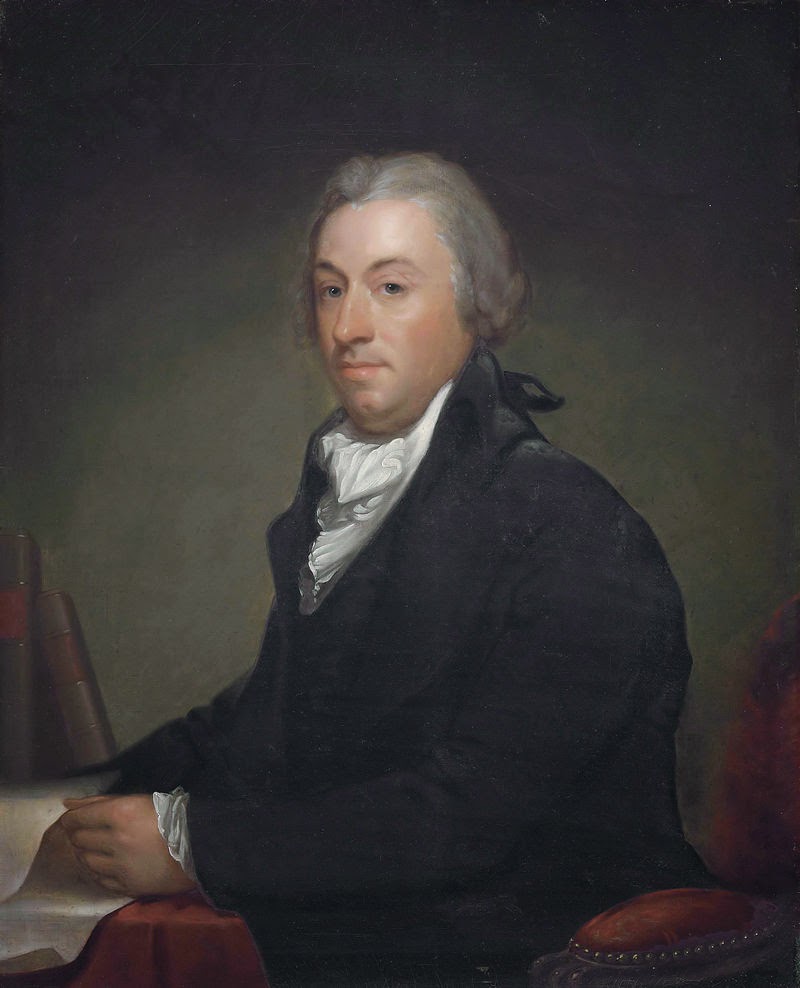
Robert Livingston, Founding Father, "The Chancellor"


When news of the sale reached the United States, the West was elated. President Jefferson, however, was in a quandary. He had always advocated strict adherence to the letter of the Constitution, yet there was no provision empowering him to purchase territory. Given the public support for the purchase and the obvious value of Louisiana to the future growth of the United States, Jefferson decided to ignore the legalistic interpretation of the Constitution and forgo the passage of a Constitutional amendment to validate the purchase. This decision contributed to the principle of implied powers of the federal government.


Sources:


Text: United States Department of State
Portraits: Official Portraits, The White House


Tuesday, April 30, 2024

The Louisiana Purchase: "An Important Adjacent Territory"


On April 30, 1803, France sold almost 830,000 square miles of territory west of the Missuissippi River to the United States. The price: $15,000,000. The event marked the end of French hopes to establish an empire in North America. Known as the Louisiana Purchase, it also ended a long struggle for access to and politicsl control of the Mississippi River.


Commemorative stamp showing the extent of the Louisiana Purchase


As the United States spread across the Appalachians, the river became increasingly important as a conduit for the produce of America’s West which at that time referred to the land between the Appalachians and the Mississippi. Since 1762, Spain had owned the territory of Louisiana, which itoday makes up all or part of fifteen separate states between the Mississippi River and the Rocky Mountains. Friction between Spain and the United States over the right to navigate the Mississippi and the right for Americans to transfer their goods to ocean-going vessels at New Orleans had been resolved by the Pinckney Treaty of 1795. With the Pinckney Treaty in place and the weak Spanish empire in control of Louisiana, American statesmen felt comfortable that the United States’ westward expansion would not be restricted in the long run.

This situation was threatened by Napoleon Bonaparte’s plans to revive the French empire in the New World. He planned to recapture the valuable sugar colony of St. Domingue from a slave rebellion, and then use Louisiana as the granary for his empire. France acquired Louisiana from Spain in 1800 and took possession in 1802, sending a large French army to St. Domingue and preparing to send another to New Orleans. Westerners became very apprehensive about having the more-powerful French in control of New Orleans. President Thomas Jefferson noted,


There is on the globe one single spot, the possessor of which is our natural and habitual enemy. It is New Orleans.


President Thomas Jefferson


In addition to making military preparations for a conflict in the Mississippi Valley, Jefferson sent James Monroe to join Robert Livingston in France to try to purchase New Orleans and West Florida for as much as $10 million. Failing that, they were to attempt to create a military alliance with England. Meanwhile, the French army in St. Domingue was being decimated by yellow fever, and war between France and England still threatened. Napoleon decided to give up his plans for Louisiana, and offered a surprised Monroe and Livingston the entire territory of Louisiana for $15 million. Although this far exceeded their instructions, they agreed.


President James Monroe


Robert Livingston, Founding Father, "The Chancellor"


When news of the sale reached the United States, the West was elated. President Jefferson, however, was in a quandary. He had always advocated strict adherence to the letter of the Constitution, yet there was no provision empowering him to purchase territory. Given the public support for the purchase and the obvious value of Louisiana to the future growth of the United States, Jefferson decided to ignore the legalistic interpretation of the Constitution and forgo the passage of a Constitutional amendment to validate the purchase. This decision contributed to the principle of implied powers of the federal government.


Sources:


Text: 
United States Department of State
tutle quote, Thomas Jefferson

Photos and Illustrations:
portraits: Official Portraits, The White House


Friday, September 1, 2023

Even More Feckless Leaders And Warm Fuzzy Diplomacy


This post first appeared eight years ago to commemorate the beginning of World War II in 1939. I never dreamed, as our leadership continues negotiations, known or unknown, with fanatics who seek our destruction, that I could post it today, changing only the players and their georgraphy. 


This is going a brief post about the most important September 1 in the twentieth century. Today in 1939, Adolph Hitler launched a massive invasion of Poland and plunged the world into war. Eleven months earlier Hitler had signed the Munich Agreement pledging to end his aggression in exchange for certain borderlands in Czechoslovakia inhabited by German-speaking people. Most of us know this history in the context of British Prime Minister Neville Chamberlain triumphantly returning to London and waving the agreement while declaring "peace for our time."


In the coming months our government may have an opportunity to pass judgement on a nuclear agreement with Iran and perhaps a cease fire in Russia's war against Ukraine. We don't know if these steps back from the brink will produce peace for our time. We almost assuredly know any agreement with Iran will produce, with the assistance of the West, an advanced nuclear program and possibly nuclear arms for a nation in the hands of religious fanatics. The prospects have already produced a nuclear arms race in the Middle East. Those who recognize the phrase, "balance of terror," may see a new parallel developing in the region. With history as our example and virtual wholesale trust as our principle, I believe those who accept such agreements  and proudly wave them over the heads of their admirers will become the feckless Chamberlains of the twenty-first century.

Many writers have warned us about the perils of ignoring history. Even in plain sight, we don't seem to listen well.


Sources

Photo: huffingtonpost.com

Sunday, April 30, 2023

A Young Nation Expands Westward Across The Mississippi


On April 30, 1803, France sold almost 830,000 square miles of territory west of the Missuissippi River to the United States. The price: $15,000,000. The event marked the end of French hopes to establish an empire in North America. Known as the Louisiana Purchase, it also ended a long struggle for access to and politicsl control of the Mississippi River.


Commemorative stamp showing the extent of the Louisiana Purchase


As the United States spread across the Appalachians, the river became increasingly important as a conduit for the produce of America’s West which at that time referred to the land between the Appalachians and the Mississippi. Since 1762, Spain had owned the territory of Louisiana, which itoday makes up all or part of fifteen separate states between the Mississippi River and the Rocky Mountains. Friction between Spain and the United States over the right to navigate the Mississippi and the right for Americans to transfer their goods to ocean-going vessels at New Orleans had been resolved by the Pinckney Treaty of 1795. With the Pinckney Treaty in place and the weak Spanish empire in control of Louisiana, American statesmen felt comfortable that the United States’ westward expansion would not be restricted in the long run.

This situation was threatened by Napoleon Bonaparte’s plans to revive the French empire in the New World. He planned to recapture the valuable sugar colony of St. Domingue from a slave rebellion, and then use Louisiana as the granary for his empire. France acquired Louisiana from Spain in 1800 and took possession in 1802, sending a large French army to St. Domingue and preparing to send another to New Orleans. Westerners became very apprehensive about having the more-powerful French in control of New Orleans. President Thomas Jefferson noted,

There is on the globe one single spot, the possessor of which is our natural and habitual enemy. It is New Orleans.

President Thomas Jefferson


In addition to making military preparations for a conflict in the Mississippi Valley, Jefferson sent James Monroe to join Robert Livingston in France to try to purchase New Orleans and West Florida for as much as $10 million. Failing that, they were to attempt to create a military alliance with England. Meanwhile, the French army in St. Domingue was being decimated by yellow fever, and war between France and England still threatened. Napoleon decided to give up his plans for Louisiana, and offered a surprised Monroe and Livingston the entire territory of Louisiana for $15 million. Although this far exceeded their instructions, they agreed.


President James Monroe


Robert Livingston, Founding Father, "The Chancellor"


When news of the sale reached the United States, the West was elated. President Jefferson, however, was in a quandary. He had always advocated strict adherence to the letter of the Constitution, yet there was no provision empowering him to purchase territory. Given the public support for the purchase and the obvious value of Louisiana to the future growth of the United States, Jefferson decided to ignore the legalistic interpretation of the Constitution and forgo the passage of a Constitutional amendment to validate the purchase. This decision contributed to the principle of implied powers of the federal government.


Sources:


Text: United States Department of State
Portraits: Official Portraits, The White House


Thursday, September 1, 2022

Feckless Leaders And Warm Fuzzy Diplomacy


This post first appeared seven years ago to commemorate the beginning of World War II. Never dreamed, as our leadership negotiates another nuclear agreement with fanatics who seek our destruction, that I could post it today without changing a single word.


This is going a brief post about the most important September 1 in the twentieth century. Today in 1939, Adolph Hitler launched a massive invasion of Poland and plunged the world into war. Eleven months earlier Hitler had signed the Munich Agreement pledging to end his aggression in exchange for certain borderlands in Czechoslovakia inhabited by German-speaking people. Most of us know this history in the context of British Prime Minister Neville Chamberlain triumphantly returning to London and waving the agreement while declaring "peace for our time."


In the coming months the United States Senate will have an opportunity to pass judgement on a nuclear agreement with Iran. We don't know if this agreement will produce peace for our time. We almost assuredly know the agreement will produce, with the assistance of the West, an advanced nuclear program for Iran, and possibly a nuclear armed Iran. The prospects have already produced a nuclear arms race in the Middle East. Those who recognize the phrase, "balance of terror," may see a new parallel developing in the region. With history as our example and virtual wholesale trust as our principle, I believe those who accept the agreement and proudly wave it over the heads of their admirers will become the feckless Chamberlains of the twenty-first century.

Many writers have warned us about the perils of ignoring history. Even in plain sight, we don't seem to listen well.


Sources

Photo: huffingtonpost.com


Saturday, April 30, 2022

It Cost 4 Cents An Acre And Doubled The Size Of The USA


On April 30, 1803, France sold almost 830,000 square miles of territory west of the Missuissippi River to the United States. The price: $15,000,000. The event marked the end of French hopes to establish an empire in North America. Known as the Louisiana Purchase, it also ended a long struggle for access to and politicsl control of the Mississippi River.


Commemorative stamp showing the extent of the Louisiana Purchase


As the United States spread across the Appalachians, the river became increasingly important as a conduit for the produce of America’s West which at that time referred to the land between the Appalachians and the Mississippi. Since 1762, Spain had owned the territory of Louisiana, which itoday makes up all or part of fifteen separate states between the Mississippi River and the Rocky Mountains. Friction between Spain and the United States over the right to navigate the Mississippi and the right for Americans to transfer their goods to ocean-going vessels at New Orleans had been resolved by the Pinckney Treaty of 1795. With the Pinckney Treaty in place and the weak Spanish empire in control of Louisiana, American statesmen felt comfortable that the United States’ westward expansion would not be restricted in the long run.

This situation was threatened by Napoleon Bonaparte’s plans to revive the French empire in the New World. He planned to recapture the valuable sugar colony of St. Domingue from a slave rebellion, and then use Louisiana as the granary for his empire. France acquired Louisiana from Spain in 1800 and took possession in 1802, sending a large French army to St. Domingue and preparing to send another to New Orleans. Westerners became very apprehensive about having the more-powerful French in control of New Orleans. President Thomas Jefferson noted,

There is on the globe one single spot, the possessor of which is our natural and habitual enemy. It is New Orleans.


President Thomas Jefferson


In addition to making military preparations for a conflict in the Mississippi Valley, Jefferson sent James Monroe to join Robert Livingston in France to try to purchase New Orleans and West Florida for as much as $10 million. Failing that, they were to attempt to create a military alliance with England. Meanwhile, the French army in St. Domingue was being decimated by yellow fever, and war between France and England still threatened. Napoleon decided to give up his plans for Louisiana, and offered a surprised Monroe and Livingston the entire territory of Louisiana for $15 million. Although this far exceeded their instructions, they agreed.


President James Monroe


Robert Livingston, Founding Father, "The Chancellor"


When news of the sale reached the United States, the West was elated. President Jefferson, however, was in a quandary. He had always advocated strict adherence to the letter of the Constitution, yet there was no provision empowering him to purchase territory. Given the public support for the purchase and the obvious value of Louisiana to the future growth of the United States, Jefferson decided to ignore the legalistic interpretation of the Constitution and forgo the passage of a Constitutional amendment to validate the purchase. This decision contributed to the principle of implied powers of the federal government.


Sources:


Text: United States Department of State
Portraits: Official Portraits, The White House

Thursday, October 21, 2021

American Expansion: A Purchase Well-Made


This week in 1803 the government of France officially transferred New Orleans, the colonial capital of Louisiana, to the United States. The event marked the end of French hopes to establish an empire in North America. In this transaction, known as the Louisiana Purchase, the nation acquired 530,000,000 acres of territory in North America for the sum of $15,000,000.


The Louisiana Purchase


As the United States spread across the Appalachians, the Mississippi River became increasingly important as a conduit for the produce of America’s West (which at that time referred to the land between the Appalachians and the Mississippi). Since 1762, Spain had owned the territory of Louisiana, which included 828,000 square miles, and which now makes up all or part of fifteen separate states between the Mississippi River and the Rocky Mountains. Friction between Spain and the United States over the right to navigate the Mississippi and the right for Americans to transfer their goods to ocean-going vessels at New Orleans had been resolved by the Pinckney Treaty of 1795. With the Pinckney treaty in place and the weak Spanish empire in control of Louisiana, American statesmen felt comfortable that the United States’ westward expansion would not be restricted in the long run.

This situation was threatened by Napoleon Bonaparte’s plans to revive the French empire in the New World. He planned to recapture the valuable sugar colony of St. Domingue from a slave rebellion, and then use Louisiana as the granary for his empire. France acquired Louisiana from Spain in 1800 and took possession in 1802, sending a large French army to St. Domingue and preparing to send another to New Orleans. Westerners became very apprehensive about having the more-powerful French in control of New Orleans; President Thomas Jefferson noted,

There is on the globe one single spot, the possessor of which is our natural and habitual enemy. It is New Orleans.


President Thomas Jefferson


In addition to making military preparations for a conflict in the Mississippi Valley, Jefferson sent James Monroe to join Robert Livingston in France to try to purchase New Orleans and West Florida for as much as $10 million. Failing that, they were to attempt to create a military alliance with England. Meanwhile, the French army in St. Domingue was being decimated by yellow fever, and war between France and England still threatened. Napoleon decided to give up his plans for Louisiana, and offered a surprised Monroe and Livingston the entire territory of Louisiana for $15 million. Although this far exceeded their instructions, they agreed.


President James Monroe


Robert Livingston, Founding Father, "The Chancellor"


When news of the sale reached the United States, the West was elated. President Jefferson, however, was in a quandary. He had always advocated strict adherence to the letter of the Constitution, yet there was no provision empowering him to purchase territory. Given the public support for the purchase and the obvious value of Louisiana to the future growth of the United States, however, Jefferson decided to ignore the legalistic interpretation of the Constitution and forgo the passage of a Constitutional amendment to validate the purchase. This decision contributed to the principle of implied powers of the federal government.


Sources:


Text: United States Department of State
Portraits: Official Portraits, The White House


Tuesday, September 1, 2015

September 1, 1939: Feckless Leadership And "Peace For Out Time"


This is going a brief post about the most important September 1 in the twentieth century. Today in 1939, Adolph Hitler launched a massive invasion of Poland and plunged the world into war. Eleven months earlier Hitler had signed the Munich Agreement pledging to end his aggression in exchange for certain borderlands in Czechoslovakia inhabited by German-speaking people. Most of us know this history in the context of British Prime Minister Neville Chamberlain triumphantly returning to London and waving the agreement while declaring "peace for our time."


In the coming months the United States Senate will have an opportunity to pass judgement on a nuclear agreement with Iran. We don't know if this agreement will produce peace for our time. We almost assuredly know the agreement will produce, with the assistance of the West, a advanced nuclear program for Iran, and possibly a nuclear armed Iran. The prospects have already produced a nuclear arms race in the Middle East. Those who recognize the phrase, "balance of terror," may see a new parallel developing in the region. With history as our example and virtual wholesale trust as our principle, I believe those who accept the agreement and proudly wave it over the heads of their admirers will become the feckless Chamberlains of the twenty-first century.

Many writers have warned us about the perils of ignoring history. Even in plain sight, we don't seem to listen well.


Sources

Photo: huffingtonpost.com

Saturday, December 20, 2014

Purchasing Louisiana, December 20, 1803


On this day in 1803 the government of France officially transferred New Orleans, the colonial capital of Louisiana, to the United States. The event marked the end of French hopes to establish an empire in North America. In this transaction, known as the Louisiana Purchase, the nation acquired 530,000,000 acres of territory in North America for the sum of $15,000,000.


The Louisiana Purchase

As the United States spread across the Appalachians, the Mississippi River became increasingly important as a conduit for the produce of America’s West (which at that time referred to the land between the Appalachians and the Mississippi). Since 1762, Spain had owned the territory of Louisiana, which included 828,000 square miles, and which now makes up all or part of fifteen separate states between the Mississippi River and the Rocky Mountains. Friction between Spain and the United States over the right to navigate the Mississippi and the right for Americans to transfer their goods to ocean-going vessels at New Orleans had been resolved by the Pinckney treaty of 1795. With the Pinckney treaty in place and the weak Spanish empire in control of Louisiana, American statesmen felt comfortable that the United States’ westward expansion would not be restricted in the long run.

This situation was threatened by Napoleon Bonaparte’s plans to revive the French empire in the New World. He planned to recapture the valuable sugar colony of St. Domingue from a slave rebellion, and then use Louisiana as the granary for his empire. France acquired Louisiana from Spain in 1800 and took possession in 1802, sending a large French army to St. Domingue and preparing to send another to New Orleans. Westerners became very apprehensive about having the more-powerful French in control of New Orleans; President Thomas Jefferson noted,

There is on the globe one single spot, the possessor of which is our natural and habitual enemy. It is New Orleans.

PresidentThomas Jefferson
In addition to making military preparations for a conflict in the Mississippi Valley, Jefferson sent James Monroe to join Robert Livingston in France to try to purchase New Orleans and West Florida for as much as $10 million. Failing that, they were to attempt to create a military alliance with England. Meanwhile, the French army in St. Domingue was being decimated by yellow fever, and war between France and England still threatened. Napoleon decided to give up his plans for Louisiana, and offered a surprised Monroe and Livingston the entire territory of Louisiana for $15 million. Although this far exceeded their instructions, they agreed.

President James Monroe

Robert Livingston, Founding Father, "The Chancellor"
When news of the sale reached the United States, the West was elated. President Jefferson, however, was in a quandary. He had always advocated strict adherence to the letter of the Constitution, yet there was no provision empowering him to purchase territory. Given the public support for the purchase and the obvious value of Louisiana to the future growth of the United States, however, Jefferson decided to ignore the legalistic interpretation of the Constitution and forgo the passage of a Constitutional amendment to validate the purchase. This decision contributed to the principle of implied powers of the federal government.


Sources:

Text: United States Department of State
Portraits: Official Portraits, The White House

Thursday, February 10, 2011

Michael Ledeen: The Spooks' Black Thursday

This Pajamas Media post is a tad unsettling. It does not portray the intelligence community OTR knew a generation ago. Perhaps the term, "government intelligence," is an oxymoron after all. News coverage of events in Egypt tell us we'll know the quality--or lack thereof--of our assessments by early tomorrow. That's when demonstrators and the Egypt military are expected to take this chess match into the endgame.

Sunday, January 30, 2011

Egypt Moves Into The Future

Elliott Abrams, senior fellow at the Council on Foreign Relations and an adviser to George W Bush's administration, has some significant thoughts on the current situation in Egypt and the Middle East. Though our marines will not be in this fight, OTR keeps hearing "From the halls of Montezuma to the shores of Tripoli" echo in his thoughts. Though our government has its faults, as all governments do, the United States remains the best hope for the free world and for those who want to be free. You can read Abrams's Washington Post column here. Let us pray that others in positions to affect policy do the same and follow through with actions to secure peace and liberty in the Middle East and throughout the world.

Monday, November 29, 2010

Wikileaks Holds America Hostage; Obama Fiddles, Carter Smiles

Blogging at Legal Insurrection, William A. Jacobson nails it with a nice assemblage of information on the meaning of the release of over 250,000 State Department cables by the folks at Wikileaks. A sample opinion:

The Wikileaks folks trot the globe with impunity and funnel documents to the press at will, for the purpose of damaging U.S. relations with other countries, our war efforts, and our intelligence capability. And we do almost nothing about it.

Whether or not someone gets killed as a direct result of a Wikileaks disclosure, the damage to our country is deep, as allies and sources among enemies will stop cooperating with us for fear of exposure, our diplomats will be hesitant to speak frankly with headquarters, and our intelligence on al-Qaeda and others will be compromised.

This is a short blog entry, to the point, and featuring several links if you want more information. Worth your time. Read it here.

Tip to the Glenn Reynolds at Instapundit.

Tuesday, August 17, 2010

Will Israel Stop Iran From Going Nuclear On August 21?

Word hasn't yet reached the usual democrat media homepages--NYT, WAPO, CNN, ABC, NBC, CBS--but comments made by John Bolton, former interim U.S. Ambassador to the United Nations, continue to rumble around conservative news sites on the Internet. Drudge is linking to this Yahoo report from the AP. According to Bolton, Israeli forces--anyone's for that matter--have until August 21 to take out Iran's capability to build a nuclear reactor. His reasoning focuses on Russia's delivery of nuclear fuel to the Iranian reactor they have helped construct. Once the fuel is loaded into the core, an attack on the reactor will likely spread radioactive materials throughout the region. Furthermore, an attack on a functional nuclear reactor would violate international law.

News sources report that Bolton thinks the opportunity to stop Iranian nuclear efforts has already been lost. He doesn't expect Israel to attack by August 21. Still, when Bolton talks, I listen very carefully because he remains one of the nation's most significant and, better yet, rational voices on the proliferation of weapons of mass destruction.

It could be a most interesting week in the Middle East. Stay tuned, my friends.

Saturday, September 26, 2009

Iran's Surprise

National Review Online has Victor Davis Hanson's comments on the latest news on Iran's "other" nuclear project. As always, he is spot on analyzing this dangerous situation. Read it.

Thursday, September 10, 2009

Time Running Out On Iran?

According to recent polls, only 4% of Israelis believe the Obama administration supports their interests in the Middle East. This is also a measure of the perception of our effectiveness in extending an olive branch to the Islamic world. It may also create an effective impression that Israel stands alone in any action it takes to eradicate an Iranian nuclear threat, That action may be much closer than we imagine following a clandestine trip to Moscow by Israeli Prime Minister Binyamin Netanyehu on Monday.

There's virtually nothing about it in the mainstream media or blogosphere, but William Katz (Urgent Agenda) picked up the story and connected the dots.

UPDATE: As of 1:30 EDT, this story is up on the Drudge Report.

Monday, June 22, 2009

The Coming Storm: Obama And American Jewry

Shmuley Boteach, writing in The Jerusalem Post, addresses the fragile coalition between Democrats and American Jews.

Sunday, June 21, 2009

Frankly Steyn

Mark Steyn should be a national living treasure for Canada, the place of his birth and citizenship. Where else in this world can you find encyclopedic knowledge of popular music, Broadway and the Great American Songbook; incisive, reasoned political commentary; and a fiercely entertaining writing style all in one person? The polymaths do lurk among us, but I doubt most of them have extraordinary communication skills. Steyn seems to qualify, though I don't know the full scope of his knowledge. Whatever the case, he provides us with a superb analysis of the dangers of neutrality for western powers in this piece, brought to my attention by Gaius at Blue Crab Boulevard.

Thursday, June 18, 2009

Expecting The Obvious

As the Middle East continues to destabilize, who would have thought that only 6% of Israelis considered the U.S. government to be pro-Israel. Gateway Pundit has the story here.

Wednesday, June 3, 2009

Wonderland

Be what you would seem to be -- or, if you'd like it put more simply -- Never imagine yourself not to be otherwise than what it might appear to others that what you were or might have been was not otherwise than what you had been would have appeared to them to be otherwise.

The Duchess
Alice in Wonderland

In an interview prior to his departure for a trip to the Middle East and Europe, President Obama stated that the "U.S. could be considered one of the largest Muslim countries in the world." I already know that our president is intent on creating a "kinder, gentler" image of the United States in international circles. On the other hand, it's doubtful this approach will work if he keeps feeding his audience complete fantasies. As I've said before, Obama either has no training in world history or he's been exposed to delusional revisionists for so long that even the basic facts can't get through. This strategy may work if your audience is equally ill-informed which unfortunately for us, it is not. Despite all the "histortions" beyond our border, I believe other nations and leaders have a much better grasp of historical reality. Saudi Arabian royalty knows full well that Muslims are a tiny minority - less than two percent - in the United States. While most Americans might challenge such a statement, then move on, students of Arab culture know that a man who makes such a statement will be played to exhaustion much like a hooked fish. To us, it is a statement of ignorance; to Arab culture, it is submission. In diplomatic history, little good has ever come out of a submissive posture.

As our president departs for what appears to be another international "apology" tour, it pains me to think about what I'm going to hear from the leader of the free world.

Friday, February 27, 2009

Policy Termination With Prejudice

Seems there will be certain change now that Charles Freeman is chairing the National Intelligence Council. As for the radical shift - read that 180 degrees - the appointment brings, I'm not so sure. Read more:

from Cigar Mike at Babalu Blog

John Hinderaker at Powerline

Paul Mirengoff at Powerline

Mark Steyn at NRO's The Corner

William Katz at Urgent Agenda - "A Sickening Choice"

About 77% of Jewish voters supported Obama. How are they reacting to this choice? Do they not care about Israel? About human rights?

ShareThis