Showing posts with label progressivism. Show all posts

Tuesday, February 18, 2025

Progresive Liberalism Fails At Legislating Morality


The New York Times front page, February 17, 1933


It really is enjoyable to commemorate the passage of the Blaine Act which took place on this day 92 years ago. This brief piece of legislation began a year-long process that ended the debacle we know as Prohibition. Granted, overindulgence in alcohol was a national issue by the Gilded Age. At the same time, I doubt few progressive liberals would have expected the degree of lawlessness that engulfed American society as a result of their best intentions. Indeed, a year before the Blaine Act, John D. Rockefeller wrote this appraisal:


When Prohibition was introduced, I hoped that it would be widely supported by public opinion and the day would soon come when the evil effects of alcohol would be recognized. I have slowly and reluctantly come to believe that this has not been the result. Instead, drinking has generally increased; the speakeasy has replaced the saloon; a vast army of lawbreakers has appeared; many of our best citizens have openly ignored Prohibition; respect for the law has been greatly lessened; and crime has increased to a level never seen before.


And here's a photo of The Honorable John J. Blaine, U.S. Senator from Wisconsin, who was responsible for not only writing the act bearing his name but also the 21st Amendment that officially repealed Prohibition.
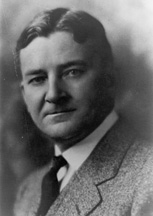


I would suggest a toast this evening to Blaine and his realistic response to moral folly. Oh that we should have such wisdom today!


Sources


Photos and Ilustrations:
The New York Times, rarenewspapers.com
Blaine, public domain photo, bioguide.congress.cov


Text:
Rockefeller quote, "Twenty-first amendment to the United States Constitution," wikipedia.com


Friday, February 17, 2023

The Blaine Act: A 90 Year-Old Rational Response To Progressive Liberalism


The New York Times front page, February 17, 1933


It really is enjoyable to commemorate the passage of the Blaine Act which took place on this day 90 years ago. This brief piece of legislation began a year-long process that ended the debacle we know as Prohibition. Granted, overindulgence in alcohol was a national issue by the Gilded Age. At the same time, I doubt few progressive liberals would have expected the degree of lawlessness that engulfed American society as a result of their best intentions. Indeed, a year before the Blaine Act, John D. Rockefeller wrote this appraisal:


When Prohibition was introduced, I hoped that it would be widely supported by public opinion and the day would soon come when the evil effects of alcohol would be recognized. I have slowly and reluctantly come to believe that this has not been the result. Instead, drinking has generally increased; the speakeasy has replaced the saloon; a vast army of lawbreakers has appeared; many of our best citizens have openly ignored Prohibition; respect for the law has been greatly lessened; and crime has increased to a level never seen before.


And here's a photo of The Honorable John J. Blaine, U.S. Senator from Wisconsin, who was responsible for not only writing the act bearing his name but also the 21st Amendment that officially repealed Prohibition.


I would suggest a toast this evening to Blaine and his realistic response to moral folly. Oh that we should have such wisdom today!


Sources


Photos and Ilustrations:
The New York Times, rarenewspapers.com
Blaine, public domain photo, bioguide.congress.cov


Text:
Rockefeller quote, "Twenty-first amendment to the United States Constitution," wikipedia.com


Thursday, February 17, 2022

Prohibition Paved The Road To Hell


Today we commemorate the passage of the Blaine Act in 1933. This brief piece of legislation began a year-long process that ended the more than twelve year debacle we know as Prohibition. During this period in the American cultural climate, alcohol - there were a few exceptions - could not be manufactured, sold, or transported in the United States.


Granted, overindulgence in alcohol was a particularly serious national issue by the Gilded Age (late 1870's to 1900) if not before. At the same time, I doubt few progressives from that era could have dreamed of the degree of lawlessness that engulfed American society as a result of their best intentions. Indeed, a year before the Blaine Act, John D. Rockefeller wrote this appraisal:


When Prohibition was introduced, I hoped that it would be widely supported by public opinion and the day would soon come when the evil effects of alcohol would be recognized. I have slowly and reluctantly come to believe that this has not been the result. Instead, drinking has generally increased; the speakeasy has replaced the saloon; a vast army of lawbreakers has appeared; many of our best citizens have openly ignored Prohibition; respect for the law has been greatly lessened; and crime has increased to a level never seen before.


I would suggest a toast this evening to The Honorable John J. Blaine, U.S. Senator from Wisconsin, who was responsible for not only writing the act bearing his name but also the 21st Amendment that officially repealed Prohibition. May his realistic response to the moral folly of legalistic social engineering always be commemorated.


Yes, the road to Hell is paved with good intentions. Oh that we should have such wisdom today!


Sources

Photos and Illustrations:
The New York Times, rarenewspapers.com
Blaine, public domain photo, bioguide.congress.cov


Text:
Rockefeller quote, "Twenty-first amendment to the United States Constitution," wikipedia.com


Wednesday, February 17, 2021

Prohibition: A Lesson On Good Intentions, Morality, And The Road to Hell


Today we commemorate the passage of the Blaine Act in 1933. This brief piece of legislation began a year-long process that ended the more than twelve year debacle we know as Prohibition. During this period in the American cultural climate, alcohol - there were a few exceptions - could not be manufactured, sold, or transported in the United States.


Granted, overindulgence in alcohol was a particularly serious national issue by the Gilded Age (late 1870's to 1900) if not before. At the same time, I doubt few progressives from that era could have dreamed of the degree of lawlessness that engulfed American society as a result of their best intentions. Indeed, a year before the Blaine Act, John D. Rockefeller wrote this appraisal:

When Prohibition was introduced, I hoped that it would be widely supported by public opinion and the day would soon come when the evil effects of alcohol would be recognized. I have slowly and reluctantly come to believe that this has not been the result. Instead, drinking has generally increased; the speakeasy has replaced the saloon; a vast army of lawbreakers has appeared; many of our best citizens have openly ignored Prohibition; respect for the law has been greatly lessened; and crime has increased to a level never seen before.


I would suggest a toast this evening to The Honorable John J. Blaine, U.S. Senator from Wisconsin, who was responsible for not only writing the act bearing his name but also the 21st Amendment that officially repealed Prohibition. May his realistic response to such moral folly always be commemorated.


Oh that we should have such wisdom today!


Sources

Photos and Illustrations:
The New York Times, rarenewspapers.com
Blaine, public domain photo, bioguide.congress.cov


Text:
Rockefeller quote, "Twenty-first amendment to the United States Constitution," wikipedia.com


Sunday, February 17, 2019

The Beginning Of The End For The Folly Known As Prohibition


Today we commemorate the passage of the Blaine Act in 1933. This brief piece of legislation began a year-long process that ended the more than twelve year debacle we know as Prohibition.  During this period in the American cultural climate, alcohol - there were a few exceptions - could not be manufactured, sold, or transported in the United States.


Granted, overindulgence in alcohol was a national issue by the Gilded Age (late 1870's to 1900) . At the same time, I doubt few progressives from that era could have dreamed of the degree of lawlessness that engulfed American society as a result of their best intentions. Indeed, a year before the Blaine Act, John D. Rockefeller wrote this appraisal:

When Prohibition was introduced, I hoped that it would be widely supported by public opinion and the day would soon come when the evil effects of alcohol would be recognized. I have slowly and reluctantly come to believe that this has not been the result. Instead, drinking has generally increased; the speakeasy has replaced the saloon; a vast army of lawbreakers has appeared; many of our best citizens have openly ignored Prohibition; respect for the law has been greatly lessened; and crime has increased to a level never seen before.

I would suggest a toast this evening to The Honorable John J. Blaine, U.S. Senator from Wisconsin, who was responsible for not only writing the act bearing his name but also the 21st Amendment that officially repealed Prohibition.  May his realistic response to such moral folly always be commemorated on this day. 


Oh that we should have such wisdom today!


Sources

Photos and Ilustrations:
The New York Times, rarenewspapers.com
Blaine, public domain photo, bioguide.congress.cov


Text:
Rockefeller quote, "Twenty-first amendment to the United States Constitution," wikipedia.com

Saturday, February 17, 2018

Here's A Victory Over Progressivism Just About Every American Can Celebrate


Between 1920 and December 1933 there was a great reform across the United States. It wasn't quite the reform the progressive movement expected.


Today we commemorate the passage of the Blaine Act in 1933. This brief piece of legislation began a year-long process of conventions among the states to adopt an amendment to end the debacle we know as Prohibition. Granted, overindulgence in alcohol was a national issue by the Gilded Age. At the same time, I doubt few liberals would have expected the degree of lawlessness that engulfed American society as a result of their best intentions. Indeed, a year before the Blaine Act, John D. Rockefeller wrote this appraisal:

When Prohibition was introduced, I hoped that it would be widely supported by public opinion and the day would soon come when the evil effects of alcohol would be recognized. I have slowly and reluctantly come to believe that this has not been the result. Instead, drinking has generally increased; the speakeasy has replaced the saloon; a vast army of lawbreakers has appeared; many of our best citizens have openly ignored Prohibition; respect for the law has been greatly lessened; and crime has increased to a level never seen before.


And here's a photo of The Honorable John J. Blaine, U.S. Senator from Wisconsin, who was responsible for not only writing the act bearing his name but also the 21st Amendment that officially repealed Prohibition.


I would suggest a toast this evening to Blaine and his realistic response to moral folly. Oh that we should have such wisdom today!


The New York Times front page from February 17, 1933


Sources

Photos and Illustrations:
The New York Times, rarenewspapers.com
Blaine, public domain photo, bioguide.congress.gov

Text:
Rockefeller quote, "Twenty-first amendment to the United States Constitution," wikipedia.com, reference 3, "Letter on Prohibition - see Daniel Okrent, Great Fortune: The Epic of Rockefeller Center, New York: Viking Press, 2003. (pp.246/7)."


Wednesday, March 2, 2011

Progressivism: 1912 And 2012

Steven Hayward is the new regular at Power Line and he has just begun what should be an exceptional series on what it means to be a Progressive in the United States. The first post is brief and outlines what is to follow. As Hayward points out, the Progressives of the early part of the last century were fiercely opposed to socialism and wrapped in spirit filled evangelical Christianity of the Protestant variety. Though some of their goals may have survived over the century, today's Progressives are quite different from those in 1912 in terms of identity and methodology. OTR thinks his readers will find this series both entertaining and informative.

Thursday, October 8, 2009

Relativism Run Amuk

Gregory of Yardale posted a short note today on Moonbattery defining the madness that surrounds us under the "progressive" label. He draws attention to the announcement earlier this week that an Israeli woman won the Nobel prize in chemistry. At the same time, a few miles away in Gaza, Palestinian authorities passed a law forbidding women to ride motorcycles. One culture celebrates the achievement of women on the world stage. The other suppresses a simple public activity by women that would go unnoticed on any American street. Any rational individual who supports the spirit of freedom and equality as expressed in the truly progressive ideas of the Founding Fathers could not support that suppression. But today's liberals and "progressives" have no problem throttling Israel as an oppressive regime determined to crush the unfortunate "Palestinian people." That liberals of this ilk inhabit the White House should repulse all of us.

Here's the link if you want more.

ShareThis