Friday, April 5, 2024

Emmylou: Still Touring After All These Years


In fifty years singer-songwriter Emmylou Harris has won fourteen Grammy Awards including a Lifetime Achievement Award in 2018. Along the way she's gained many honors including membership in the Grand Ole Opry, the Country Music Hall of Fame, the American Academy of Arts and Sciences, and a star on the Hollywood Walk of Fame. Her career first gained traction in small clubs and coffee houses in Washington and its suburbs. I was only a few miles from most of the venues but sadly never saw her perform. Still, it was impossible not to see and hear the advertising in and around Georgetown in DC and the Maryland suburbs of Bethesda, Chevy Chase and Silver Spring. By the early '70's she moved to Los Angeles to work with Gram Parsons and his band, The Grievous Angels. When Parsons died in 1973 the devastating event led her to focus on Parsons's search for the fusion sound he called "cosmic American music." The sound Harris and Parsons produced in their short time together, in addition to her life-long dance with experimental sounds in folk, blues and country music, would have a significant impact on decades of American music.

Harris continues to produce innovative and award-winning sound. In 2016 a selection of duets with Rodney Crowell - The Traveling Kind - won a Grammy for Best Americana Album. Here is a track from the album:


Earlier this week Emmylou Harris turned 77. Fame has been kind to her given such a long and successful touring and recording career. She's brought quality entertainment to millions of people since the beginning in those early days with Graham Parsons. We'll never know where the two of them would have gone together in the world of music but it's safe to say it would have been far. Here is a song she and Bill Danoff wrote as a tribute to Parsons:


Boulder to Birmingham

I don't want to hear a love song
I got on this airplane just to fly
And I know there's life below
But all that it can show me
Is the prairie and the sky

And I don't want to hear a sad story
Full of heartbreak and desire
The last time I felt like this
It was in the wilderness and the canyon was on fire
And I stood on the mountain in the night and I watched it burn
I watched it burn, I watched it burn.

I would rock my soul in the bosom of Abraham
I would hold my life in his saving grace.
I would walk all the way from Boulder to Birmingham
If I thought I could see, I could see your face.

Well you really got me this time
And the hardest part is knowing I'll survive.
I have come to listen for the sound
Of the trucks as they move down
Out on ninety five
And pretend that it's the ocean
coming down to wash me clean, to wash me clean
Baby do you know what I mean

I would rock my soul in the bosom of Abraham
I would hold my life in his saving grace.
I would walk all the way from Boulder to Birmingham
If I thought I could see, I could see your face.


Thank you, Emmylou, and a happy birthday (April 2), too. It's been quite a journey from those gigs at the Red Fox Inn.


Sources:
Photo, emmylouharris.com
Lyrics: play.google.com


Thursday, April 4, 2024

A King Struck Down By Hate


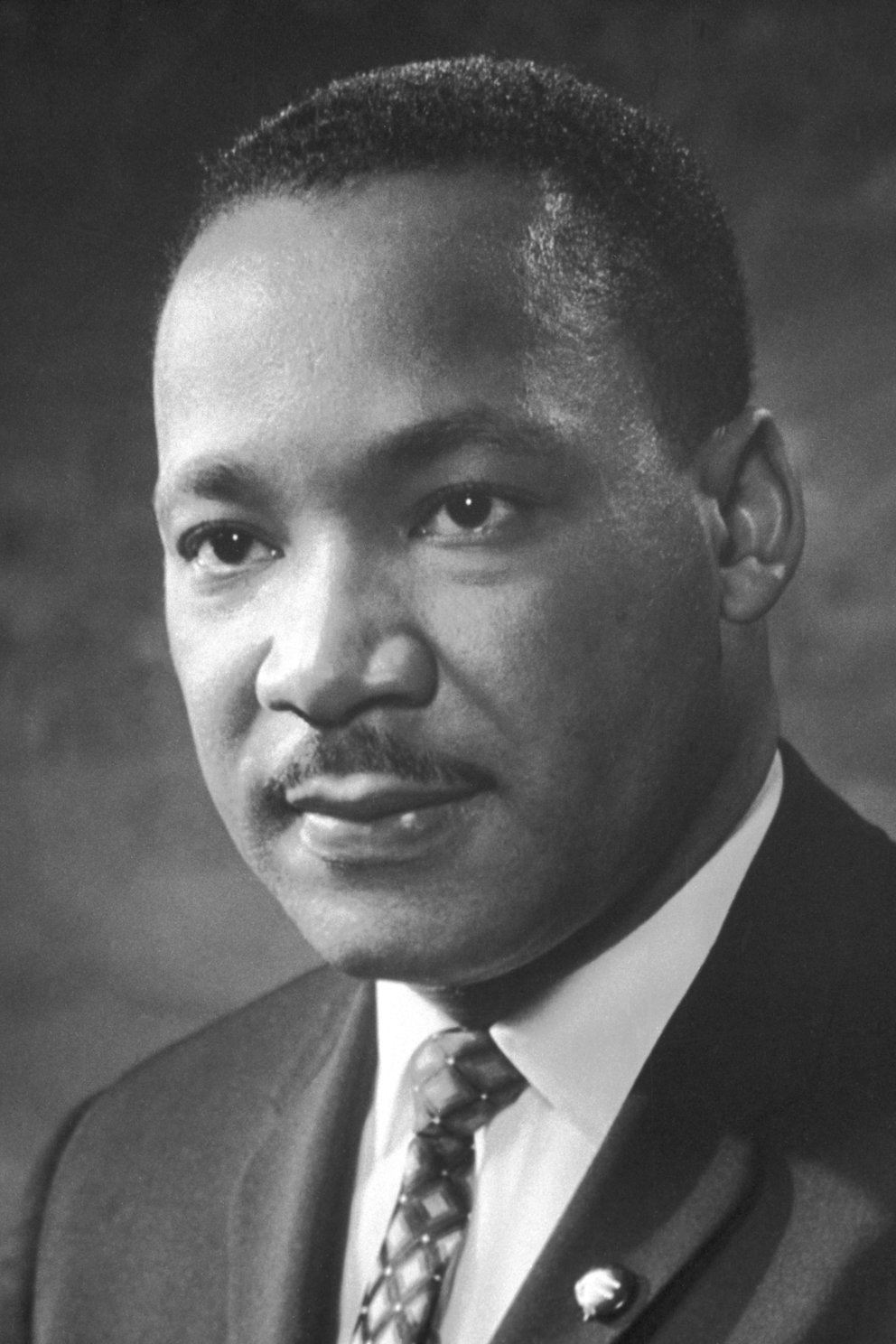
Each morning after I contemplate the world outside the window wall by my desk my focus shifts to reviewing Internet news sources for a hour or so. Again this year it was unsettling but not unexpected to find little more than passing mention one of the most significant events in our national history. That event was the assassination of Martin Luther King, Jr. in 1968.


That year American society was already divided over our involvement in the Vietnam War. King's assassination, and that of Robert Kennedy two months later, widened that divide and pushed domestic instability on several fronts to unheard of levels in our lifetime. Much of the anger, distrust, and uncertainty rising out of that era has been simmering ever since. As a people we pay a huge price for focusing on what divides us rather than on what unites us. The erosion of political discourse since 2000 is a daily reminder of that cost.

Today the erosion accelerates when a zealous, hate-filled prosecutor indicts a former president with a felony crime that ordinarily would be a misdeanor offense for virtually all other Americans. The leftist mob cheers this indictment. At the same time it ignores the precedent it sets and the national consequences sure to follow when the opposition party assumes executive power and a legislative majority, both likely near-term events.

I doubt our Founding Fathers ever expected the American experience they created to be an easy one to maintain. We're certainly proving that today. Furthermore, I doubt they expected it to evolve outside the freedoms they enshrined in a republic and its rule by law. Much of what King did, much of what he said about equality and peaceful change, operated within that context. Although there is much debate on whether or not he would have maintained that posture had he lived, his legacy lives on to help us perfect our union. We should take the time to stop talking and listen before our unique experiment enboldened by the Declaration of Independence and the Constitution can no longer be sustained. We can only imagine how pleased King would be were we to focus on reconciliation in the pursuit of freedom, equality, and justice.

More about this day, the man, and his legacy can be found at the Lorraine Motel/National Civil Rights Museum website, the King Center website, and that of the Martin Luther King National Historical Park.


Sources

Photos and Illustrations:
Public domain photo, Nobel Foundation (http://nobelprize.org/) and Wikimedia Commons

Sunday, March 31, 2024

Easter 2024


Easter Changes Everything!
Christ is Risen!


The Angel Rolling The Stone Away From the Sepulchre, William Blake, ca. 1808


Thine be the glory, risen, conquering Son;
endless is the victory, thou o'er death hast won;
angels in bright raiment rolled the stone away,
kept the folded grave clothes where thy body lay.


Refrain:
Thine be the glory, risen conquering Son,
Endless is the vict'ry, thou o'er death hast won.


Lo! Jesus meets us, risen from the tomb;
Lovingly he greets us, scatters fear and gloom;
let the Church with gladness, hymns of triumph sing;
for her Lord now liveth, death hath lost its sting.

No more we doubt thee, glorious Prince of life;
life is naught without thee; aid us in our strife;
make us more than conquerors, through thy deathless love:
bring us safe through Jordan to thy home above.


Christ As The Redeemer Of Man,  William Blake, ca. 1808


He is Risen indeed!


Brahms: Ein deutches Requiem, Part 6 
For here have we no continuing city
(English translation follows the German text)

Denn wir haben hie keine bleibende Statt,
sondern die zukünftige suchen wir. 

Siehe, ich sage euch ein Geheimnis:  
Wir werden nicht alle entschlafen,
wir werden aber all verwandelt werden, 
und dasselbige plötzlich, in einem Augeblick, 
zu der Zeit der letzten Posaune. 
Denn es wird die Posaune schallen, 
und die Toten werden auferstehen unverweslich,
und wir werden verwandelt werden. 
Dann wird erfüllet werden das Wort, das geschrieben steht: 
Der Tod ist verschlungen in den Sieg. 
Tod, wo ist dein Stachel? 
Hölle, wo ist dein Sieg? 
Herr, du bist würdig zu nehmen Preis und Ehre und Kraft, 
denn du hast alle Dinge geschaffen, 
und durch deinen Willen haben sie das Wesen 
und sing geschaffen.

 
For here have we no continuing city,
but we seek one to come. 

Behold, I tell you a mystery: 
we shall not all sleep, 
but we shall all be changed in a moment, 
in the twinkling of an eye at the last trumpet. 
For the trumpet shall sound, 
and the dead shall be raised incorruptible, 
and we shall be changed. 
Then shall be brought to pass the saying that is written: 
Death is swallowed up in victory. 
O death, where is thy sting? 
O hell, where is the victory?

Thou are worthy, O Lord to receive glory and honour and power: 
for thou hast created all things 
and by thy will they are 
and were created.


Sources


Photos and Illustrations:
Blake images, collections.vam.ac.uk, Victoria and Albert Museum, London

Saturday, March 30, 2024

Holy Saturday 2024


Holy Saturday . . . is the sound of perfect silence. Yesterday's mockery, the good thief's prayer, the cry of dereliction - all of that is past now. Mary has dried her tears, and the whole creation is still, waiting for what will happen next.
Christ in the Sepulchre           William Blake, 1808


Today, there is a great silence. The Savior has died. He rests in the tomb. Many hearts were filled with uncontrollable grief and confusion. Was He really gone? Had all their hopes been shattered? These and many other thoughts of despair filled the minds and hearts of so many who loved and followed Jesus.

It is on this day that we honor the fact that Jesus was still preaching. He descended to the land of the dead, to all the holy souls who had gone before Him, so as to bring them His gift of salvation. He brought His gift of mercy and redemption to Moses, Abraham, the prophets and so many others. This was a day of great joy for them. But a day of great sorrow and confusion for those who watched their Messiah die on the Cross.

Holy Saturday should be a reminder to us that even those things which seem to be the worst of tragedies are not always what they seem. God the Son was obviously doing great things as He laid in the tomb. He was accomplishing His mission of redemption. He was changing lives and pouring forth grace and mercy.

With the altar stripped bare and the Divine Service unspoken, the wait in silence resonates.


Sources


Photos and Illustrations:
collections.vam.ac.uk/item/O74285/the-angels-hovering-over-the-watercolour-blake-william/

Text:

The opening quotation was taken from an excerpt from Death on A Friday Afternoon, by Richard John Neuhaus. The excerpt was posted on firstthings.com in 2007.
Second quotation, cathoicreadings.org, Holy Saturday entry

Friday, March 29, 2024

Good Friday 2024


For contemplation on this holy day...


Crucifixion (Corpus Hypercubus)               Salvador Dali, 1954


Christ of Saint John of the Cross                     Salvador Dali, 1951


For more information on the Christian dimension of Dali's surrealistic interpretation of the Crucifixion (Corpus Hypercubus) go here and here, for Christ of Saint John of the Cross go here and here, and for the Good Friday music(Verwandlungsmusik) from Wagner's opera, Parsifal, go here.

.

Thursday, March 28, 2024

Maundy Thursday: 2024


"Maundy" is an Anglo-French word derived from the Latin "mandatum," meaning "commandment." On this day , also known as Holy Thursday, Christians remember the Last Supper - likely a Passover meal - and the institution of Holy Communion, Jesus's command to his disciples to love one another as He loved them, His agony in the Garden of Gethsemane, and His betrayal by Judas Iscariot.


Detail, The Sacrament of the Last Supper Salvador Dali, 1953


A new command I give you: Love one another. As I have loved you, so you must love one another.

                                                                           John 13:34 NIV


Go to dark Gethsemane,
Ye that feel the tempter's power;
Your Redeemer's conflict see;
Watch with him one bitter hour;
Turn not from his griefs away;
Learn of Jesus Christ to pray.


See him at the judgment hall,
Beaten, bound, reviled, arraigned;
See him meekly bearing all;
Love of man His soul sustained!
Shun not suffering, shame, or loss;
Learn of Christ to bear the cross.


In mainstream churches, as a symbol of Christ, the altar is stripped in remembrance of his abandonment by the disciples in Gathsemane, a garden at the foot of the Mount of Olives. This action prepares the congregation and chancel for Good Friday and the celebration of the day the world changed forever.


If you are interested in learning more about Salvador Dali's surreal Sacrament of the Last Supper, go here.


Sources

Photos and Illustrations: Dali painting, National Gallery of Art, Washington, D.C.


Paul Whiteman: There Was A Time When America Knew Him As The King Of Jazz


We've had quite a few significant musical birthdays this week. The honor today is reserved for "The King of Jazz," Paul Whiteman. A strong-willed innovator and perfectionist, he became the most popular band leader in the U.S. during the Roaring Twenties. Whiteman encouraged many talented artists and composers through his interest in fusing jazz with other musical styles. He appreciated experimental music and sponsored several concerts featuring new compositions and artists. Historian Glenn T. Eskew says this about him:

Alert to the emerging style, Whiteman pioneered standardized settings of the songs, capturing the melodies on paper and leaving room for improvisation while making jazz appear "respectable" for dancing by using symphonic arrangements. Whiteman made recordings in 1920 of "Avalon" and "Whispering" songs that inspired Johnny Mercer. By 1924, in a bid to blend the "serious" with the "popular," Whiteman conducted his Palais Royale Orchestra in the world premier of George Gershwin's 'Rhapsody in Blue,' which revealed the omnipresence of syncopation. Indeed, Whiteman's various approaches to jazz gained him his crown, for he mastered a jazz-inflected light-sweet music that while never the hot music of [Louis] Armstrong nonetheless popularized the genre in the United States. From the cabaret to the symphony hall, musicians embraced the rhythm and blues of playing as Americans consumed Whiteman's liberating jazz.

In his most notable experimental concert he asked his friend and collaborator, George Gershwin, to compose a "jazz concerto" for his series of experimental music concerts. Though faced with a short performance deadline, Gershwin reluctantly agreed. In two weeks, he completed the new piece and titled it Rhapsody in Blue. After two weeks of orchestration and eight days of rehearsal, Whiteman premiered the piece at the Aeolian Hall in New York in February 1924 with Gershwin at the piano.

Today Rhapsody in Blue enters its second century beloved throughout the world but Whiteman is all but forgotten as the man behind the music. There is a backstory here worth knowing. After all, Whiteman gave early exposure to some of the best, including Bing Crosby, Mildred Bailey, Bunny Berigan, Jack Venuti, Bix Beiderbecke, and Jack Teagarden. Many people today won't recognize most of these names but they should be aware that these unknowns helped shape much of the music - especially jazz and vocal pop - we hear today.

Here's an important interview with Whiteman about Gershwin and the creation of Rhapsody in Blue. It's well worth every second of talk and includes about three minutes of music:


Whiteman was quite the showman as can be viewed in this excerpt from the 1930 film, King of Jazz. The film was the first to use a prerecorded studio soundtrack "made independently of the actual filming." It was also one of the earliest Technicolor films.


And we can't let Whiteman's birthday pass without an opportunity to hear his celebrated orchestra performing the popular music that made them famous. This 1928 recording features 25 year-old Bing Crosby singing his first number one hit. Crosby would go on to shape popular singing for the rest of the century.


That's happy music. Tap your feet, did you?


Sources

Photos and Illustrations:
Whiteman photo, photographer uncredited, archive.org

Text:
Glenn T. Askew, Johnny Mercer: Southern Songwriter for the World, University of Georgia Press: Athens and London, 2013


ShareThis