Showing posts with label Atlanta. Show all posts

Thursday, April 4, 2024

A King Struck Down By Hate


Each morning after I contemplate the world outside the window wall by my desk my focus shifts to reviewing Internet news sources for a hour or so. Again this year it was unsettling but not unexpected to find little more than passing mention one of the most significant events in our national history. That event was the assassination of Martin Luther King, Jr. in 1968.
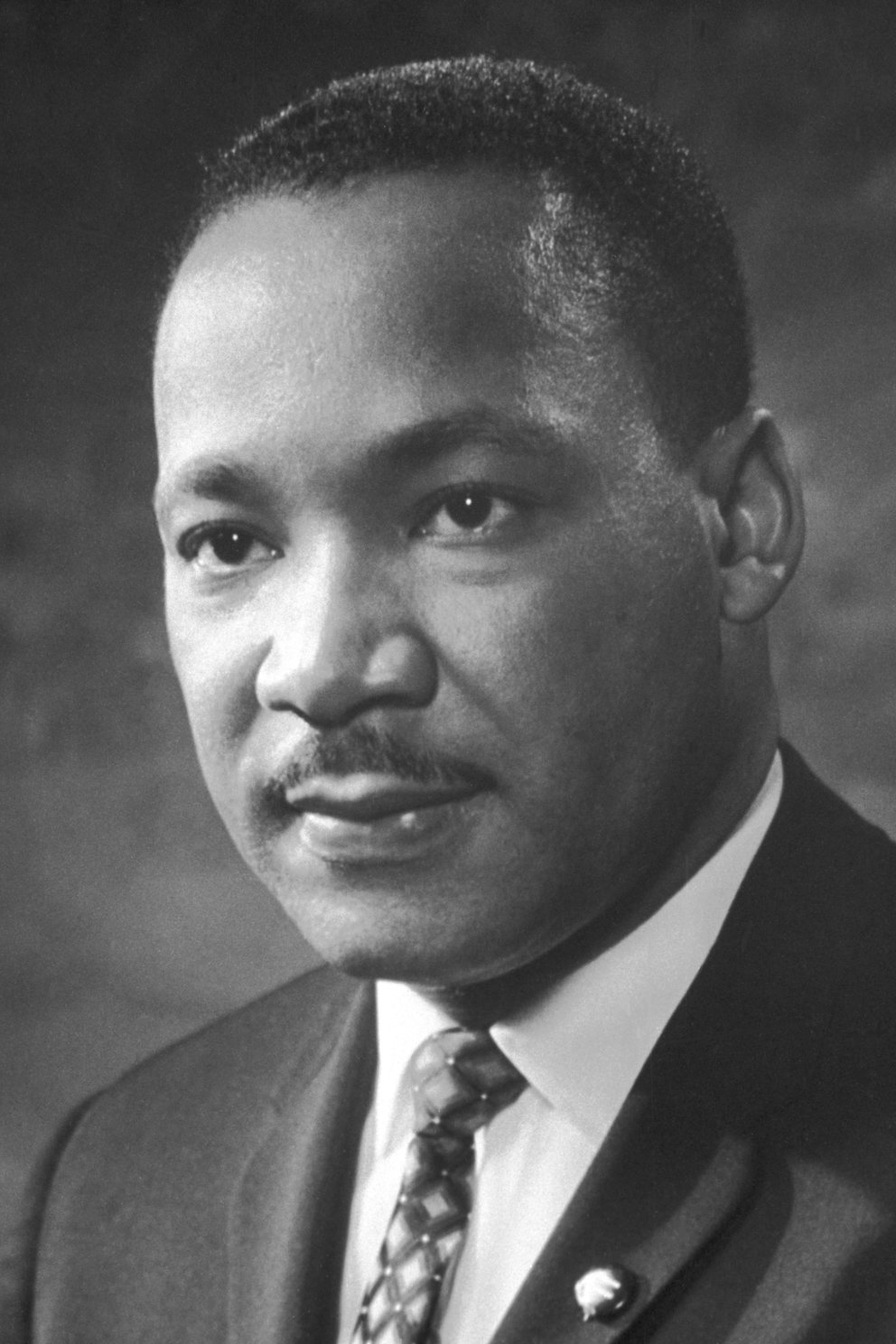


That year American society was already divided over our involvement in the Vietnam War. King's assassination, and that of Robert Kennedy two months later, widened that divide and pushed domestic instability on several fronts to unheard of levels in our lifetime. Much of the anger, distrust, and uncertainty rising out of that era has been simmering ever since. As a people we pay a huge price for focusing on what divides us rather than on what unites us. The erosion of political discourse since 2000 is a daily reminder of that cost.

Today the erosion accelerates when a zealous, hate-filled prosecutor indicts a former president with a felony crime that ordinarily would be a misdeanor offense for virtually all other Americans. The leftist mob cheers this indictment. At the same time it ignores the precedent it sets and the national consequences sure to follow when the opposition party assumes executive power and a legislative majority, both likely near-term events.

I doubt our Founding Fathers ever expected the American experience they created to be an easy one to maintain. We're certainly proving that today. Furthermore, I doubt they expected it to evolve outside the freedoms they enshrined in a republic and its rule by law. Much of what King did, much of what he said about equality and peaceful change, operated within that context. Although there is much debate on whether or not he would have maintained that posture had he lived, his legacy lives on to help us perfect our union. We should take the time to stop talking and listen before our unique experiment enboldened by the Declaration of Independence and the Constitution can no longer be sustained. We can only imagine how pleased King would be were we to focus on reconciliation in the pursuit of freedom, equality, and justice.

More about this day, the man, and his legacy can be found at the Lorraine Motel/National Civil Rights Museum website, the King Center website, and that of the Martin Luther King National Historical Park.


Sources

Photos and Illustrations:
Public domain photo, Nobel Foundation (http://nobelprize.org/) and Wikimedia Commons

Tuesday, April 4, 2023

A Fallen Leader Remembered


Every morning after I contemplate the world outside the window wall by my desk my focus shifts to reviewing Internet news sources for a hour or longer if warranted. It was unsettling but not unexpected again today to find little more than passing mention of the most significant event in our national history to occur on April 4. That event was the assassination of Martin Luther King, Jr. in 1968.


That year American society was already divided over our involvement in the Vietnam War. King's assassination, and that of Robert Kennedy two months later, widened that divide and pushed domestic instability on several fronts to unheard of levels in our lifetime. Much of the anger, distrust, and uncertainty rising out of that era has been simmering ever since. As a people we pay a huge price for focusing on what divides us rather than on what unites us. The erosion of political discourse over the past decde is a daily reminder of that cost. 

Today the erosion accelerates when a zealous, hate-filled prosecutor indicts a former president with a felony crime that ordinarily would be a misdeanor offense for virtually all other Americans. The leftist mob cheers this indictment. At the same time it ignores the precedent it sets and the national consequences sure to follow when the opposition party assumes executive power and a legislative majority, both likely near-term events.

I doubt our Founding Fathers ever expected the American experience they created to be an easy one to maintain. We're certainly proving that today. Furthermore, I doubt they expected it to evolve outside the freedoms they enshrined in the rule of law. Much of what King did, much of what he said about equality and peaceful change, operated within that context. Although there is much debate on whether or not he would have maintained that posture had he lived, his legacy lives on to help us perfect our union. We should take the time to stop talking and listen before our unique experiment enboldened by the Declaration of Independence and the Constitution can no longer be sustained. We can only imagine how pleased King would be were we to focus on reconciliation in the pursuit of freedom, equality, and justice.

More about this day, the man, and his legacy can be found at the King Center website and that of the Martin Luther King National Historical Park.


Sources

Photos and Illustrations:
Public domain photo, Nobel Foundation (http://nobelprize.org/) and Wikimedia Commons

Monday, April 4, 2022

Martin Luther King's Dream Still Lives


Every morning after I contemplate the world outside the window wall by my desk my focus shifts to reviewing Internet news sources for a hour or longer if warranted. It was unsettling but not unexpected today to find little more than passing mention of the most significant event in our national history to occur on April 4. That event was the assassination of Martin Luther King, Jr. in 1968.


In 1968 American society was already divided over our involvement in the Vietnam War. King's assassination, and that of Robert Kennedy two months later, widened that divide and pushed domestic instability on several fronts to unheard of levels in our lifetime. Much of the anger, distrust, and uncertainty rising out of that era has been simmering ever since. As a people we pay a huge price for focusing on what divides us rather than on what unites us. The erosion of political discourse over the past six years is a daily reminder of that cost

I doubt our Founding Fathers ever expected the American experience they created to be an easy one to maintain. Furthermore, I doubt they expected it to evolve outside the freedoms they enshrined in the rule of law. Much of what King did, much of what he said about equality and peaceful change operated within that context. Although there is much debate on whether or not he would have maintained that posture had he lived, his legacy lives on to help us perfect our union. We should take the time to stop talking and listen.

More about this day, the man, and his legacy can be found at the King Center website and that of the Martin Luther King National Historical Park.


Sources

Photos and Illustrations:
Public domain photo, Nobel Foundation (http://nobelprize.org/) and Wikimedia Commons

Tuesday, March 15, 2022

Atlanta's WSB Radio Celebrates 100 Years


In the early days of the 20th century the call sign "WSB" was assigned to a ship for communications with land-based stations and nearby ships. When that vessel sank, the letters were assigned to another ship that was quickly lost. Mariners are very superstitious about such happening and soon the marked call sign was reserved for land based operators. The year was 1919. Civilian radio use - almost exclusively with a crystal set - began a robust recovery from prohibitions in World War I. At that time there were around 8000 licensed amateur radio operators in the U.S. They shared the airways with fewer than half a dozen licensed radio stations broadcasting brief, intermittent programs featuring concerts, news, and special sports events, especially boxing.

By 1922 technological improvements led to a large expansion in the number of broadcast stations - commercial operations - including the landmarks established by Westinghouse (KDKA Pittsburgh, WJZ Newark, WBZ Springfield/Boston. and KYW Chicago) and American Telephone and Telegraph (WJY Hoboken/New York). It is in this wave of enthusiasm for radio that the owners of the Atlanta Journal established WSB, the oldest station in the Southeast. The first broadcast, eagerly awaited by the city's one thousand wireless radio enthusiasts, took place on March 15, 1922, at a power of 100 watts. They beat their competition, the Atlanta Constitution and WGST, by two days. In its first decades the station was known as "The Voice of the South" but in time management adopted the slogan, "Welcome South, Brother." It was a perfect fit for call letters that had been randomly selected and assigned by the Federal Radio Commission.

In its 100 years WSB has played significant roles in the American experience. They range from the popularizing of Southern gospel music to the advocacy for civil rights through a pioneering editorial policy faced by broad and often hostile opposition. Today, the WSB family serves its listeners as a national talk radio leader, the driving companion for millions of metro Atlanta commuters, and the University of Georgia flagship station for football and basketball.

In retirement I don't listen to local radio much these days unless the Bulldogs are on the gridiron and there's no video media at hand. At the same time, I'm never far removed from the magic of radio because my great uncle Charles's 1921 Westinghouse RC Regenerative Receiver sits in an honored place in our den next to my desk.


It was built by the Westinghouse Electric and Manufacturing Company in East Pittsburgh, Pennsylvania. The radio was dated by its very low serial numbers (2239 and 4004). My uncle lived about 75 miles from KDKA in Pittsburgh and I know he enjoyed listening to that station on his radio because he told me so. There's written evidence on the radio manual as well. As for WSB, I can't say with certainty that he ever heard the station but he was an avid radio fan from the very beginning of its commercial era when it had thirty stations. With so few choices it's hard to imagine him missing Atlanta on the air and that warm greeting, "Welcome South, Brother!"


Happy birthday, WSB!


Sources

Photos and Illustrations:
logo, commons.wikimedia.org/wiki/File:WSB_NewsTalkLogo.jpg
radio, OTR photo collection

Text:
en.wikipedia.org/wiki/WSB_(AM)
eh.net/encyclopedia/the-history-of-the-radio-industry-in-the-united-states-to-1940
earlyradiohistory.us

Thursday, March 15, 2018

"Welcome South, Brother"- Atlanta's WSB-AM Celebrates 96 Years On The Air


In the early days of the 20th century the call sign "WSB" was assigned to a ship for communications with land-based stations and nearby ships. When that vessel sank, the letters were assigned to another ship that was quickly lost. Mariners are very superstitious about such happening and soon the marked call sign was reserved for land based operators. The year was 1919. Civilian radio use - almost exclusively with a crystal set - began a robust recovery from prohibitions in World War I. At that time there were around 8000 licensed amateur radio operators in the U.S. They shared the airways with fewer than half a dozen licensed radio stations broadcasting brief, intermittent programs featuring concerts, news, and special sports events, especially boxing.

By 1922 technological improvements led to a large expansion in the number of broadcast stations - commercial operations - including the landmarks established by Westinghouse (KDKA Pittsburgh, WJZ Newark, WBZ Springfield/Boston. and KYW Chicago) and American Telephone and Telegraph (WJY Hoboken/New York). It is in this wave of enthusiasm for radio that the owners of the Atlanta Journal established WSB, the oldest station in the Southeast, on March 15, 1922. They beat their competition, the Atlanta Constitution and WGST, by two days. In time the management adopted "Welcome South, Brother" as WSB's slogan. It was a perfect fit for call letters that had been randomly selected and assigned by the Federal Radio Commission.


In its 96 years WSB has played significant roles in the American experience. They range from the popularizing of Southern gospel music to the advocacy for civil rights through a pioneering editorial policy faced by broad and often hostile opposition.

Today, the WSB family serves its listeners as a national talk radio leader, the driving companion for millions of metro Atlanta commuters, and the University of Georgia flagship station for football and basketball.

In retirement I don't listen to local radio much these days unless the Bulldogs are on the gridiron and there's no video media at hand. At the same time, I'm never far removed from the magic of radio because my great uncle Charles's 1921 Westinghouse RC Regenerative Receiver sits in an honored place in our den next to my desk. It was built by the Westinghouse Electric and Manufacturing Company in East Pittsburgh, Pennsylvania. The radio was dated by its very low serial numbers (2239 and 4004). My uncle lived about 75 miles from KDKA in Pittsburgh and I know he enjoyed listening to that station on his radio because he told me so. There's written evidence on the radio manual as well. As for WSB, I can't say with certainty but he was an avid fan from the very beginning of the commercial radio era when it had thirty stations. With so few choices it's hard to imagine him missing Atlanta on the air and that warm greeting, "Welcome South, Brother!"


Happy birthday, WSB!


Sources

Photos and Illustrations:
logo, commons.wikimedia.org/wiki/File:WSB_NewsTalkLogo.jpg
radio, OTR photo collection

Text:
en.wikipedia.org/wiki/WSB_(AM)
eh.net/encyclopedia/the-history-of-the-radio-industry-in-the-united-states-to-1940
earlyradiohistory.us


Saturday, March 14, 2015

The Murder Kroger: Where "Shop 'Til You Drop" Is Frighteningly Real


In the thirty or so years our family has lived in metro Atlanta, I've had a few opportunities to drive past the Kroger on Ponce de Leon Avenue between North Avenue at Somerset Place. It's known as Murder Kroger. The site is a few blocks from the Carter Center and a ten minute walk from Piedmont Park and the tony Mid-Town district on Peachtree Street. 

The store opened in the mid-'80's in response to tax incentives and a vast urban renewal project including new residential space in a former Ford Motor plant. Over its near thirty year history the neighborhood has witnessed increasing gentrification along with new shops, bars, restaurants ,and recreational opportunities on the recently opened Atlanta Beltline Trail. That seems to have made little difference in one statistic; that is, crime. And the crime of interest is murder. The first killing occurred in the parking lot in 1991. A murder victim was found locked inside a car in the parking lot in 2002. Another victim was found just off the parking lot in 2012. Four days ago, a man was killed next to the building confronting thieves breaking into his car. It's not clear precisely when the moniker, "Murder Kroger" came about, but it has been well-earned at a tragic cost. And it is a tragedy that a place can be known by such a name.   It is as if we have come to accept Murder Kroger as a norm.  It does, after all, have a Facebook page ,  fan club,  tee-shirt, Twitter account (posted by Freddy Kroger), and a song: 


Down on Ponce where the call girls roam
and the homeless trannies won't leave you alone
just a block or so past the Clermont Lounge
sits the deadliest grocery store in town
it's a good place to go if you wanna buy crack
but if you go there for groceries you may never come back

Its murder
Murder Kroger
Its murder
Murder Kroger

It's a grocery store with a deadly twist
You'll get shot in the head for your shopping list
Murder Kroger

It's the worst place to shop in all of Atlanta
you could lose your life over a twelve pack of Fanta
if you leave your car don't forget your mace
unless you wanna get stabbed in the face
by an angry bum with a switchblade knife
I hope those hot pockets were worth your life

It's murder

Murder Kroger
Murder
Murder Kroger

The odds are good you won't come back alive
and your friends will all hear about it on Fox 5
Murder Kroger

It's Murder Kroger
It's Murder Kroger
Murder Kroger


It's a grocery store with a deadly twist
You'll get shot in the head for your shopping list

It's Murder Kroger
It's Murder Kroger
Murder Kroger

The odds are good you won't come back alive
and your friends will all hear about it on Fox 5
Murder Kroger


Murder Kroger has tried to rebrand itself as the Beltline Kroger. It no longer sits in a "bad" neighborhood but murder was there in 1991 and it's there today. I don't know if the store will ever overcome it's past. I don't fully know what such a store and its culture says about us. I do know with certainty it is a well-known landmark, quirky, bizarre, and somewhat risky. 

Tuesday, August 26, 2014

Doing Less With Less At CNN, HLN, And TBS


For nineteen years working adjacent the Five Points MARTA station in downtown Atlanta, if I looked out my office window the CNN Center filled the view. Many journalists thought it was folly for Ted Turner to think a cable news network had any chance of survival in the world of television news. Ted proved them wrong beginning in 1980. By the time he moved on CNN was an international sensation. For a decade it had the most comprehensive - best designed as well -  news web page on the Internet. Fox News didn't appear until the mid-80's and CNN went essentially unchallenged until it began to openly embrace a more liberal political posture. By the late-90's their superb web page was reduced to a rather colorless, bland layout and by 2002, both CNN and HLN had lost the ratings battle to Fox News. Turner's brilliant "vision" has never recovered. 

Today's news about 550 buyouts and additional layoffs, mostly for CNN and HLN personnel, saddens me. At the same time, I did have something to say in this blog about the situation at TBS as early as 2009:

...First, either the Associated Press writer, David Bauder, apparently doesn't watch news broadcasts on Fox News or he can't recognize news from opinion. And second, CNN U.S. president Jon Klein is deluding himself if he thinks CNN is the "real news network." There was a time, years ago, when CNN did "read the news," but those days are long gone. CNN has been a bastion of liberal journalism for years now, and that's fine as long as people, including management, acknowledge it. On the other hand, Fox News seems perfectly comfortable with their center right news and conservative opinion. If CNN's management wants to operate under a delusion, then they're suffering from Sulzberger [myopia], the illness that is sinking The New York Times.
I feel for CNN. Fifteen years ago, they had the most comprehensive, useful, and timely news page on the Internet. Today, that page is a shell of its former self. Their cable news is struggling. Maybe it's time for that madman maverick, Ted Turner, to rescue his baby. At least he'd bring humor along with his delusions. Best of all, he wouldn't mind admitting he's a far lefty.

I doubt if Ted will come to the rescue in this age of niche journalism. He's likely having too much fun whatever he's up to these days. That leaves us and the stockholders looking to current management and its ability to adjust to the pendulum shifts in opinions and beliefs taking place in a rapidly changing national political environment. 


Photo: PBS.org

Sunday, May 3, 2009

Kyle Wingfield At The New Atlanta Journal-Constitution

William Katz writes some very kind words about the conservative voice of Kyle Wingfield, now writing on the opinion page of the newly revised Atlanta Journal-Constitution (AJC). Wingfield comes to his new assignment from the Wall Street Journal. This news should be fresh air for those who appreciate first-class writers.

The AJC reported a 20% drop in first quarter circulation, a decline it must stop if the print edition is to survive. Wingfield's byline should attract more readers, but the paper's long-term success will require more aggressive changes. This is a challenging time for newspapers everywhere. I hope they can find a profitable niche in the new information world.

Tuesday, February 17, 2009

Reinventing Where America Lives

For most of the time in post-World War II America, I think a house was a reasonably accurate extension of the identity and character of its homeowners. That began to change for me in the mid-1990s, when my wife would return home with stories about the real estate explosion in the north Atlanta suburbs. It seemed that more and more people were buying huge, expensive homes in new developments along the Chattahoochee River corridor. Nothing wrong with that, with one exception. More than a few of the homes had virtually no furniture. Fast forward a decade and I'll bet those same houses stand empty of people. In other words, the "all hat, no cattle" lifestyle had come head to head with the reality of the financial and housing meltdown. As the decline enters its second year, the ability to purchase a house remains somewhat detached from reality, and the family you see moving in next door may not be what you get. Furthermore, occupancy rates and rental housing continue to mold the identity and character of many neighborhoods. With the Atlanta metro area now ranked as the third emptiest city in the country, you can bet change is the order of the day.

If you're a student of urban historical geography, all of this would make perfect sense, in part, because it would be interpreted perhaps in a less emotional environment. For homeowners, it is interpreted more in terms of property value, personal safety, quality schools, employment opportunity, and culture.

I discovered some "must read" articles on this subject, thanks to Tim Mak's "The Decline of Suburbia," appearing today on the blog, The New Majority. I think two of his sources demand special attention. They are:

Richard Florida's "How the Crash Will Reshape America," from The Atlantic Online; and

Alan Ehrenhalt's "Trading Places," appearing in The New Republic

A commenter provided a link to David Brooks's New York Times opinion column on a recent Pew Research Center study of American preferences for location and lifestyle. In general, I found comments, if available, to be of great interest.

Yes, I'm asking my readers to take on a long assignment here, but is a significant topic with serious social, economic, and political impacts for most Americans. If you get the feeling this subject was one aspect of my training and career, you'd be correct.

Photo by David Shankbone

ShareThis