Thursday, January 25, 2018

Burns Night 2018: A Celebration Of Robert Burns


Today Scottish organizations and communities around the world are celebrating Burns Day, the 259th anniversary of the birth of Robert Burns (1759-1796), the Bard of Scotland. Soon after the light fades, attention turns to Burns Night, a supper commemorating the life and work of the Bard of Scotland.  In 2016 the International Business Times UK edition said this about him:

Burns is one of Scotland's most important literary figures, best known for his famous – and often humorous – songs and poetry. He is regarded as Scotland's National Bard. His most recognised works include Auld Lang Syne, which is often sung at Hogmanay on New Year's Eve, and Scots Wha Hae, which has become an unofficial Scottish national anthem.
Burns, commonly known as Rabbie, was born to a poor family in Alloway, Ayr, on 25 January 1759 and began his working life on the family farm. His father hired a local teacher to tutor Burns, who showed signs of having a natural talent for writing from a young age.
As Burns grew older, his passion for Scotland and his contemporary vision played important roles in inspiring the founders of socialism and liberalism. His first work, Poems, Chiefly in the Scottish Dialect – later known as the Kilmarnock Edition – was published in 1786.
He also wrote in English and is regarded as a pioneer of the Romantic movement. Burns' poetry drew on references to classical, biblical and English literature, as well as the Scottish Makar tradition – a term from Scottish literature for a poet or bard.
Burns died in Dumfries at the age of 37. Inspired by Scottish history and culture, as well as Scotland's countryside, Burns remains one of the most celebrated figures in the country's history – as demonstrated by the annual Burns Night celebrations.


Here are interpretations of three of Burns's best known poems. The first two are by the late, great Scottish folk singer and educator, Jean Redpath:


There's nought but care on ev'ry han',

In every hour that passes, O
What signifies the life o' man,
An' 'twere na for the lasses, O.

Green grow the rashes, O
The sweetest hours that e'er I spend,
Are spent among the lasses, O

The warl'y race may riches chase,
An' riches still may fly them, O
An' tho' at last they catch them fast,
Their hearts can ne'er enjoy them, O.

Green grow the rashes, O
The sweetest hours that e'er I spend,
Are spent among the lasses, O

But gie me a cannie hour at e'en,
My arms about my dearie, O,
An' warl'y cares an' war'ly men
May a' gae tapsalteerie, O!

Green grow the rashes, O
The sweetest hours that e'er I spend,
Are spent among the lasses, O

For you sae douce, ye sneer at this
Ye're nought but senseless asses, O
The wisest man the warl' e'er saw,
He dearly lov'd the lasses, O.

Green grow the rashes, O
The sweetest hours that e'er I spend,
Are spent among the lasses, O

Auld Nature swears, the lovely dears
Her noblest work she classes, O
Her prentice han' she try'd on man,
An' then she made the lasses, O.

Green grow the rashes, O
The sweetest hours that e'er I spend,
Are spent among the lasses, O


Cauld is the e'enin blast,
O' Boreus o'er the pool,
An' dawin' it is dreary,
When birks are bare at Yule.

Cauld blaws the e'enin blast,
When bitter bites the frost,
And, in the mirk and dreary drift,
The hills and glens are lost.

Ne'er sae murky blew the night,
That drifted o'er the hill,
But bonie Peg-a-Ramsay
Gat grist in her mill.


Every Burns Night ends with the singing of Auld Lang Syne, a poem written by Burns in 1788 from old song fragments and his own words and set to a Scottish folk melody. This version has the complete and original lyrics.


For everything you ever wanted to know about Robert Burns and Burns Night go here. If you were fortunate enough to attend a Burns Supper tonight we trust you enjoyed the haggis and the extra dram or two of fine whisky to wash it down.


Sources

Photos and Illustrations:
Alexander Reid, miniature portrait, ca, 1795, National Portrait Gallery Scotland

Text:
poems are public domain


Tuesday, January 23, 2018

Django Reinhardt: Hot Swinging Gypsy Jazz


Andres Segovia, Wes Montgomery, B.B. King, and Jimi Hendix. All masters at the guitar. And then there is Django Reinhardt. He was a poor Belgian gypsy who as a young man played the guitar. When a trailer fire left him with a severely injured hand, he developed a new fingering style to compensate. It was a unique sound. In the early '30s he met the violinist, Stephane Grappelli, an equally free spirit in the early days of jazz. They would go on to form the "Quintette du Hot Club de France" and make music - and music history for the next twenty years. 


Reinhardt died in 1953 at the age of 43, but his impact has lived on for decades. Even today, almost every celebrity guitarist in the world of popular music, jazz, blues and rock and roll would acknowledge Reinhardt as an influence in their music. Here is an entertaining musical link to an NPR Jazz Live blog expanding on Reinhardt's legacy. We commemorate his birthday today (in 1910) with this documentary excerpt:


We'll be writing more about Reinhardt's friend and co-founder of the Quintette du Hot Club de France, Stephane Grappelli, in a few days.


Sources

Photos and Illustrations:
William P. Gottlieb Collection, Library of Congress


Friday, January 19, 2018

Edgar Allan Poe: "...My Days Have Been A Dream"


Today marks the 209th anniversary of the birth of the American writer, Edgar Allan Poe.  He was born in Boston,  spent his lifetime living and working between the coastal cities of Boston and Charleston, and died and buried in Baltimore in 1849 wrapped in the mystery and tragedy that surrounded him during much of his life.  I don't recall when Poe's work first entered my life but I was reading him before high school. He's been a source of great enjoyment in my family. His many associations with Baltimore made him even more popular with English teachers in Maryland. My thanks to all of them for remembering a favorite son.


Poe and I do share a bit of history. He was stationed at Fort Moultrie, on Sullivan's Island, South Carolina for about a year beginning in 1827. The fort and island are the setting for his short story, The Gold Bug. During my career, I spent several weeks walking the damp tunnels, the grassy terreplein, and studying the character of this historic fort and those who garrisoned it over the centuries. I watched the sun rise and set over its walls, and stood at the gun emplacements at midnight listening to the invisible surf breaking on the beach or watching ship traffic moving in and out of Charleston harbor. For all I know, Poe's shadow may have watched my every move.


A Dream Within A Dream


Take this kiss upon the brow!
And, in parting from you now,
Thus much let me avow —
You are not wrong, who deem
That my days have been a dream;
Yet if hope has flown away
In a night, or in a day,
In a vision, or in none,
Is it therefore the less gone? 
All that we see or seem
Is but a dream within a dream.


I stand amid the roar
Of a surf-tormented shore,
And I hold within my hand
Grains of the golden sand —
How few! yet how they creep
Through my fingers to the deep,
While I weep — while I weep!
O God! Can I not grasp
Them with a tighter clasp?
O God! can I not save
One from the pitiless wave?
Is all that we see or seem
But a dream within a dream?


There is magic about deep historic places, and it is magnified by darkness, fog, or a rich drizzle. Judging by the vast body of his work, I'd say Poe enjoyed his duty station at Fort Moultrie. His biographers would tell us otherwise. Unrest, tension and unhappiness seemed to follow him everywhere. Out of his personal darkness came a magic that blossomed into a timeless contribution to Western literature.


Sources

Photos and Illustrations:
public domain photograph by Edwin H. Manchester taken November 9, 1848 in Providence, Rhode Island, Library of Congress, Famous People Collection

Text:
eapoe.org
poetryfoundation.org


Monday, January 15, 2018

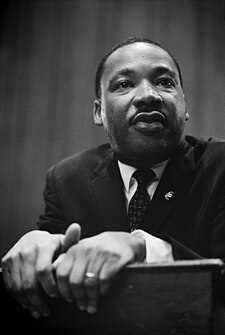
Martin Luther King Jr. Day 2018


Today is a national holiday observing the birth of the American civil rights leader, Martin Luther King Jr. His story is well-known but as it slips further into the past we are less likely to recall the deeper and personal impact he had on American culture in his time. Much of that impact lives on in King's words written and spoken eloquently from the mind as well as the heart. In his Powerline post, first published on this day in 2005, Scott Johnson captured King's essence so well with his comments inserted between the paragraphs of King's "Letter from Birmingham Jail" and the speech he delivered in Memphis the day before his assassination. 

Martin Luther King press conference 01269u edit.jpg


That essence also emerges from words and images of King at his national memorial on the west shore of the Tidal Basin in Washington, D.C. Here are two examples:


Sources

Photos and Illustrations:
News conference photo; Library of Congress
All others; National Park Service, Martin Luther King, Jr. Memorial webpage


Saturday, January 6, 2018

Carl Sandburg: A Voice For All Of Us


Today is the birthday of the American lecturer, journalist, poet, biographer, editor and folk singer, Carl Sandburg. He remains my favorite American socialist. Those of us who had a childhood in the 1950s grew up knowing Sandburg rather well as he enjoyed near iconic status as a literary figure. By 1950, his most significant work had already appeared but he maintained a busy working retirement at his farm, Connemara, located in western North Carolina, where he produced about one-third of his total literary output.

Sandburg was widely known as the voice of the American people, especially the working men and women who built a new and prosperous nation out of dreams and sweat. In spite of his popularity, he was a family man at heart who loved the warmth and activities associated with his close-knit family consisting of his wife, Lillian Steichen Sandburg and their three children and their families.


Carl Sandburg in 1955                                                                      Library of Congress photo 

For about forty years now, Connemara has been preserved as the Carl Sandburg National Historic Site . During my career I was honored to work for several months with the staff and resources there and was offered the opportunity to manage the place in the mid 90's. As time and fate would have it I declined that offer thus preserving my sole family tie to Lillian and Carl Sandburg at Connemara, that being my late goat farming father-in-law and his business with them and their award-winning Chikaming herd.

If you find yourself near Connemara and Flat Rock, North Carolina, a visit to the historic site would be time well spent. Penelope Niven's 1991 work, Carl Sandburg: A Biography, is an essential resource for those who want to know more about the three-time Pulitzer Prize winning writer and his family.

Here is Sandburg reading his work for a Caedmon recording released in 1959.


Alan Watts: On Blazing One's Own Way


Alan Watts was born on this day in 1915 in Britain. At an early age he developed a keen interest in Asian studies and religion. He moved to the U.S. in the late 1930’s and became an Episcopal priest in 1943. After seven years Watts left the church and returned to the study of Asian philosophy and religion full-time. By the 1960's he had become rather well-known on the American scene as much for living "in the moment" in alcohol, experimental drugs, and other excesses as for his writings. Classical Zen masters criticized him for practicing a light version of Buddhism. Many in the youth rebellion of the time latched on to his eccentrism and independent thought as a beacon in what they viewed as a western world in decline. Either way, he would say that he was what he did. We can do nothing more or less than accept the full man. 


When he died in November 1973 he left the world over two dozen books, hundreds of pamphlets and briefs, and well over a thousand hours of audiovisual recordings offering his original thoughts on the Western expression of Zen/ Zen Buddhism and Asian thought. For those who are interested I recommend his autobiography - In My Own Way (1972) - very highly as an entertaining read and a particularly memorable glimpse at American culture in the generation following World War II.

Epiphany 2018


Today is Epiphany, a celebration of the visit of the three kings to the infant Jesus, and their recognition of Him as the King of Kings.

Epiphany                                                                       Jaime Huguet, Spain, ca. 1464

There is but one popular American carol for the celebration of Epiphany. It was written by the Episcopal clergyman, John Henry Hopkins, Jr., and appeared in print in 1863 in a collection of his sacred music.


ShareThis