Showing posts with label geography. Show all posts

Tuesday, October 22, 2024

A Young Nation Buys A Prairie And A Port


This week in 1803 the governments of France and the United States exchanged ratified copies of a document that officially transferred the Louisiana Territory and its capital, New Orleans, to the United States. The event marked the end of French hopes to establish an empire in North America. In this transaction, known as the Louisiana Purchase, the nation acquired 530,000,000 acres of territory in North America for the sum of $15,000,000.


The Louisiana Purchase


As the United States spread across the Appalachians, the Mississippi River became increasingly important as a conduit for the produce of America’s West (which at that time referred to the land between the Appalachians and the Mississippi). Since 1762, Spain had owned the territory of Louisiana, which included 828,000 square miles, and which now makes up all or part of fifteen separate states between the Mississippi River and the Rocky Mountains. Friction between Spain and the United States over the right to navigate the Mississippi and the right for Americans to transfer their goods to ocean-going vessels at New Orleans had been resolved by the Pinckney Treaty of 1795. With the Pinckney treaty in place and the weak Spanish empire in control of Louisiana, American statesmen felt comfortable that the United States’ westward expansion would not be restricted in the long run.

This situation was threatened by Napoleon Bonaparte’s plans to revive the French empire in the New World. He planned to recapture the valuable sugar colony of St. Domingue from a slave rebellion, and then use Louisiana as the granary for his empire. France acquired Louisiana from Spain in 1800 and took possession in 1802, sending a large French army to St. Domingue and preparing to send another to New Orleans. Westerners became very apprehensive about having the more-powerful French in control of New Orleans; President Thomas Jefferson noted,

There is on the globe one single spot, the possessor of which is our natural and habitual enemy. It is New Orleans.

President Thomas Jefferson


In addition to making military preparations for a conflict in the Mississippi Valley, Jefferson sent James Monroe to join Robert Livingston in France to try to purchase New Orleans and West Florida for as much as $10 million. Failing that, they were to attempt to create a military alliance with England. Meanwhile, the French army in St. Domingue was decimated by yellow fever, and war between France and England still threatened. Napoleon decided to give up his plans for Louisiana, and offered a surprised Monroe and Livingston the entire territory of Louisiana for $15 million. Although this far exceeded their instructions, they agreed.


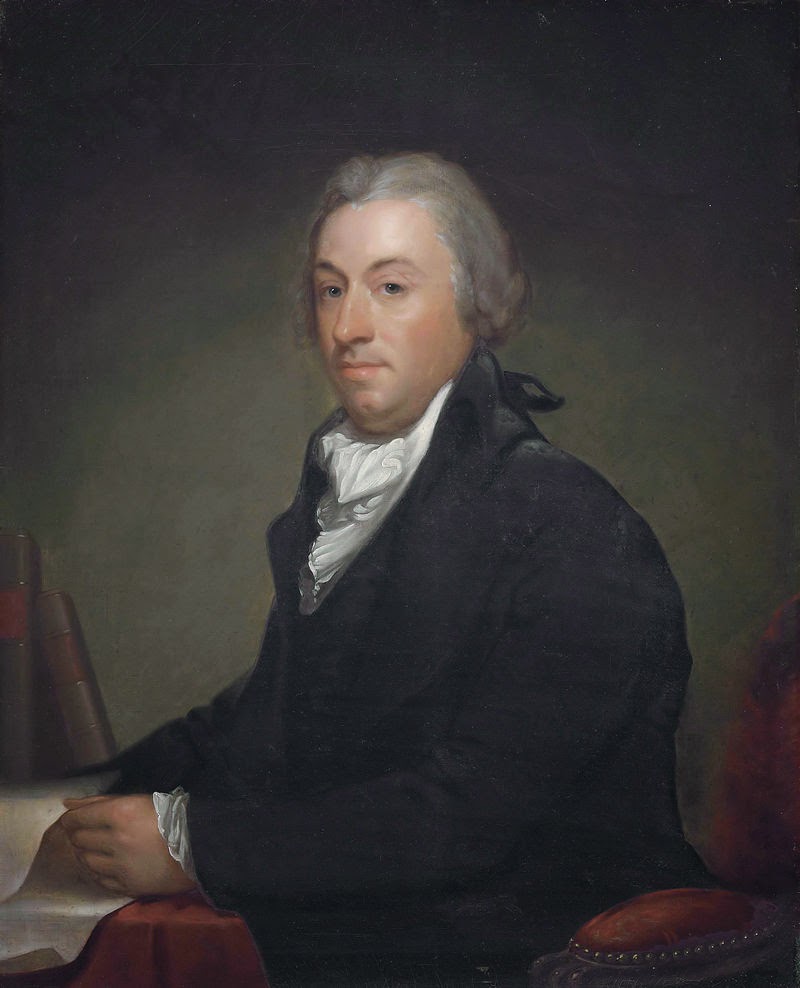
President James Monroe


Robert Livingston, Founding Father, "The Chancellor"


When news of the sale reached the United States, the West was elated. President Jefferson, however, was in a quandary. He had always advocated strict adherence to the letter of the Constitution, yet there was no provision empowering him to purchase territory. Given the public support for the purchase and the obvious value of Louisiana to the future growth of the United States, Jefferson decided to ignore the legalistic interpretation of the Constitution and forgo the passage of a Constitutional amendment to validate the purchase. This decision contributed to the principle of implied powers of the federal government.


Sources:


Text: United States Department of State
Portraits: Official Portraits, The White House


Tuesday, April 30, 2024

The Louisiana Purchase: "An Important Adjacent Territory"


On April 30, 1803, France sold almost 830,000 square miles of territory west of the Missuissippi River to the United States. The price: $15,000,000. The event marked the end of French hopes to establish an empire in North America. Known as the Louisiana Purchase, it also ended a long struggle for access to and politicsl control of the Mississippi River.


Commemorative stamp showing the extent of the Louisiana Purchase


As the United States spread across the Appalachians, the river became increasingly important as a conduit for the produce of America’s West which at that time referred to the land between the Appalachians and the Mississippi. Since 1762, Spain had owned the territory of Louisiana, which itoday makes up all or part of fifteen separate states between the Mississippi River and the Rocky Mountains. Friction between Spain and the United States over the right to navigate the Mississippi and the right for Americans to transfer their goods to ocean-going vessels at New Orleans had been resolved by the Pinckney Treaty of 1795. With the Pinckney Treaty in place and the weak Spanish empire in control of Louisiana, American statesmen felt comfortable that the United States’ westward expansion would not be restricted in the long run.

This situation was threatened by Napoleon Bonaparte’s plans to revive the French empire in the New World. He planned to recapture the valuable sugar colony of St. Domingue from a slave rebellion, and then use Louisiana as the granary for his empire. France acquired Louisiana from Spain in 1800 and took possession in 1802, sending a large French army to St. Domingue and preparing to send another to New Orleans. Westerners became very apprehensive about having the more-powerful French in control of New Orleans. President Thomas Jefferson noted,


There is on the globe one single spot, the possessor of which is our natural and habitual enemy. It is New Orleans.


President Thomas Jefferson


In addition to making military preparations for a conflict in the Mississippi Valley, Jefferson sent James Monroe to join Robert Livingston in France to try to purchase New Orleans and West Florida for as much as $10 million. Failing that, they were to attempt to create a military alliance with England. Meanwhile, the French army in St. Domingue was being decimated by yellow fever, and war between France and England still threatened. Napoleon decided to give up his plans for Louisiana, and offered a surprised Monroe and Livingston the entire territory of Louisiana for $15 million. Although this far exceeded their instructions, they agreed.


President James Monroe


Robert Livingston, Founding Father, "The Chancellor"


When news of the sale reached the United States, the West was elated. President Jefferson, however, was in a quandary. He had always advocated strict adherence to the letter of the Constitution, yet there was no provision empowering him to purchase territory. Given the public support for the purchase and the obvious value of Louisiana to the future growth of the United States, Jefferson decided to ignore the legalistic interpretation of the Constitution and forgo the passage of a Constitutional amendment to validate the purchase. This decision contributed to the principle of implied powers of the federal government.


Sources:


Text: 
United States Department of State
tutle quote, Thomas Jefferson

Photos and Illustrations:
portraits: Official Portraits, The White House


Sunday, April 30, 2023

A Young Nation Expands Westward Across The Mississippi


On April 30, 1803, France sold almost 830,000 square miles of territory west of the Missuissippi River to the United States. The price: $15,000,000. The event marked the end of French hopes to establish an empire in North America. Known as the Louisiana Purchase, it also ended a long struggle for access to and politicsl control of the Mississippi River.


Commemorative stamp showing the extent of the Louisiana Purchase


As the United States spread across the Appalachians, the river became increasingly important as a conduit for the produce of America’s West which at that time referred to the land between the Appalachians and the Mississippi. Since 1762, Spain had owned the territory of Louisiana, which itoday makes up all or part of fifteen separate states between the Mississippi River and the Rocky Mountains. Friction between Spain and the United States over the right to navigate the Mississippi and the right for Americans to transfer their goods to ocean-going vessels at New Orleans had been resolved by the Pinckney Treaty of 1795. With the Pinckney Treaty in place and the weak Spanish empire in control of Louisiana, American statesmen felt comfortable that the United States’ westward expansion would not be restricted in the long run.

This situation was threatened by Napoleon Bonaparte’s plans to revive the French empire in the New World. He planned to recapture the valuable sugar colony of St. Domingue from a slave rebellion, and then use Louisiana as the granary for his empire. France acquired Louisiana from Spain in 1800 and took possession in 1802, sending a large French army to St. Domingue and preparing to send another to New Orleans. Westerners became very apprehensive about having the more-powerful French in control of New Orleans. President Thomas Jefferson noted,

There is on the globe one single spot, the possessor of which is our natural and habitual enemy. It is New Orleans.

President Thomas Jefferson


In addition to making military preparations for a conflict in the Mississippi Valley, Jefferson sent James Monroe to join Robert Livingston in France to try to purchase New Orleans and West Florida for as much as $10 million. Failing that, they were to attempt to create a military alliance with England. Meanwhile, the French army in St. Domingue was being decimated by yellow fever, and war between France and England still threatened. Napoleon decided to give up his plans for Louisiana, and offered a surprised Monroe and Livingston the entire territory of Louisiana for $15 million. Although this far exceeded their instructions, they agreed.


President James Monroe


Robert Livingston, Founding Father, "The Chancellor"


When news of the sale reached the United States, the West was elated. President Jefferson, however, was in a quandary. He had always advocated strict adherence to the letter of the Constitution, yet there was no provision empowering him to purchase territory. Given the public support for the purchase and the obvious value of Louisiana to the future growth of the United States, Jefferson decided to ignore the legalistic interpretation of the Constitution and forgo the passage of a Constitutional amendment to validate the purchase. This decision contributed to the principle of implied powers of the federal government.


Sources:


Text: United States Department of State
Portraits: Official Portraits, The White House


Saturday, October 22, 2022

A Fall Ritual Remembered


It's that time of year for another Burlington memory harvest.  The sights, sounds, tastes, aromas, and feelings are as fresh as this year's apple hrvest. 


When an early autumn walks the land and chills the breeze
and touches with her hand the summer trees,
perhaps you'll understand what memories I own.
There's a dance pavilion in the rain all shuttered down,
a winding country lane all russet brown,
a frosty window pane shows me a town grown lonely.


In October 2008 I wrote the first of many revised editions of the story of the annual October closing of my family's "summer place" in West Virginia. It was nestled in the Patterson Creek valley about twenty miles south of Cumberland, Maryland, and just under a three hour drive from my home in the Washington suburbs. Those who follow this blog likely know more about the Burlington campground than most current residents of that village. Still, it's an important story in my formative years and it's worth repeating, especially with revisions. The most recent change has been the loss of the magnificent two-story cedar pavilion that stood for nearly a century as the focal point of the property. For over 90 years it served as a Burlington landmark and with its loss a place that created so many memories has itself become one. And speaking of memories:


Repairing  flood damage at the pavilion


Every October 15, my mind floods with wonderful memories. From birth through my 27th year, the date marked an important event in my life. The story descends from my dad's membership in the Uniform Rank of the Knights of Pythias. The URKP was a military-style company within a fraternal organization born out of the search for national reconciliation following the Civil War. Every good military organization needed a campground with lodging, mess hall, recreation pavilion, and parade. The URKP built theirs in the small village of Burlington, West Virginia. It also served as a regional park, complete with playground, ball fields, and swimming in the creek. It was often rented for the day for family reunions, company picnics, church functions, and other large gatherings.


It was legal...and tasty, about 1966


"Camp" at Burlington was paradise for a young boy. A creek bordering the camp offered hours of fun. You could explore the woods and fields forever. The frequent social events made the playground a great place to meet new friends. But "camping" at Burlington was by no means a wilderness experience. We were lucky to have a cottage that offered every comfort of home. There was a drive-in theater next door where I enjoyed the snack bar as much as the movies. Across the road was a small airfield with a few Aeroncas, Taylorcrafts and Piper Cubs, and a hangar that gave birth to many "homebuilts" over the years. I can say with confidence that Burlington was never boring. The drive-in and airport were owned and operated by Dave and Georgia Baker, an entertaining and endearing couple I came to love and respect as family.

Today, the sycamores along the river may be a bit taller, but they still explode in yellow this time of year along with my favorite walnut tree. And the young maple I climbed as a boy has matured into a massive Fall fire tree. In 1950, I watched when the men brought in their bulldozers to shape a new channel and level the bank of Patterson Creek. The stone beach they built was much safer for the generation of bathers who enjoyed it, but creeks have a way of remembering affronts. By the mid '70's, the creek's waters restored the original course and bank to a scene my grandfather enjoyed in the 1930s. Although time changed the place I called "Camp" it will never erase the memories of this childhood paradise.


1959


Hulling walnuts, 1967


Through the summer of 1974, I spent many annual family vacations at "camp" and in later years, several weekends of "cold camping" in the off-seasons where I wrote many college essays including a graduate thesis. Opening the cottage and grounds for the summer though exciting was not especially memorable. Freezing temperatures lingered into May, so the campground usually opened on Memorial Day weekend.


When it's 48 degrees at noon in a pouring August rain


On the other hand, winterizing the place was like saying "Goodbye" to an old friend. Thoughts of family, friends, the big - or small - fish, fireworks, that scary movie, the old biplane, all those memories accumulated over the past six months filled your mind. Amid the blazing gold sycamores, brilliant fire oaks and maples, the smell of wood smoke, and a harvest of black walnuts, we went through the years-old closing procedure until the last item - pouring anti-freeze into sink traps - was checked. At that point, it was time to load the car, proceed with all those repetitive tasks one does "just to be sure," then close and lock the big red door until Spring.


Radical days, 1970


As American society changed, the URKP fell out of fashion. Lodge members grew old and passed away. In 1974, the lodge itself and all its assets dissolved. I haven't locked that big red door for 48 years now, but I still have the key and a remarkably detailed mental picture of the cottage and landscape that I loved.


Closing weekend, 1972


In many ways, Burlington is with me every day for my experiences there helped shape my values, and define my career, hobbies, and general interests. The impact has been so profound that I have asked my children to do their best to provide the same opportunity for their own families.


1949


In weaving all of the memories about this weekend, I ask you, my readers, to do the same: Find a nearby paradise and escape to it often while your children are young. And when they are older and have children of their own, they can join you and make even more vivid memories. There will be no sorrow there.


Sources

Illustrations and Photos:
all photos from the family archive

Text:
song title, "When October Goes", and opening quote, "Early Autumn", lyrics, by Johnny Mercer, Johnny Mercer, The Complete Lyrics of Johnny Mercer, edited by Kimball, Day, Kreuger, and Davis; Knopf 2009


Saturday, April 30, 2022

It Cost 4 Cents An Acre And Doubled The Size Of The USA


On April 30, 1803, France sold almost 830,000 square miles of territory west of the Missuissippi River to the United States. The price: $15,000,000. The event marked the end of French hopes to establish an empire in North America. Known as the Louisiana Purchase, it also ended a long struggle for access to and politicsl control of the Mississippi River.


Commemorative stamp showing the extent of the Louisiana Purchase


As the United States spread across the Appalachians, the river became increasingly important as a conduit for the produce of America’s West which at that time referred to the land between the Appalachians and the Mississippi. Since 1762, Spain had owned the territory of Louisiana, which itoday makes up all or part of fifteen separate states between the Mississippi River and the Rocky Mountains. Friction between Spain and the United States over the right to navigate the Mississippi and the right for Americans to transfer their goods to ocean-going vessels at New Orleans had been resolved by the Pinckney Treaty of 1795. With the Pinckney Treaty in place and the weak Spanish empire in control of Louisiana, American statesmen felt comfortable that the United States’ westward expansion would not be restricted in the long run.

This situation was threatened by Napoleon Bonaparte’s plans to revive the French empire in the New World. He planned to recapture the valuable sugar colony of St. Domingue from a slave rebellion, and then use Louisiana as the granary for his empire. France acquired Louisiana from Spain in 1800 and took possession in 1802, sending a large French army to St. Domingue and preparing to send another to New Orleans. Westerners became very apprehensive about having the more-powerful French in control of New Orleans. President Thomas Jefferson noted,

There is on the globe one single spot, the possessor of which is our natural and habitual enemy. It is New Orleans.


President Thomas Jefferson


In addition to making military preparations for a conflict in the Mississippi Valley, Jefferson sent James Monroe to join Robert Livingston in France to try to purchase New Orleans and West Florida for as much as $10 million. Failing that, they were to attempt to create a military alliance with England. Meanwhile, the French army in St. Domingue was being decimated by yellow fever, and war between France and England still threatened. Napoleon decided to give up his plans for Louisiana, and offered a surprised Monroe and Livingston the entire territory of Louisiana for $15 million. Although this far exceeded their instructions, they agreed.


President James Monroe


Robert Livingston, Founding Father, "The Chancellor"


When news of the sale reached the United States, the West was elated. President Jefferson, however, was in a quandary. He had always advocated strict adherence to the letter of the Constitution, yet there was no provision empowering him to purchase territory. Given the public support for the purchase and the obvious value of Louisiana to the future growth of the United States, Jefferson decided to ignore the legalistic interpretation of the Constitution and forgo the passage of a Constitutional amendment to validate the purchase. This decision contributed to the principle of implied powers of the federal government.


Sources:


Text: United States Department of State
Portraits: Official Portraits, The White House

Thursday, October 21, 2021

American Expansion: A Purchase Well-Made


This week in 1803 the government of France officially transferred New Orleans, the colonial capital of Louisiana, to the United States. The event marked the end of French hopes to establish an empire in North America. In this transaction, known as the Louisiana Purchase, the nation acquired 530,000,000 acres of territory in North America for the sum of $15,000,000.


The Louisiana Purchase


As the United States spread across the Appalachians, the Mississippi River became increasingly important as a conduit for the produce of America’s West (which at that time referred to the land between the Appalachians and the Mississippi). Since 1762, Spain had owned the territory of Louisiana, which included 828,000 square miles, and which now makes up all or part of fifteen separate states between the Mississippi River and the Rocky Mountains. Friction between Spain and the United States over the right to navigate the Mississippi and the right for Americans to transfer their goods to ocean-going vessels at New Orleans had been resolved by the Pinckney Treaty of 1795. With the Pinckney treaty in place and the weak Spanish empire in control of Louisiana, American statesmen felt comfortable that the United States’ westward expansion would not be restricted in the long run.

This situation was threatened by Napoleon Bonaparte’s plans to revive the French empire in the New World. He planned to recapture the valuable sugar colony of St. Domingue from a slave rebellion, and then use Louisiana as the granary for his empire. France acquired Louisiana from Spain in 1800 and took possession in 1802, sending a large French army to St. Domingue and preparing to send another to New Orleans. Westerners became very apprehensive about having the more-powerful French in control of New Orleans; President Thomas Jefferson noted,

There is on the globe one single spot, the possessor of which is our natural and habitual enemy. It is New Orleans.


President Thomas Jefferson


In addition to making military preparations for a conflict in the Mississippi Valley, Jefferson sent James Monroe to join Robert Livingston in France to try to purchase New Orleans and West Florida for as much as $10 million. Failing that, they were to attempt to create a military alliance with England. Meanwhile, the French army in St. Domingue was being decimated by yellow fever, and war between France and England still threatened. Napoleon decided to give up his plans for Louisiana, and offered a surprised Monroe and Livingston the entire territory of Louisiana for $15 million. Although this far exceeded their instructions, they agreed.


President James Monroe


Robert Livingston, Founding Father, "The Chancellor"


When news of the sale reached the United States, the West was elated. President Jefferson, however, was in a quandary. He had always advocated strict adherence to the letter of the Constitution, yet there was no provision empowering him to purchase territory. Given the public support for the purchase and the obvious value of Louisiana to the future growth of the United States, however, Jefferson decided to ignore the legalistic interpretation of the Constitution and forgo the passage of a Constitutional amendment to validate the purchase. This decision contributed to the principle of implied powers of the federal government.


Sources:


Text: United States Department of State
Portraits: Official Portraits, The White House


Monday, October 18, 2021

The Harvest Of Memories


When an early autumn walks the land and chills the breeze 
and touches with her hand the summer trees,
perhaps you'll understand what memories I own.
There's a dance pavilion in the rain all shuttered down,
a winding country lane all russet brown,
a frosty window pane shows me a town grown lonely.


In October 2008 I wrote the first of many revised editions of the story of the annual October closing of my family's "summer place" in West Virginia. It was nestled in the Patterson Creek valley about twenty miles south of Cumberland, Maryland, and just under a three hour drive from my home in the Washington suburbs. Those who follow this blog likely know more about the Burlington campground than most current residents of that village. Still, it's an important story in my formative years and it's worth repeating, especially with revisions. The most recent change has been the loss of the magnificent two-story cedar pavilion that stood for nearly a century as the focal point of the property. For over 90 years it served as a Burlington landmark and with its loss a place that created so many memories has itself become one. And speaking of memories:


Repairing flood damage at the pavilion


Every October 15, my mind floods with wonderful memories. From birth through my 27th year, the date marked an important event in my life. The story descends from my dad's membership in the Uniform Rank of the Knights of Pythias. The URKP was a military-style company within a fraternal organization born out of the search for national reconciliation following the Civil War. Every good military organization needed a campground with lodging, mess hall, recreation pavilion, and parade. The URKP built theirs in the small village of Burlington, West Virginia. It also served as a regional park, complete with playground, ball fields, and swimming in the creek. It was often rented for the day for family reunions, company picnics, church functions, and other large gatherings.


It was legal...and tasty, about 1966


"Camp" at Burlington was paradise for a young boy. A creek bordering the camp offered hours of fun. You could explore the woods and fields forever. The frequent social events made the playground a great place to meet new friends. But "camping" at Burlington was by no means a wilderness experience. We were lucky to use a cottage that had every comfort of home. There was a drive-in theater next door where I enjoyed the snack bar as much as the movies. Across the road was a small airfield with a few Aeroncas, Taylorcrafts and Piper Cubs, and a hangar that gave birth to many "homebuilts" over the years. I can say with confidence that Burlington was never boring. The drive-in and airport were owned and operated by Dave and Georgia Baker, an entertaining and endearing couple I came to love and respect as family.


Today, the sycamores along the river may be a bit taller, but they still explode in yellow this time of year along with my favorite walnut tree. And the young maple I climbed as a boy has matured into a massive Fall fire tree. In 1950, I watched when the men brought in their bulldozers to shape a new channel and level the bank of Patterson Creek. The stone beach they built was much safer for the generation of bathers who enjoyed it, but creeks have a way of remembering affronts. By the mid '70's, the creek's waters restored the original course and bank to a scene my grandfather enjoyed in the 1930s. Although time changed the place I called "Camp" it will never erase the memories of this childhood paradise.


1959


Hulling walnuts, 1967


Through the summer of 1974, I spent many annual family vacations at "camp" and in later years, several weekends of "cold camping" in the off-seasons where I wrote many college essays including a graduate thesis. Opening the cottage and grounds for the summer, though exciting, was not especially memorable. Freezing temperatures lingered into May, so the campground usually opened on Memorial Day weekend.


When it's 48 degrees and pouring rain in August


On the other hand, winterizing the place was like saying "Goodbye" to an old friend. Thoughts of family, friends, the big - or small - fish, fireworks, that scary movie, the old biplane, all those memories accumulated over the past six months filled your mind. Amid the blazing gold sycamores, brilliant fire oaks and maples, the smell of wood smoke, and a harvest of black walnuts, we went through the years-old closing procedure until the last item - pouring anti-freeze into sink traps - was checked. At that point, it was time to load the car, proceed with all those repetitive tasks one does "just to be sure," then close and lock the big red door until Spring.


Radical days, about 1970


As American society changed, the URKP fell out of fashion. Lodge members grew old and passed away. In 1974, the lodge itself and all its assets dissolved. I haven't locked that big red door for 47 years now, but I still have the key and a remarkably detailed mental picture of the cottage and landscape that I loved.


Closing weekend, 1972


In many ways, Burlington is with me every day for my experiences there helped shape my values, and define my career, hobbies, and general interests. The impact has been so profound that I have asked my children to do their best to provide the same opportunity for their own families.


1949


In weaving all of the memories about this weekend, I ask you, my readers, to do the same: Find a nearby paradise and escape to it often while your children are young. And when they are older and have children of their own, they can join you and make even more vivid memories. There will be no sorrow there.


Sources

Illustrations and Photos:
all photos from the family archive

Text:
song title, "When October Goes", and opening quote, "Early Autumn", lyrics, by Johnny Mercer, Johnny Mercer, The Complete Lyrics of Johnny Mercer, edited by Kimball, Day, Kreuger, and Davis; Knopf 2009


Sunday, October 18, 2020

When October Goes


When an early autumn walks the land and chills the breeze
and touches with her hand the summer trees,
perhaps you'll understand what memories I own.
There's a dance pavilion in the rain all shuttered down,
a winding country lane all russet brown,
a frosty window pane shows me a town grown lonely.


In October 2008 I wrote the first of many revised editions of the story of the annual October closing of my family's "summer place" in West Virginia. It was nestled in the Patterson Creek valley about twenty miles south of Cumberland, Maryland, and just under a three hour drive from my home in the Washington suburbs. Those who follow this blog likely know more about the Burlington campground than most current residents of that village. Still, it's an important story in my formative years and it's worth repeating, especially with revisions. The most recent change has been the loss of the magnificent two-story cedar pavilion that stood for nearly a century as the focal point of the property.  For over 90 years it served as a Burlington landmark and with its loss a place that created so many memories has itself become one. And speaking of memories:


Repairing flood damage at the pavilion 


Every October 15, my mind floods with wonderful memories. From birth through my 27th year, the date marked an important event in my life. The story descends from my dad's membership in the Uniform Rank of the Knights of Pythias. The URKP was an elite military-style company within a fraternal organization born out of the search for national reconciliation following the Civil War. Every good military organization needed a campground with lodging, mess hall, recreation pavilion, and parade. The URKP had theirs in the small village of Burlington, West Virginia. It also served as a regional park, complete with playground, ball fields, and swimming in the creek. It was often rented for the day for family reunions, company picnics, church functions, and other large gatherings.


It was legal...and tasty, about 1966


"Camp" at Burlington was paradise for a young boy. A creek bordering the camp offered hours of fun. You could explore the woods and fields forever. The frequent social events made the playground a great place to meet new friends. But "camping" at Burlington was by no means a wilderness experience. We were lucky to use a cottage that had every comfort of home. There was a drive-in theater next door where I enjoyed the snack bar as much as the movies. Across the road was a small airfield with a few Aeroncas, Taylorcrafts and Piper Cubs, and a hangar that gave birth to many "homebuilts" over the years. I can say with confidence that Burlington was never boring. The drive-in and airport were owned and operated by Dave and Georgia Baker, an entertaining and endearing couple I came to love and respect as family. 

Today, the sycamores along the river may be a bit taller, but they still explode in yellow this time of year along with my favorite walnut tree. And the young maple I climbed as a boy has matured into a massive Fall fire tree. In 1950, I watched when the men brought in their bulldozers to shape a new channel and level the bank of Patterson Creek. The stone beach they built was much safer for the generation of bathers who enjoyed it, but creeks have a way of remembering affronts. By the mid '70's, the creek's waters restored the original course and bank to a scene my grandfather enjoyed in the 1930s. Although time changed the place I called "Camp" it will never erase the memories of this childhood paradise.


1959


Hulling walnuts, 1967


Through the summer of 1974, I spent many annual family vacations at "camp" and in later years, several weekends of "cold camping" in the off-seasons where I wrote a host of college papers including a graduate thesis. Opening the cottage and grounds for the summer, though exciting, was not especially memorable. Freezing temperatures lingered into May, so the campground usually opened on Memorial Day weekend. 


When it's 48 degrees and pouring rain in August


On the other hand, winterizing the place was like saying "Goodbye" to an old friend. Thoughts of family, friends, the big - or small - fish, fireworks, that scary movie, the old biplane, all those memories accumulated over the past six months filled your mind. Amid the blazing gold sycamores, brilliant fire oaks and maples, the smell of wood smoke, and a harvest of black walnuts, we went through the years-old closing procedure until the last item - pouring anti-freeze into sink traps - was checked. At that point, it was time to load the car, proceed with all those repetitive tasks one does "just to be sure," then close and lock the big red door until Spring.


Radical days, about 1971


As American society changed, the URKP fell out of fashion. Lodge members grew old and passed away. In 1974, the lodge itself and all its assets dissolved. I haven't locked that big red door for 46 years now, but I still have the key and a remarkably detailed mental picture of the cottage and landscape that I loved.


Closing weekend, 1972


In many ways, Burlington is with me every day for my experiences there helped shape my values, and define my career, hobbies, and general interests. The impact has been so profound that I have asked my children to do their best to provide the same opportunity for their own families.


1949


In weaving all of the memories about this weekend, I ask you, my readers, to do the same: Find a nearby paradise and escape to it often while your children are young. And when they are older and have children of their own, they can join you and make even more vivid memories.  There will be no sorrow there.


Sources

Illustrations and Photos:
all photos from the family archive

Text:
song title, "When October Goes", and opening quote, "Early Autumn", lyrics, by Johnny Mercer, Johnny Mercer, The Complete Lyrics of Johnny Mercer, edited by Kimball, Day, Kreuger, and Davis; Knopf 2009

Monday, July 16, 2012

Massive Landslide Hits Glacier Bay National Park and Preserve

The Great Gorge of Ruth Glacier, Denali National Park, Alaska


OTR may be out of the traces these days, but that doesn't mean he can ignore the magnificent resources of our national parks that he defended officially for almost 35 years. Last month one of the largest landslides ever recorded in North America roared down five miles of the Johns Hopkins Glacier in Alaska's Glacier Bay National Park and Preserve. A flight up one of the world's deepest glacier valleys - deeper than the Grand Canyon - on the face of Mount McKinley left him breathless. It is the scale of Alaska that matters. The story of the slide is here. And here is a flyover taken a few weeks after the event.


It is one thing to see this in remote Alaska. It is another entirely to contemplate events on this scale in the more populous states. The state of Washington and the cities of greater Seattle come to mind immediately. Officials there have already prepared as best as possible for warning citizens about landslides, lahars, and pyroclastic flows from Mount Rainier. Some Seattle suburbs are only minutes from these dangers. Though probabilities may be low, it's always good practice to keep in mind that we should never underestimate Mother Nature. She can be a cruel mother.

Hat tip to National Parks Traveler for the video.

Thursday, May 24, 2012

The American West, 150 Years Ago

Zuni Indian Pueblo, New Mexico 1873                          USGS Library
The Atlantic posted a new photo essay today featuring the work of Timothy O'Sullivan. The thirty-four photographs were taken during government-sponsored expeditions into the western frontier in the years following the Civil War. Many of these photos may not be new to our readers, but the scenes they capture are simply too compelling to ignore, especially for those who have stood in O'Sullivan's footprints. Do enjoy.

H/T to Glenn Reynolds at Instapundit.

Tuesday, April 17, 2012

The Voice Of The Turtle Is Heard In Our Land


Terry Teachout writes about the arts. He is an exceptionally good writer with a compelling, conversational style that puts readers at ease and looking forward to the next page. His many books include biographies of H.L. Mencken, America's foremost debunker, and the jazz legend, Louis Armstrong. Teachout writes from the heart almost daily at his blog, About Last Night. With winter behind us and spring coming on strong, his post about a walk in New York's Fort Tryon Park struck OTR as revealing much about places and how we learn of and react to them. Readers should prepare themselves for personal moments lost in memory and geography.

ShareThis