Showing posts with label Japan. Show all posts

Sunday, August 6, 2023

Special Bombing Mission Number 13, August 6, 1945


On August 6, 1945 at 8:15 a.m. Japan Local Time the world changed.

Forty-three seconds after releasing the bomb nicknamed "Little Boy," pilot Col. Paul Tibbets was alerted to the blast by radioactivity tingling in his teeth and the metallic taste from electrolysis on his tongue. Ten and a half miles away, tens of thousands of people had already vanished in a brilliant flash. A massive firestorm would grip the city within minutes and kills thousands more. This photo taken minutes after the blast at a distance of six miles was found in a suburban Hiroshima grade school in 2013:


The photo below was taken after the removal of street and lot debris and revealed the full extent of the destruction.


As the first use of an atomic weapon against an enemy, the decision to drop the bomb on Hiroshima - and Nagasaki three days later - was controversial. The decision assuredly brought a very quick end to the war with Japan and in the eyes of most historians and military experts saved the lives of millions of combatants and civilians. For more on this historic event and its aftermath readers should visit the Harry S. Truman Library & Museum's outstanding archive of primary sources relating to the story.
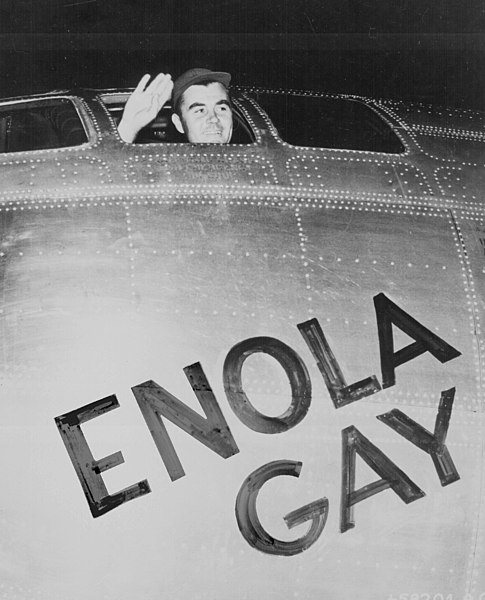

Tibbets, pilot and commander, in the cockpit prior to takeoff for Hiroshima


For a three minute assessment of the event by Tibbets visit this history.com link.


The last surviving Enola Gay crew member - Theodore "Dutch" Van Kirk - died at his home in Stone Mountain, Georgia, in 2014. It's one more indication that our greatest generation as an eyewitness to history is itself rapidly moving into history.


Sources

Photos and Illustrations:
Ground photo, gizmodo.com.au
Hiroshima aftermath, U.S. Navy Public Affairs Website, chinfo.navy.milEnola Gay photo, National Archives and Records Service


Monday, August 8, 2022

Hiroshima: A New Weapon Ends A War


There's been almost no mention of this event in newscasts this week but I believe it's worth remembering.

On August 6, 1945 at 8:15 a.m. Japan Local Time the world changed.

Forty-three seconds after releasing the bomb nicknamed "Little Boy," pilot Col. Paul Tibbets was alerted to the blast by radioactivity tingling in his teeth and the metallic taste from electrolysis on his tongue. Ten and a half miles away, tens of thousands of people had already vanished in a brilliant flash. A massive firestorm would grip the city within minutes and kills thousands more. This photo taken minutes after the blast at a distance of six miles was found in a suburban Hiroshima grade school in 2013:


This photo taken after the removal of street and lot debris revealed the full extent of the destruction.


As the first use of an atomic weapon against an enemy, the decision to drop the bomb on Hiroshima - and Nagasaki three days later - was controversial. The decision assuredly brought a very quick end to the war with Japan and in the eyes of most historians and military experts saved the lives of millions of combatants and civilians. For more on this historic event and its aftermath readers should visit the Harry S. Truman Library & Museum's outstanding archive of primary sources relating to the story.


Tibbets, pilot and commander, in the cockpit prior to takeoff for Hiroshima


For a three minute assessment of the event by Tibbets visit this history.com link.


The last surviving Enola Gay crew member - Theodore "Dutch" Van Kirk - died at his home in Stone Mountain, Georgia, in 2014. It's one more indication that our greatest generation as an eyewitness to history is itself rapidly moving into history.


Sources


Photos and Illustrations:
Ground photo, gizmodo.com.au
Hiroshima aftermath, U.S. Navy Public Affairs Website, chinfo.navy.milEnola Gay photo, National Archives and Records Service


Friday, August 6, 2021

Destruction And Renewal In The Twinkling Of An Eye


On August 6, 1945 at 8:15 a.m. Japan Local Time the world changed.

Forty-three seconds after releasing the bomb nicknamed "Little Boy," pilot Col. Paul Tibbets was alerted to the blast by radioactivity tingling in his teeth and the metallic taste from electrolysis on his tongue. Ten and a half miles away, tens of thousands of people had already vanished in a brilliant flash. A massive firestorm would grip the city within minutes and kills thousands more. This photo taken minutes after the blast at a distance of six miles was found in a suburban Hiroshima grade school in 2013:


This photo taken after the removal of street and lot debris revealed the full extent of the destruction.


As the first use of an atomic weapon against an enemy, the decision to drop the bomb on Hiroshima - and Nagasaki three days later - was controversial. The decision assuredly brought a very quick end to the war with Japan and in the eyes of most historians and military experts saved the lives of millions of combatants and civilians. For more on this historic event and its aftermath readers should visit the Harry S. Truman Library & Museum's outstanding archive  of primary sources relating to the story.


Tibbets, pilot and commander, in the cockpit prior to takeoff for Hiroshima


For a three minute assessment of the event by Tibbets visit this history.com link.

The last surviving Enola Gay crew member - Theodore "Dutch" Van Kirk - died at his home in Stone Mountain, Georgia, in 2014. It's one more indication that our greatest generation as an eyewitness to history is itself rapidly moving into history.


Sources


Photos and Illustrations:
Ground photo, gizmodo.com.au
Hiroshima aftermath, U.S. Navy Public Affairs Website, chinfo.navy.milEnola Gay photo, National Archives and Records Service

Tuesday, August 6, 2019

A New Weapon Redefines Warfare


Today marks the 74th anniversary of the first use of an atomic bomb in warfare. It was dropped over Hiroshima, Japan, by a B-29 bomber, the Enola Gay, under the command of Col. Paul Tibbets. The crew may have had suspicions about their mission beforehand but Tibbets let them know only after the bomb had been armed a mere hour from its target.

Tibbets was alerted to the blast by radioactivity tingling in his teeth and the metallic taste from electrolysis on his tongue. Ten and a half miles away, many thousands had already vanished. A massive firestorm would grip the city within minutes and kills thousands more.

The decision to drop the bomb on Hiroshima - and Nagasaki three days later - was a difficult and controversial one that assuredly brought a very quick end to the war with Japan and in the eyes of most historians and military experts saved the lives of millions of combatants and civilians. The controversy is still with us. For more on this historic event and its aftermath readers should visit this fascinating Harry S. Truman Museum and Library archive of primary sources relating to the story.


File:Tibbets-wave.jpg
Tibbets waves from the cockpit prior to takeoff 


Sources

Photos and Illustrations:
Hiroshima aftermath, U.S. Navy Public Affairs Website, chinfo.navy.mil
Enola Gay photo, National Archives and Records Service

Text:
wikipedia.com


Monday, August 6, 2018

The Atomic Age Ends A War


On this day at 8:15 A.M. Japan Local Time, the world changed 

Forty-three seconds after releasing the bomb nicknamed "Little Boy," pilot Col. Paul Tibbets was alerted to the blast by radioactivity tingling in his teeth and the metallic taste from electrolysis on his tongue. Ten and a half miles away, tens of thousands had already vanished in a brilliant flash. A massive firestorm would grip the city within minutes and kills thousands more. This photo taken minutes after the blast at a distance of six miles was found in a suburban Hiroshima grade school in 2013:


This photo taken after the removal of street and lot debris revealed the full extent of the destruction. 


As the first use of an atomic weapon against an enemy, the decision to drop the bomb on Hiroshima - and Nagasaki three days later - was controversial. The decision assuredly brought a very quick end to the war with Japan and in the eyes of most historians and military experts saved the lives of millions of combatants and civilians.  For more on this historic event and its aftermath readers should visit a fascinating Harry S. Truman Library and Museum archive of primary sources relating to the story.


File:Tibbets-wave.jpg
Tibbets, pilot and commander, in the cockpit prior to takeoff for Hiroshima

For a three minute assessment of the event by Tibbets visit this history.com link.

The last surviving Enola Gay crew member - Theodore "Dutch" Van Kirk - died at his home in Stone Mountain, Georgia, in 2014. It's one more indication that our greatest generation as an eyewitness to history is itself rapidly moving into history.


Sources

Photos and Illustrations:
Ground photo, gizmodo.com.au
Hiroshima aftermath, U.S. Navy Public Affairs Website, chinfo.navy.mil
Enola Gay photo, National Archives and Records Service

Text:
wikipedia.com

Sunday, August 6, 2017

A New Weapon Obliterates A City And Ends An Aging War


Today marks the 72nd anniversary of the first use of an atomic bomb. It was dropped over Hiroshima, Japan, by a B-29 bomber, the Enola Gay, under the command of Col. Paul Tibbets. The crew may have had suspicions about their mission beforehand but Tibbets let them know only after the bomb had been armed a mere hour from its target. 

Tibbets was alerted to the blast by radioactivity tingling in his teeth and the metallic taste from electrolysis on his tongue. Ten and a half miles away, many thousands had already vanished. A massive firestorm would grip the city within minutes and kills thousands more.

The decision to drop the bomb on Hiroshima - and Nagasaki three days later - was a difficult and controversial one that assuredly brought a very quick end to the war with Japan and in the eyes of most historians and military experts saved the lives of millions of combatants and civilians. The controversy is still with us. For more on this historic event and its aftermath readers should visit this fascinating Harry S. Truman Library and Museum archive of primary sources relating to the story. 


File:Tibbets-wave.jpg
Tibbets waves from the cockpit prior to takeoff


Sources

Photos and Illustrations:
Hiroshima aftermath, U.S. Navy Public Affairs Website, chinfo.navy.mil
Enola Gay photo, National Archives and Records Service

Text:
wikipedia.com


Saturday, August 6, 2016

Hiroshima: "We Saw The Flash...And Knew The Bomb Had Worked"


Hiroshima scene six miles and a few minutes following the detonation


Harry Truman's decision to drop an atomic bomb on an enemy target was agonizing for him and controversial for the world.  Although he viewed the bombing of Hiroshima - and Nagasaki three days later - as a tragedy he saw the events as necessities and expressed no regret. Assuredly, his decision brought a very quick end to the war with Japan and in the eyes of most historians and military experts saved the lives of millions of combatants and civilians. For more on this historic event and its aftermath readers should visit a fascinating Harry S. Truman Library and Museum archive of primary sources relating to the story. 


File:Tibbets-wave.jpg
Col. Paul Tibbets, pilot and commander, waves from the cockpit of the Enola Gay prior to takeoff  to Hiroshima

On August 6, 1945, forty-three seconds after releasing the bomb nicknamed "Little Boy," Tibbets was alerted to the blast by radioactivity tingling in his teeth and the metallic taste from electrolysis on his tongue. Ten and a half miles away, tens of thousands had already vanished. For a three minute assessment of the event by Col. Paul Tibbets, visit this history.com link.

The last surviving Enola Gay crew member - Theodore "Dutch" Van Kirk - died at his home in Stone Mountain, Georgia, in 2014. It's one more indication that our greatest generation as an eyewitness to history is itself rapidly moving into history.


Sources

Photos:
Ground photo, gizmodo.com.au
Enola Gay photo, National Archives and Records Service

Text:

title quote, Theodore Van Kirk interview, rt.com,
wikipedia.com

Thursday, August 6, 2015

Hiroshima: Seventy Years Ago Today At 8:15 A.M., JLT


Forty-three seconds after releasing the bomb nicknamed "Little Boy," the Enola Gay pilot, Col. Paul Tibbets, was alerted to the blast by radioactivity tingling in his teeth and the metallic taste from electrolysis on his tongue. Ten and a half miles away, tens of thousands had already vanished. A massive firestorm would grip the city within minutes and kills thousands more. This photo taken minutes after the blast at a distance of six miles was found in a suburban Hiroshima grade school in 2013:


As the first use of an atomic weapon against an enemy, the decision to drop the bomb on Hiroshima - and Nagasaki three days later - was controversial. The decision assuredly brought a very quick end to the war with Japan and in the eyes of most historians and military experts saved the lives of millions of combatants and civilians.  For more on this historic event and its aftermath readers should visit a fascinating Harry S. Truman Library and Museum archive of primary sources relating to the story. 

U.S. Army poster preparing Americans for the Japanese campaign 

For a three minute assessment of the event by Col. Paul Tibbets, commander of the Enola Gay, visit this history.com link.


Sources

Photos:
Ground photo, gizmodo.com.au
Poster, U.S. National Archives and Records Administration
Hiroshima aftermath, U.S. Navy Public Affairs Website, chinfo.navy.mil

Text:

wikipedia.com

Sunday, December 7, 2014

National Pearl Harbor Remembrance Day 2014


Forward magazine detonation, USS Shaw, December 7, 1941 
Lest we forget...Today marks the 73rd anniversary of the Imperial Japanese Navy surprise attack on the U.S. naval base at Pearl Harbor, Hawaii. Twelve hundred dead were counted among the nearly 4000 casualties that day. 

Tuesday, August 6, 2013

Hiroshima, Japan, August 6, 1945, 8:15 AM, JLT


Forty-three seconds after releasing Little Boy, the pilot was alerted to the blast by radioactivity tingling in his teeth and the metallic taste from electrolysis on his tongue. Ten and a half miles away, many thousands in Hiroshima had already vanished. A massive firestorm would grip the city within minutes.

Today marks the 68th anniversary of the event.

The photograph of the blast was found in a Japanese elementary school earlier this year. It was taken about ten kilometers from the city and thirty seconds after the explosion. The photographer is unknown.

Here is a link to a fascinating Harry S. Truman Library and Museum archive of  material relating to the decision to drop the atomic bomb.


Friday, August 6, 2010

8:15 JLT, August 6, 1945

Forty-three seconds after releasing the bomb, the pilot was alerted to the blast by radioactivity tingling in his teeth and the metallic taste from electrolysis on his tongue. Ten and a half miles away, many thousands had already vanished. A massive firestorm would grip the city within minutes.

Read a 1995 retrospective on this event here. Read the Hiroshima and Nagasaki Wikipedia entry with its host of external links here.

Tuesday, June 23, 2009

Is America Entering Its "Lost Decade?"

Reason.tv draws some frightening parallels between the Japanese economic meltdown that began about 1989 and our own late economic problems. See their brief (3;37) video here. This is a complex story and no worthy economist would predict an identical response to three variables operating in two quite different national environments. At the same time, ignoring the similarities could put us at great risk.

Source: Instapundit

ShareThis