Friday, December 18, 2015

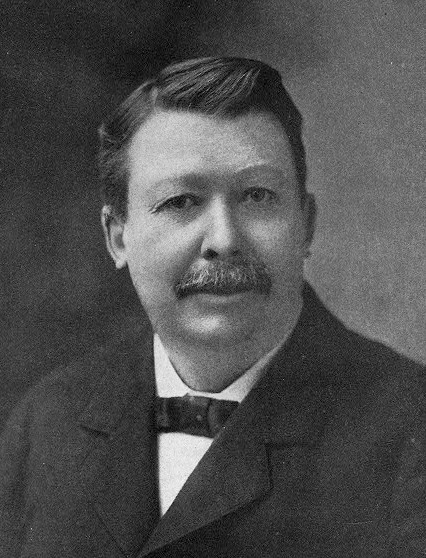
Fletcher Henderson: The Quiet Pioneer Of Swing


Long-time readers know I enjoy birthday posts about Georgians who have made memorable contributions to the American experience. Today is no exception as we honor the contribution of Fletcher Henderson (1897-1952) to the sounds of jazz, blues, and swing, three genres still very much alive more than fifty years after the beginning of the rock revolution. 


He was born in Cuthbert into a well-educated and musical family and earned degrees in mathematics and chemistry in Atlanta and New York. As a black man he had difficulty finding work in those fields and soon turned to music to make a living. That musical career took him from accompanying Ethel Waters, Ma Rainey, Bessie Smith and other blues singers, through the creation of an orchestra that included Don Redman and Louis Armstrong, to work as a composer-accompanist for Benny Goodman at a formative time for the swing era.

Henderson played an important role in bringing improvisational jazz elements into big band/dance band compositions. Both Duke Ellington and Benny Goodman credited his talent as an arranger for much of their success. It is interesting that his role in the development of American popular music was not well understood until academic studies of the history of jazz appeared late in the last century.

What was the Henderson sound? Here are two examples: a 1927 recording of the Henderson orchestra and a brief "arranging workshop" featuring Goodman and Henderson followed by the Goodman orchestra performing Henderson's famous arrangement of Blue Skies:


Sources

Photo:
Compact disc cover, Imports release, ASIN: B01596RGW, October 16, 2015 

Text:
wikipedia.com, Fletcher Henderson
newgeorgiaencyclopedia.com, Fletcher Henderson
pbs.org, Jazz: A Film by Ken Burns, Fletcher Henderson biography


Thursday, December 17, 2015

The Wright Brothers At Kitty Hawk: 112 Years Ago Today


The 27-mph wind was harder than they would have liked - their predicted cruising speed was only 30-35 mph. The headwind would slow their ground speed to a crawl but they proceeded anyway. With the wave of a bed sheet they signaled the volunteers from the nearby lifesaving station that they were about to try again.

It was Orville's turn. Remembering Wilbur's experience he positioned himself in the pilot cradle and tested the controls. The stick that moved the horizontal elevator controlled climb and descent. The cradle that he swung with his hips warped the wings and swung the vertical tails which in combination turned the machine. A lever controlled the gas flow and airspeed recorder. The controls were simple and few but Orville knew it would take all his finesse to handle the new and heavier aircraft. At 10:35 AM he released the restraining wire. The flyer moved down the rail as Wilbur steadied the wings. Just as the craft left the ground John Daniels, an amateur photographer and member of the lifesaving station, snapped the shutter on a preset camera  In doing so he captured the historic image of the Wright Brothers flight that we know so well.


The Wright Flyer begins its first successful flight, December 17, 1903 

As usual the flyer was unruly, pitching up and down as Orville overcompensated with the controls. But he kept it aloft until it hit the sand about 120 feet from the rail. Into that 27-mph wind the ground speed had been 6.8 mph. The total airspeed was 34 mph. The 12 second event was the real thing: controlled, sustained flight by a man in a heavier-than-air vehicle.

The brothers took turns flying three more times that day getting a feel for the controls and increasing their distance with each flight. Wilbur's second flight - the fourth and last of the day – was an impressive 852 feet in 59 seconds.

For comprehensive information on this historic event visit the National Park Services Wright Brothers National Memorial web page.


Sources

Photograph:
unrestored version, 1903 photograph, John T. Daniels, Library of Congress

Text:
National Park Service, Wright Brothers National Memorial

Georgia's Erskine Caldwell: The Preacher's Kid Who Wrote About Life And Labor


The Georgia writer, Erskine Caldwell, who was born on this day in 1903. He is an interesting blend of 20th century authors. He is Sherwood Anderson, William Faulkner, D.H. Lawrence, Christopher Isherwood, Joseph Mitchell, and a reflection of other modernists. Readers who enjoy dark humor and seek more than discourse on the happy veneer of the human condition will enjoy Caldwell's interpretations.

He was an only child and a "preacher's kid" whose family moved frequently throughout the South until he was fifteen when they settled in Wrens, Georgia. Still, his father often preached on large circuits, necessitating plenty of travel. In fact, the elder Caldwell traveled so regularly that his son could determine his destinations by the odor of coal smoke on his suit. In time, father took son on many of these journeys. The peculiarity, poverty, and injustice of the Depression era South was embedded in Erskine Caldwell's memory and he soon began writing about it. His observations had little to do with remnants of "the late unpleasantness" - the polite Southern term for the War of Northern Aggression, aka, the Civil War - that often gripped the region. Instead, Caldwell wrote of the raw realities of the human condition in the South. This, and his crusade for improving conditions, did not sit well with many Southerners. The dislike was enhanced because he was writing "in absentia." having left the South before 1930. Furthermore, his subject matter often placed him in conflict with censors across the country.


Caldwell had a long career as a writer of both fiction and non-fiction, but he is best known for Tobacco Road (1932), God's Little Acre (1933) and other works from the 1930s. An adaptation of Tobacco Road played on Broadway for eight years - a record at the time - beginning in 1933. A very loose film adaptation directed by John Ford in 1941 contributed to the stereotyping and ridicule of poor white Southerners. God's Little Acre remains one of the most popular novels in the U.S. with over ten million copies in print. A 1958 film version is considered the best presentation of Caldwell themes on film.


Here are clips from both films.


Readers interested in learning more about the life of Erskine Caldwell will enjoy this article from the New Georgia Encyclopedia.


Saturday, December 12, 2015

A Century Of Frank Sinatra


Today is the centennial of the birth of Frank Sinatra (1915-1998) the American singer and actor whose phenomenal career spanned sixty years ending in 1995.  During his career he produced a discography spanning the eras of jazz, swing, big band, and pop music. I had the good fortune to attend two Sinatra concerts during the '60's. Both were unforgettable opportunities to see this American icon at work as a storm of rock music swept the nation and displaced the popular song as the dominant music genre in our culture. 

Frank Sinatra from the trailer of the film, Pal Joey, 1957           

It's been twenty years since Sinatra walked on stage but his persona is still with us. Writing at nationalreview.com, Deroy Murdock begins his exploration of the life, times, and legacy of "Ol' Blue Eyes" with this:

Saturday completes a century since Francis Albert Sinatra belted out his first note as a newborn, 13-and-a-half-pound baby in Hoboken, N.J. He grew up to become the finest male vocalist of the 20th Century, alongside his female counterpart and occasional partner in rhyme, Ella Fitzgerald.

But Frank was much more than just a crooner. He excelled as an actor, dancer, TV host, entrepreneur, record-company executive, and even music conductor. His timeless fashion sense defined style and elegance for gentlemen from the 1940s until today. He left enormous footprints on popular culture and was as original an American as this nation has produced.

After 100 years, a hundred superlatives barely could do Sinatra justice. Rather than wade through the many adjectives that define the man, the best way to appreciate Sinatra and his gigantic contribution is to savor his artistry and epic life story.

What follows is a rich overview of the man in sight and sound. It's not to be missed. 

If you read Murdock's article you may want to scroll down to an earlier post by him on a Sinatra exhibit in New York as well as a another tribute, this one by George Will. 

For those who simply want to enjoy Sinatra at his best I offer two personal favorites:

Summer Wind (1965), music by Heinz Meyer, words by Johnny Mercer


One For My Baby (And One More For The Road) (1943), music by Harold Arlen, words by Johnny Mercer, 


The man had a way with a song quite unlike that of any other singer in the 20th century. 


Sources

Photo:
Columbia Pictures Corporation, public domain photograph in the United States

Wednesday, December 9, 2015

Joel Chandler Harris: A Southern Treasure


Today is the birthday of the beloved Georgia journalist and writer, Joel Chandler Harris. He was born in Eatonton in 1845 and raised by his single mother and other benefactors to love reading, writing, and humor. At sixteen he was employed at the nearby Turnwold Plantation as a print setter for what was likely the nation's only plantation newspaper, The Countryman. Under the guidance of owner Joseph Addison Turner, Harris read from the plantation's large library over the a period of four years. He also observed life on the plantation including its rich culture of oral traditions among the slaves.


After a decade of employment with several papers in central Georgia and Savannah, Harris joined the staff of the Atlanta Constitution in 1876. It was here that he linked a Lippincott's article on black folklore to his Turnwold Plantation experience and the Uncle Remus character he had created for his feature writing. The rest was history, described here in R. Bruce Bickley's Georgia Encyclopedia article on Harris:


For the next quarter-century, Harris lived a double life professionally. He was one of two associate editors of the premier newspaper in the Southeast, helping readers interpret the complex New South movement. He was also the creative writer, the "other fellow," as he termed himself: a prolific, committed, and ambitious re-creator of folk stories, a literary comedian, fiction writer, and author of children's books. Harris published thirty-five books in his lifetime, in addition to writing thousands of articles for the Constitution over a twenty-four-year period. Along with his first book, Uncle Remus: His Songs and His Sayings, the most ambitious of the Uncle Remus volumes is Nights with Uncle Remus: Myths and Legends of the Old Plantation (1883). This book comprises seventy-one tales that feature stories told by four different black narrators, including Uncle Remus.
.  .  . 

Harris also left his impact on major literary figures to come. Rudyard Kipling, Zora Neale Hurston, William Faulkner, Flannery O'Connor, Ralph Ellison, and Toni Morrison all responded to the legacy of Brer Rabbit and the tar baby that Harris had helped popularize. Fellow Eatonton writer Alice Walker protested, however, that Harris had stolen her African American folklore heritage and had made it a white man's publishing commodity.
.  .  .  

Harris died on July 3, 1908, of acute nephritis and was buried in Westview Cemetery, West End, Atlanta. Obituary writers were not exaggerating when they eulogized this celebrated middle Georgia writer as "the most beloved man in America." Only Harris's friend and admirer, Mark Twain, who died two years later, surpassed Harris in popular reputation at the beginning of the twentieth century. Harris's retelling of the story of Brer Rabbit and the tar baby remains one of the world's best-known folktales, and his complex legacy as a literary comedian, New South journalist, folklorist, fiction writer, and children's author continues to influence modern culture in a surprising number of ways.


As noted in the quotation, Harris's place in the history of folklore is not without its controversy. Historically there has always been a struggle in the sphere of anthropological studies with cultural preservation and destruction as well as ownership. In Harris we have a written legacy from black oral tradition as viewed though the author's personal lens. It isn't perfect but it does preserve universal themes and lessons in their cultural context. Furthermore his work in part inspired a resurgence of interest in storytelling and performance in a number of cultural niches. If anything that interest is far stronger today than it was a century ago and much of it under black ownership. I can certainly encourage and appreciate that as well as Harris's contribution.


Sources

Text:
R. Bruce Bickley, Joel Chandler Harris, Georgia Encyclopedia, georgiaencyclopedia,org

Monday, December 7, 2015

National Pearl Harbor Remembrance Day 2015


This is the 74th anniversary of the Imperial Japanese Navy's attack on the U.S. Navy's base at Pearl Harbor. The war effort mounted after the attack included 16,000,000 American men and women in uniform. Today the U.S. Office of Veterans Affairs estimates that just over 820,000 of these veterans are still alive. They are passing away at the rate of more than 400 per day. Soon, the relics, memorials and ceremonies will be all that is left to testify to America's greatest generation at war. If we are to survive, we need to remember them now and in the future for what they did to crush evil in the world.


USS Arizona Memorial, Pearl Harbor, Hawaii, 2004


The National Pearl Harbor Remembrance Day Commemoration will be streamed from Hawaii beginning at 12:00 PM, EST. The programming includes three events to be live-streamed over three hours and ten hours of additional historical and educational programming. Access the page here. Readers may want to scroll down the page for a complete list of the day's events before viewing the live stream. 


Flag raising on Arizona Memorial


Sunday, December 6, 2015

The Other Gershwin


Mention the name "Gershwin" today and just about everyone will think you have "George" on your mind. Granted he wrote some spectacular music between 1917 and 1937, much of it as fresh today as the day it was written. But George and his melodies were only half of the story. His brother, Ira, born on December 6, 1896, added the poetry. Together they formed one of the most successful collaborations in American music history. While George's music has lived on, Ira's words survive primarily in the world of jazz and in the Great American Songbook niche among popular singers. 

George and Ira Gershwin
George (l) and Ira (r) Gershwin, Newark Airport, 1936

This excerpt from the Ira Gershwin bio at the Song Writers Hall of Fame website will give readers an idea of the scope of their collaboration and bring to mind some of Ira's lyrics:

Their first collaborations were for Broadway: Lady, Be Good! (1924, including "Fascinating Rhythm" and, although it was cut from the show, "The Man I Love"), Tip Toes (1925, including "Sweet and Low Down"), Oh Kay! (1926, including "Clap Yo' Hands", "Do-Do-Do", "Maybe", and "Someone To Watch Over Me"), Funny Face (1927, including '"S Wonderful"), Rosalie (1928, including "How Long Has This Been Going On"), Show Girl (1929, including "Liza"), Strike Up the Band (1930, including "I've Got A Crush On You" and "Soon"), Girl Crazy (1930, including "But Not For Me", "Embraceable You", "Bidin' My Time", and "I Got Rhythm"), Delicious (1931, including "Blah Blah Blah. "), Of Thee I Sing (1931, the first musical to win the Pulitzer Prize and which included "Of Thee I Sing", "Love Is Sweeping The Country", and "Who Cares").

The complete picture includes their work in Hollywood, the Broadway opera Porgy and Bess, and Ira's collaboration with a host of songwriters following his brother's death in 1937. Forty years before his own passing in 1983 Ira Gershwin began a long collaboration with the Library of Congress to collect and preserve their legacy. Today the George and Ira Gershwin Collection  is the leading archive for the study of the Gershwin brothers and their impact on cultural history around the world. Read more about the collection here


Sources

Text:

Songwriters Hall of Fame, songwritershalloffame.org
Library of Congress, loc.gov

Photos:

Library of Congress, loc.gov

ShareThis