Tuesday, April 29, 2025

Duke Ellington: He Created A Sound That Influenced World Culture


Smooth, high brow, faultless, sophisticated, American. All of these words describe the music that came out of the world of Edward Kennedy "Duke" Ellington as a composer, performer, and conductor. For fifty years he defined jazz in his own way with his superbly talented jazz orchestra, surviving the onslaught of bebop, rhythm and blues, and rock and roll. His discography includes over seventy hit records out of hundreds of releases spanning seven decades. Here is perhaps his most celebrated song, credited primarily to Ellington's extraordinarily talented composer and arranger, Billy Strayhorn.


Ellington was born on this day in Washington, D. C., in 1899. He formed a band while in his teens and played the circuit in and around the nation's capital before moving to New York in 1923. There, his creative fervor and gentlemanly demeanor made him an influential force in the Harlem Renaissance. He was a star much appreciated in Europe as well as the United States by the mid '30s. His collaboration with the brilliant composer and arranger, Billy Strayhorn, later in that decade and again in the '60s enhanced his fame and helped him bridge gaps between jazz and other musical genres.


We end with a historic moment in jazz history: Duke Ellington and his orchestra at the 1956 Newport Jazz Festival. Jazz was changing from a dance band to smaller ensemble format and at the same time competing with the rise of rock and roll. Ellington decided to link two compositions with a free-wheeling sax solo. Many jazz historians agree that this was a landmark performance that not only gave the band concept renewed life but also gave jazz a new and expanded direction in sound and listener experience.


The conclusion is obvious: Ellington was an amazing force in both American and world music. 
Ellington passed away over forty years ago and with his passing the nation lost both a legendary technician at the piano and its strongest advocate for the American musical invention called jazz. Readers can learn more about this extraordinary entertainer by visit his Wikipedia page, by far the most comprehensive source of Ellington information and references on the Internet. I also recommend Terry Teachout's fine biography, Duke, published in 2015.

Friday, April 25, 2025

She's Still The First Lady Of Song


The incomparable jazz singer, Ella Fitzgerald, was born on this day in Newport News, Virginia, 108 years ago. When she was 17, Ella Jane Fitzgerald wanted to dance at an amateur night at the Apollo in Harlem, but was intimidated by other dancers and decided to sing instead. It was the beginning of a career that took her magnificent voice through the big bands, to jazz, bop, and the Great American Songbook. With a voice ranging from smoky to bright she put her signature on every note and sharp diction on every word. For people who like to immerse themselves in lyrics, Ella was unbeatable. And when she forgot those lyrics or let the spontaneity flow, the scat singing was priceless.


The First Lady of Song in 1960     Erling Mandelmann


Only once did I see her perform and that was in an overcrowded and hot venue in Washington. After a few songs, the crowd didn't mind the environment. She had us wrapped in music for over two hours and left us wanting more after several encores. Everyone had a great time that evening, especially Ella. Looking back on that concert, I realize how significant it was. She had turned 50 and completed recording her famous Songbook series a few years earlier. And though her peak years were coming to an end, what she had left exceeded the best of what most 20th century singers ever offered. She went on to perform another quarter of a century dazzling audiences everywhere. Ella passed away twenty-eight years ago, but she's still entertaining fans through a huge discography and video record. In all, it is an immense if not iconic legacy.


Fitzgerald and President Reagan at the White House in October 1981


Throughout her very public life, Ella Fitzgerald remained a private if not shy person. Were she receiving a birthday cake today, I can envision a broad, approving smile and nervous glances from squinting eyes behind those big bottle bottom glasses. She'd respond with a heart-felt "Thank you, thank you," and move into the comfort and safety of song.

Here she is in 1964 performing two Johnny Mercer jazz standards for the last of her now legendary Songbook albums - eight in all - produced by Norman Grantz and released over an eight year period. The series has never been out of print and remains a hot seller over fifty years after its release.


In almost sixty years, few jazz vocalists - there are many fine ones performing today - can approach the significance and near-perfection of Fitzgerald's interpretation of the Great American Songbook. To me, nothing since has quite matched it and I doubt anything in the future will without some extraordinary changes within the music industry and jazz itself.

Though she left us in 1996, Ella simply "is." I can only imagine the look on the faces of the heavenly hosts when she waltzed through those pearly gates scat singing all the way. So here's a happy birthday wish going up to the First Lady of Song. Simply incomparable and yes, sometimes too marvelous for words.


Sources

Photos and Illustrations:
Mandelmann photo, commons.wikimedia.org
White House, Item C4495-9A, President Reagan with Ella Fitzgerald after her performance for King Juan Carlos I of Spain in the east room, 10/13/81; Ronald Reagan Presidential Library and Museum, Simi Valley, California.

Tuesday, April 22, 2025

Earth Day 2025


Today we celebrate our planet, our earthly home. At our home in the woods a celebration of the planet takes place in some way every day. Perhaps it's a seed order, a letter about water quality in the creek that crosses our property, admiring a blooming orchid or slicing into an amazing tomato harvested a few yards from the kitchen. More often these days I simply watch nature flowing through the seasons.


Our appreciation of nature persists in spite of the full-on seizure and politicization of environmental themes by the radical left - the green movement - that came with the fall of the Soviet Union in 1990. Even the unhinged need an anchor and it is after all the birthday (1870) of the Communist butcher, Vladimir Lenin. Still, it's sad they selected such a universal idea. And now even our information technology isolates us from the outside making it more difficult to experience, understand, appreciate, and protect our planet. All of my adult life, I fought hard to dissolve the barriers between people and nature. Whether we like it or not we live IN nature. The sooner we recognize it the better off both we and the planet will coexist.


Father Mississippi                  Walter Inglis Anderson, U.S., ca. 1955


Experiencing the earth and the built environment upon it has been the greatest teacher over the years. The written word provided significant guidance along the way. First came the foundation heard from childhood:


Psalm 104


1 Praise the LORD, O my soul. O LORD my God, you are very great; you are clothed with splendor and majesty. 2 He wraps himself in light as with a garment; he stretches out the heavens like a tent 3 and lays the beams of his upper chambers on their waters. He makes the clouds his chariot and rides on the wings of the wind. 4 He makes winds his messengers, flames of fire his servants. 5 He set the earth on its foundations; it can never be moved. 6 You covered it with the deep as with a garment; the waters stood above the mountains. 7 But at your rebuke the waters fled, at the sound of your thunder they took to flight; 8 they flowed over the mountains, they went down into the valleys, to the place you assigned for them. 9 You set a boundary they cannot cross; never again will they cover the earth. 10 He makes springs pour water into the ravines; it flows between the mountains. 11 They give water to all the beasts of the field; the wild donkeys quench their thirst. 12 The birds of the air nest by the waters; they sing among the branches. 13 He waters the mountains from his upper chambers; the earth is satisfied by the fruit of his work. 14 He makes grass grow for the cattle, and plants for man to cultivate-- bringing forth food from the earth: 15 wine that gladdens the heart of man, oil to make his face shine, and bread that sustains his heart. 16 The trees of the LORD are well watered, the cedars of Lebanon that he planted. 17 There the birds make their nests; the stork has its home in the pine trees. 18 The high mountains belong to the wild goats; the crags are a refuge for the coneys. 19 The moon marks off the seasons, and the sun knows when to go down. 20 You bring darkness, it becomes night, and all the beasts of the forest prowl. 21 The lions roar for their prey and seek their food from God. 22 The sun rises, and they steal away; they return and lie down in their dens. 23 Then man goes out to his work, to his labor until evening. 24 How many are your works, O LORD! In wisdom you made them all; the earth is full of your creatures. 25 There is the sea, vast and spacious, teeming with creatures beyond number-- living things both large and small. 26 There the ships go to and fro, and the leviathan, which you formed to frolic there. 27 These all look to you to give them their food at the proper time. 28 When you give it to them, they gather it up; when you open your hand, they are satisfied with good things. 29 When you hide your face, they are terrified; when you take away their breath, they die and return to the dust. 30 When you send your Spirit, they are created, and you renew the face of the earth. 31 May the glory of the LORD endure forever; may the LORD rejoice in his works-- 32 he who looks at the earth, and it trembles, who touches the mountains, and they smoke. 33 I will sing to the LORD all my life; I will sing praise to my God as long as I live. 34 May my meditation be pleasing to him, as I rejoice in the LORD. 35 But may sinners vanish from the earth and the wicked be no more. Praise the LORD, O my soul. Praise the LORD.

And here, from 1971, are words that to me reinforce that foundation:

...If you think that the world is going somewhere, that there are certain things that are supposed to happen and there are certain things that are supposed not to happen you never see the way it is like music. Music has no destination. We don' play it in order to get somewhere. If that were the way, the best orchestras would be those who got to the end of the piece the fastest. Music is a pattern which we listen to and enjoy as it unfolds. In the same way, "Where is the water going?" Where do the leaves go? Where are the clouds going? There not going anywhere because nature understands that the point of the whole thing is to be here, to be wide awake to the now that is going on. So when you listen to music you don't try to hold in your memory what is past or to think about what's coming. You listen to the pattern as it unfolds and so watch it as it moves now. It's a dance. And dancing is like music for when you dance you dance just to dance. You don't aim at a particular place on the floor that is your destination of the dance. You listen to the music and you move your body with it [as if] your eyes are following the patterns of the water.


The secret of...life is to spend some time every day in which you don't think but just watch, in which you don't form any ideas about life but look at it, listen to it, smell it, feel it. And when you get rid of all the talk in your head, all the ideas about what I do as distinct from what happen to me or what's the difference between man and nature or between what's mine and what's yours it all goes. And it's just the dancing pattern, what the Chinese call "li," the word that originally meant the markings in jade, the grain in wood, or...the pattern on water. When you let go of the definitions, of the attempt to try to pin down nature, to pin down life in your mind so that you can feel you are completely in control of it, its all based on the idea that you're different from it, that you have to master it. When you don't pin it down anymore, when you don't try to cling to it as if it was something different from you then your whole life has about it the sensation of flowing like water. It always goes away. but it always comes back because away and back are two sides of the same thing. Let it go!


Earth Day 2025 will soon be over in my woods but these passages where East meets West tell me that every day is an Earth day. For me the celebration indeed flows like water. Every day is a day to spend some time in observing nature and practicing its wise stewardship.

Five generations ago the Czech composer, Antonin Dvorak, spent his last summer in the United States in the Czech settlement of Spillville, Iowa. In two weeks there surrounded by a landscape of fields, farms, and families under the open skies of the prairie he composed what has become known as the American Quartet. It is a beautiful expression of the optimism of the American experience (see Alexis de Toqueville's Democracy in America) and a fine way to conclude remarks on what should be an uplifting celebration of the "big blue marble" we call Earth.


I hope this post encourages you to go OUTside and find your INside.


Sources

Text:
Psalm 104, Holy Bible, NIV
Alan Watts, writer/narrator, Buddhism, Man and Nature, Hartley Foundation, Inc., Cos Cob, Connecticut, 1968

Photos and Illustrations:
Anderson painting, porterbriggs.com

Monday, April 21, 2025

John Muir: To Cherish Wildness In Nature


The great American naturalist and conservationist, John Muir, was born in Dunbar, East Lothian, Scotland, on this day in 1838. Eleven years later he immigrated with his family to a farm in Portage, Wisconsin. Through his personal efforts and the movements he supported with such fervor - he founded the Sierra Club - we can enjoy the spectacular wildness that is Yosemite National Park.


President Theodore Roosevelt and John Muir on Glacier Point, Yosemite Valley, 1903


His efforts also help establish the national park movement that today preserves and interprets 429 units administered by the National Park Service. And modeled after the national park idea, there are more than 6500 state parks and thousands of local parks and preserves to enjoy. Although Muir focused on the preservation of wilderness his work provided a structure for cultural resource preservation and management. That movement originated largely with Civil War commemorations late in the 19th century and accelerated through the benevolence of industrialists including Henry Ford (The Henry Ford Museum of American Innovation and Greenfield Village) and John D. Rockefeller Jr. (Colonial Williamsburg).


Muir in his beloved Yosemite Valley in 1890


Muir was a wanderer both physically and intellectualy building upon his studies in botany and geology as he traveled. In 1868 he saw Yosemite Valley for the first time and soon realized he had found his calling in the world of the Sierra Nevada Mountains. This is how he described the revelation in his autobiographical notebook:


There are eight members in our family....All are useful members of society - save me. One is a healer of the sick. Another, a merchant, and a deacon in good standing. The rest school teachers and farmers' wives - all exemplary, stable, anti-revolutionary. Surely then, I thought, one may be spared for so fine an experiment.

. . . the remnants of compunction - the struggle covering the serious business of settling down -gradually wasted and melted, and at length left me wholly free - born again! I will follow my instincts, be myself for good or ill, and see what will be the upshot...As long as I live, I'll hear the waterfalls and birds and winds sing. I'll interpret the rocks, learn the language of flood, storm and the avalanche. I'll acquaint myself with the glaciers and wild gardens, and get as near the heart of the world as I can.

Muir lived to see the creation of Yosemite National Park in 1890 and the consolidation of control of the park - California had retained management of the Yosemite Valley and Mariposa Grove - by the federal government in 1906.


John Muir, seated. reading a book ca. 1912 May 29


Two years following his death in 1914 Congress created the National Park Service to manage the preservation and use of the growing number of national parks and monuments under federal jurisdictions.

To learn more about John Muir. Visit the John Muir Exhibit at the Sierra Club website. Yosemite National Park also has a fine tribute to Muir at this link.


Sources

Photos and Illustrations:
public domain photos, Library of Congress, Washington

Text:
wikipedia entry, John Muir


Sunday, April 20, 2025

Easter 2025


Easter Changes Everything!
Christ is Risen!


The Angel Rolling The Stone Away From the Sepulchre, William Blake, ca. 1808


Thine be the glory, risen, conquering Son;
endless is the victory, thou o'er death hast won;
angels in bright raiment rolled the stone away,
kept the folded grave clothes where thy body lay.


Refrain:
Thine be the glory, risen conquering Son,
Endless is the vict'ry, thou o'er death hast won.


Lo! Jesus meets us, risen from the tomb;
Lovingly he greets us, scatters fear and gloom;
let the Church with gladness, hymns of triumph sing;
for her Lord now liveth, death hath lost its sting.

No more we doubt thee, glorious Prince of life;
life is naught without thee; aid us in our strife;
make us more than conquerors, through thy deathless love:
bring us safe through Jordan to thy home above.


Christ As The Redeemer Of Man,  William Blake, ca. 1808


He is Risen indeed!


Brahms: Ein deutches Requiem, Part 6 
For here have we no continuing city
(English translation follows the German text)

Denn wir haben hie keine bleibende Statt,
sondern die zukünftige suchen wir. 

Siehe, ich sage euch ein Geheimnis:  
Wir werden nicht alle entschlafen,
wir werden aber all verwandelt werden, 
und dasselbige plötzlich, in einem Augeblick, 
zu der Zeit der letzten Posaune. 
Denn es wird die Posaune schallen, 
und die Toten werden auferstehen unverweslich,
und wir werden verwandelt werden. 
Dann wird erfüllet werden das Wort, das geschrieben steht: 
Der Tod ist verschlungen in den Sieg. 
Tod, wo ist dein Stachel? 
Hölle, wo ist dein Sieg? 
Herr, du bist würdig zu nehmen Preis und Ehre und Kraft, 
denn du hast alle Dinge geschaffen, 
und durch deinen Willen haben sie das Wesen 
und sing geschaffen.

 
For here have we no continuing city,
but we seek one to come. 

Behold, I tell you a mystery: 
we shall not all sleep, 
but we shall all be changed in a moment, 
in the twinkling of an eye at the last trumpet. 
For the trumpet shall sound, 
and the dead shall be raised incorruptible, 
and we shall be changed. 
Then shall be brought to pass the saying that is written: 
Death is swallowed up in victory. 
O death, where is thy sting? 
O hell, where is the victory?

Thou are worthy, O Lord to receive glory and honour and power: 
for thou hast created all things 
and by thy will they are 
and were created.


Sources


Photos and Illustrations:
Blake images, collections.vam.ac.uk, Victoria and Albert Museum, London

Saturday, April 19, 2025

Holy Saturday 2025


Holy Saturday . . . is the sound of perfect silence. Yesterday's mockery, the good thief's prayer, the cry of dereliction - all of that is past now. Mary has dried her tears, and the whole creation is still, waiting for what will happen next.


Christ in the Sepulchre William Blake, 1808


Today, there is a great silence. The Savior has died. He rests in the tomb. Many hearts were filled with uncontrollable grief and confusion. Was He really gone? Had all their hopes been shattered? These and many other thoughts of despair filled the minds and hearts of so many who loved and followed Jesus.

It is on this day that we honor the fact that Jesus was still preaching. He descended to the land of the dead, to all the holy souls who had gone before Him, so as to bring them His gift of salvation. He brought His gift of mercy and redemption to Moses, Abraham, the prophets and so many others. This was a day of great joy for them. But a day of great sorrow and confusion for those who watched their Messiah die on the Cross.

Holy Saturday should be a reminder to us that even those things which seem to be the worst of tragedies are not always what they seem. God the Son was obviously doing great things as He laid in the tomb. He was accomplishing His mission of redemption. He was changing lives and pouring forth grace and mercy.


With the altar stripped bare and the Divine Service unspoken, the wait in silence resonates.


Sources


Photos and Illustrations:
collections.vam.ac.uk/item/O74285/the-angels-hovering-over-the-watercolour-blake-william/

Text:

The opening quotation was taken from an excerpt from Death on A Friday Afternoon, by Richard John Neuhaus. The excerpt was posted on firstthings.com in 2007.
Second quotation, cathoicreadings.org, Holy Saturday entry

Friday, April 18, 2025

Good Friday 2025


For contemplation on this holy day...


Crucifixion (Corpus Hypercubus)               Salvador Dali, 1954


Christ of Saint John of the Cross                     Salvador Dali, 1951


For more information on the Christian dimension of Dali's surrealistic interpretation of the Crucifixion (Corpus Hypercubus) go here and here, for Christ of Saint John of the Cross go here and here, and for the Good Friday music(Verwandlungsmusik) from Wagner's opera, Parsifal, go here.


Monday, April 14, 2025

Abraham Lincoln Goes On To Glory


Abraham Lincoln Photo Portrait, early 1865 Alexander Gardner


Today marks the 160th anniversary of the assassination (1865) of President Abraham Lincoln at Ford's Theatre in Washington. He was taken across the street to the home of William and Anna Peterson where died shortly after 7:00 a.m. the following morning (April 15). The theatre remained closed for over a century. It reopened in 1968 as a performance venue and national historic site that included the Peterson House. Today it is owned by the National Park Service and operated through a partnership agreement with the Ford's Theatre Society.


Ford's Theatre 514 10th Street NW, Washington, DC


President Lincoln and his son, Tad. February 5, 1865


For more information on this event, the place where it occurred, and its impact on the American experience explore the Ford's Theatre National Historic Site web page.


Lincoln Memorial, The Mall, Washington


Sources


Photographs and Illustrations:

Ford Theatre photographs, Ford's Theatre National Historic Site
Lincoln photograph, Alexander Gardner. Abraham Lincoln with his son Tad (Thomas), February 5, 1865. Prints and Photographs Division, Library of Congress (140) Digital ID # cph-3a05994

Lincoln Memorial, Official White House Photo, Chuck Kennedy, 2013, public domain


Sunday, April 13, 2025

Eudora Welty: Distinctly Southern


Today we remember the celebrated Southern writer, Eudora Welty, on what would have been her 116th birthday. She is remembered as one of the finest short story writers in American literary history. Welty lived and died in Jackson, Mississippi. Although she attended college in Wisconsin and New York, and traveled abroad, she always returned to the house and garden on Pinehurst Street that she had called "home" since high school.

Her skill as a writer enabled her to transform observations of life in Mississippi into a body of literature including novels, short stories, reviews, letters, and an autobiography. Over sixty years she received a host of awards including the Pulitzer Prize for her 1973 novel, The Optimist's Daughter.

Here is a short CSPAN BookTV production exploring Welty and her home in Jackson.


For four years toward the end of the Great Depression (1929-1939) Welty was employed by the Works Progress Administration to document everyday life in Mississippi. Her photography from that period has become well known as an expression of her powers of observation. Smithsonian Magazine produced this short documentary on her photography on the occasion of the centennial of her birth in 2009.


For more information on Welty readers should visit the outstanding website maintained by the Euroda Welty Foundation.


Sources

Text:
Eudora Welty entry, Wikipedia.com

Photos and Illustrations:
National Portrait Gallery, Smithsonian Institution, Washington


Palm Sunday 2025


The Bible pictured above served my family well beginning in the 1890's. As one of my earliest memories I recall my parents carrying it every Sunday to Mount Calvary Lutheran Church a few blocks from our home. It's too fragile for use these days and now occupies an honored place in our family archive. The book becomes special to me on Palm Sundays. Among the near eighty years of memorabilia inside are a dozen or so treasured palm crosses from my childhood.

Today is Palm Sunday and Passion Sunday, the last Sunday of Lent, and the beginning of Holy Week. On this day, Christians around the world commemorate the triumphant entry of Jesus into Jerusalem. It is also a time to remember the Passion history as preparation for the Holy Week experience. Readings for the day recall the anointing of Jesus, the institution of the Lord's Supper, the Garden of Gethsemane, Jesus's trials before Caiaphas and Pilate, the crucifixion of Jesus, and His burial.


All glory, laud, and honor to you Redeemer King,
To whom the lips of children made sweet hosannas ring.

You are the king of Israel and David's royal Son,
Now in the Lord's name coming, our King and Blessed One.

The company of angels are praising you on high;
Creation and all mortals in chorus make reply.

The multitude of pilgrims with palms before you went,
Our praise and prayer and anthems before you we present.

To you, before your Passion, they sang their hymns of praise.
To you, now high exalted, our melody we raise.

Their praises you accepted; accept the prayers we bring,
Great author of all goodness, all good and gracious King.

All glory, laud and honor to you, Redeemer King,
To whom the lips of children made sweet hosannas ring.


                                   Theodulf of Orleans, 750/760-821


On the Sunday following this Passion Week we celebrate a 2000 year-old event that changes everything.


Sources

Photos and Illustrations:
early 20th century postcards from the family archives

Friday, April 4, 2025

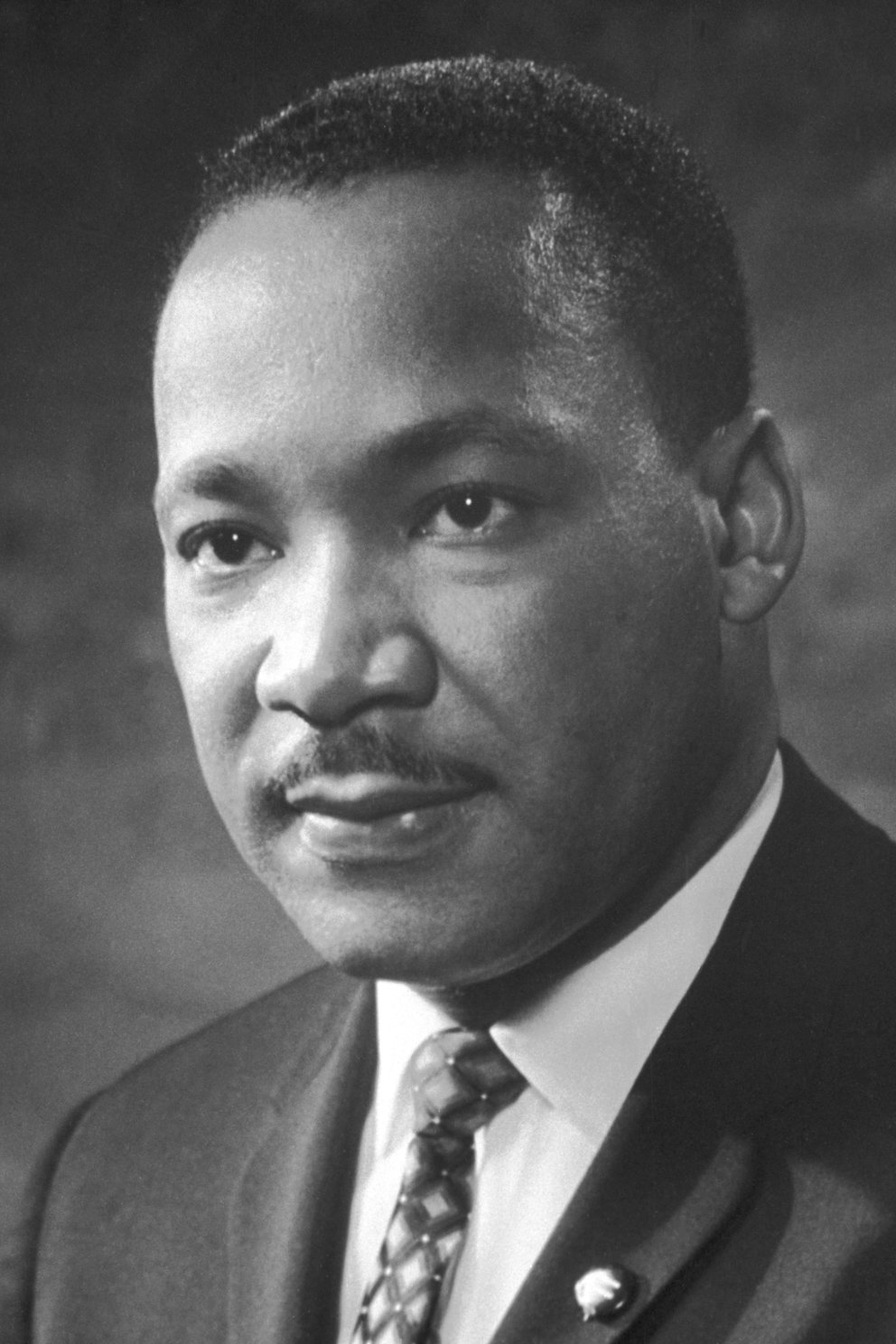
Martin Luther King Jr.: Lest We Forget


Each morning after I contemplate the world outside the window wall by my desk my focus shifts to  reviewing Internet news sources. Much like last year it was unsettling on this day to find little more than passing mention of the most significant event in our national history to occur on April 4. That event was the assassination of Martin Luther King Jr. in 1968.


American society was already divided over our involvement in the Vietnam War. King's assassination, and that of Robert Kennedy two months later, widened that divide and pushed domestic instability on several fronts to unheard of levels in our lifetime. Much of the anger, distrust, and uncertainty rising out of that era has been simmering ever since. As a people we pay a huge price for focusing on what divides us rather than on what unites us. The erosion of political discourse into hatred and violence over the past five years is a daily reminder of that cost. 

I doubt our Founding Fathers ever expected the American experience they created to be an easy one to maintain. Furthermore, I doubt they expected it to evolve outside the freedoms they enshrined in the rule of law. Much of what King did, much of what he said about equality and peaceful change operated within that context. Although there is much debate on whether or not he would have maintained that posture had he lived, his legacy lives on to help us perfect our union. We should take the time to stop talking and listen. 

More about this day, the man, and his legacy can be found at the King Center website and that of the Martin Luther King National Historical Park.


Sources

Photos and Illustrations:
Public domain photo,  Nobel Foundation (http://nobelprize.org/) and Wikimedia Commons

Thursday, April 3, 2025

Bluebird Time In The South


On an early Spring day in 1977 I was hiking one of the small ridges that sits astride the North and South Carolina line near Charlotte. Climbing out of one of the steep ravines and reaching the highest point on the trail, I was suddenly surrounded by thousands of bluebirds moving through the woods and brush. The show continued for twenty minutes as wave after chattering wave passed by. In the 36 years since that encounter, only two events compare with it: seeing nearly a dozen bald eagles relaxing in a tree next to a convenience store in Anchorage We were leaving for a tour and some of the folks wanted to stop for snacks before we left town. As we pulled into the parking lot, someone - obviously a lower 48 type - said, "Hey, are those bald eagles?" The driver said something like, "Yeah, happens all the time here." Amazing. The second event occurred over our patio in Atlanta when hundreds of sand hill cranes "kettled" before continuing on their way north to summer in the Great Plains and Canada.

Today the bluebirds returned to our woods in Atlanta. They have been here before, and in greater numbers, but even sighting a few of them is a sure sign of the coming summer. This year we have several small snags in the rear woods that will make excellent housing for any of those birds seeking to set up housekeeping. If we're lucky, they will be close to the patio where they will provide us with hours of entertainment in both song and behavior. Here's an observation I made in 2009 when a pair of bluebirds decided to inspect the housing potential in our woods:

This pair spent an hour scoping out apartments in a small dead tree trunk about 50 feet from my patio. First, the male would inspect the premises, then look inquiringly toward the female in a nearby branch. After a few minutes, he would fly to a neutral branch; she would inspect, then fly to her neutral branch. They would meet to discuss on yet another branch, then repeat the cycle. Again. And again. The setting sun made it hard to follow their house hunting and soon they disappeared over our ridge. Will the rising sun lead them to return and make a home in our tree?


I don't recall if the pair actually moved in. The snag they inspected fell a few years ago. Still plenty of apartments waiting for young families though.

Wednesday, April 2, 2025

Happy 78th Birthday, Emmylou Harris


In fifty years singer-songwriter Emmylou Harris has won fourteen Grammy Awards including a Lifetime Achievement Award in 2018. Along the way she's gained many honors including membership in the Grand Ole Opry, the Country Music Hall of Fame, the American Academy of Arts and Sciences, and a star on the Hollywood Walk of Fame. Her career first gained traction in small clubs and coffee houses in Washington and its suburbs. I was only a few miles from most of the venues but sadly never saw her perform. Still, it was impossible not to see and hear the advertising in and around Georgetown in DC and the Maryland suburbs of Bethesda, Chevy Chase and Silver Spring. By the early '70's she moved to Los Angeles to work with Gram Parsons and his band, The Grievous Angels. When Parsons died in 1973 the devastating event led her to focus on Parsons's search for the fusion sound he called "cosmic American music." The sound Harris and Parsons produced in their short time together, in addition to her life-long dance with experimental sounds in folk, blues and country music, would have a significant impact on decades of American music.

Harris continues to produce innovative and award-winning sound. In 2016 a selection of duets with Rodney Crowell - The Traveling Kind - won a Grammy for Best Americana Album. Here is a track from the album:


Today, Emmylou Harris turned 78. Fame has been kind to her given such a long and successful touring and recording career. She's brought quality entertainment to millions of people since the beginning in those early days with Graham Parsons. We'll never know where the two of them would have gone together in the world of music but it's safe to say it would have been far. Here is a song she and Bill Danoff wrote as a tribute to Parsons:


Boulder to Birmingham

I don't want to hear a love song
I got on this airplane just to fly
And I know there's life below
But all that it can show me
Is the prairie and the sky

And I don't want to hear a sad story
Full of heartbreak and desire
The last time I felt like this
It was in the wilderness and the canyon was on fire
And I stood on the mountain in the night and I watched it burn
I watched it burn, I watched it burn.

I would rock my soul in the bosom of Abraham
I would hold my life in his saving grace.
I would walk all the way from Boulder to Birmingham
If I thought I could see, I could see your face.

Well you really got me this time
And the hardest part is knowing I'll survive.
I have come to listen for the sound
Of the trucks as they move down
Out on ninety five
And pretend that it's the ocean
coming down to wash me clean, to wash me clean
Baby do you know what I mean

I would rock my soul in the bosom of Abraham
I would hold my life in his saving grace.
I would walk all the way from Boulder to Birmingham
If I thought I could see, I could see your face.


Thank you, Emmylou, and a happy birthday (April 2), too. It's been quite a journey from those gigs at the Red Fox Inn.


Sources:
Photo, emmylouharris.com
Lyrics: play.google.com

ShareThis